Ubud Travel Guide

Destination Guide · Central Bali

Ubud Travel Guide

Rice terraces, temples and Bali’s slowest mornings.

By The Bali Guideline Editorial TeamUpdated 15 October 2026

Area Brief

What Ubud is really like.

Ubud is Bali’s inland culture town, a cluster of villages on the ridges of Gianyar about 38 km north of the airport, or 75 minutes to 2 hours by car. It suits travelers who want temples, nightly dance, rice-field walks, yoga and good food more than beaches. Plan three days, or five if you add Mount Batur and the waterfalls.

Ubud is not one town but a string of villages on ridges between river gorges in Gianyar regency. The royal family still lives in the palace on Jalan Raya Ubud, temple ceremonies close roads most weeks, and a dance troupe performs somewhere in town every night. That living culture, plus rice fields that start a ten-minute walk from the palace, is why people come.

Be ready for the other side. Central Ubud is crowded, and its narrow streets were never built for tour buses and thousands of scooters. On 8 September 2026 Gianyar made Jalan Raya Ubud one-way eastbound and Jalan Raya Pengosekan one-way northbound, and the first day brought more than four hours of gridlock while drivers learned the new loop. Sidewalks on Monkey Forest Road and Jalan Hanoman are narrow and broken in places, and local transport groups still discourage Grab and Gojek pickups in parts of the center.

Read the full overview

Prices have climbed with the crowds. The Sacred Monkey Forest now charges IDR 130,000 for adults, and the swing platforms and cafés on the rim of Tegallalang have turned the famous terraces into a ticketed photo stop. A fire in August 2024 burned one of the two blocks of the Ubud market, and Sari Organik, the café that made the Subak Sok Wayah rice-field path famous, has closed. The path itself is still there.

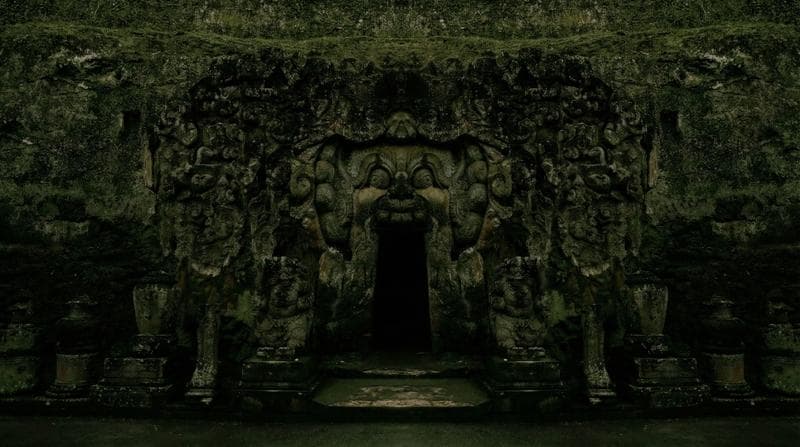
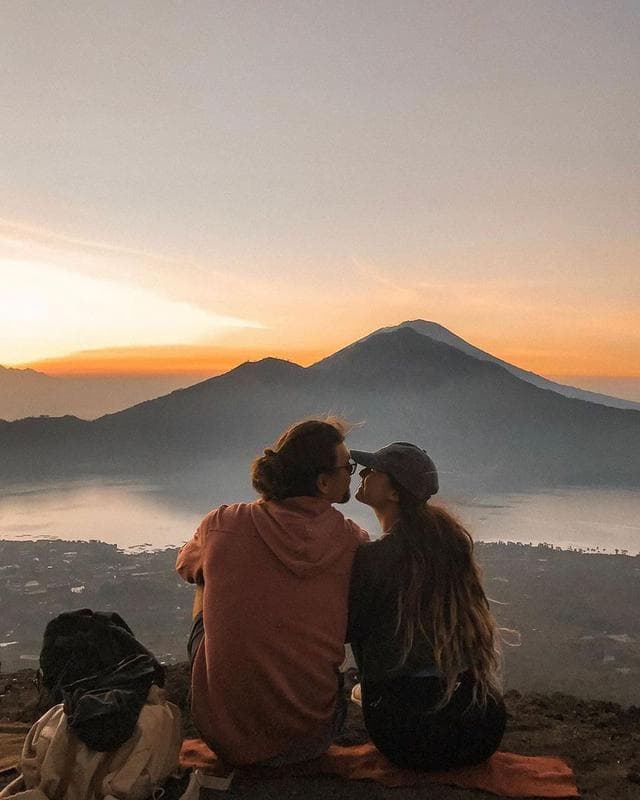
Ubud is still the best base in Bali for culture and inland day trips. Tirta Empul, Gunung Kawi, Goa Gajah and a ring of waterfalls are 15 to 60 minutes away, and Mount Batur sunrise treks pick up at 2 am. Mornings are the reward: at 6:30 the Campuhan ridge is quiet, the air is fresher than on the coast, and farmers are already in the paddies.

Compared with Canggu or Seminyak, Ubud has no beach, fewer late bars and far more yoga studios, galleries and cooking schools. The coast is for surf and sunsets; Ubud is for walking, temples and long breakfasts. Where you stay inside Ubud matters more than in most Bali areas. The center is walkable but noisy. Penestanan and Nyuh Kuning are quieter and still on foot. The resorts in Sayan, Kedewatan and Tegallalang give you valley views at the cost of a drive every time you want dinner.

Best for
Temples, dance, rice-field walks, yoga and food
Vibe
Green, arty and spiritual, with a crowded core
From the airport
75–120 min by car (about 38 km)
Days needed
3 days; 5 with Batur and waterfalls
Best time
April–October (dry); early mornings all year
Getting around
Walk the center; driver or scooter for day trips

Ubud is a good fit if…

  • First-timers who want temples, dance and rice fields in one base
  • Walkers: the ridge trail and rice-field paths start in town
  • Yoga, retreats and slow wellness trips
  • Day trips to Tirta Empul, Mount Batur and the Bangli waterfalls
  • Couples booking a valley-view villa or resort

Skip it if…

  • You want a swimming beach: the nearest is Sanur, 45–60 min away
  • Traffic ruins your day: the center jams most afternoons
  • You want nightlife that runs past midnight
  • Steep stairs are hard for you: waterfalls and valley resorts are full of them
  • You expect empty rice terraces at midday

Neighborhoods

Which part of Ubud to base yourself in.

Ubud is not one place. Each pocket has its own pace, noise level and walking distance to the things you came for.

Gold labels are the neighborhoods below. Numbered pins match the things-to-do list; zoom out for the day trips.

  1. 01

    Central Ubud

    The grid between Jalan Raya Ubud, Monkey Forest Road, Jalan Hanoman and Jalan Goutama holds the palace, the market, Saraswati temple and most cafés, spas and dance stages. You can walk everywhere, including to the Monkey Forest at the south end of Monkey Forest Road. The trade-off is noise, scooters and afternoon jams, worse while the September 2026 one-way scheme settles in. Goutama and the lanes off Hanoman are the quietest streets in the core, and Jalan Kajeng leads straight into rice fields.

    Best for: First-timers without a scooter who want to walk to dinner and dance shows

  2. 02

    Penestanan & Campuhan

    Penestanan sits on the ridge west of the Campuhan bridge, reached by a long stairway off Jalan Raya Campuhan or by lanes too narrow for cars. Dutch painter Arie Smit encouraged village children to paint here in the 1960s, the start of the Young Artists style. Today it is guesthouses, villas and cafés between rice fields, about a 25-minute walk from the palace. Campuhan and Sanggingan, just north, hold the ridge walk and the Neka Art Museum.

    Best for: Longer stays and walkers who want quiet without needing a car

  3. 03

    Sayan & Kedewatan

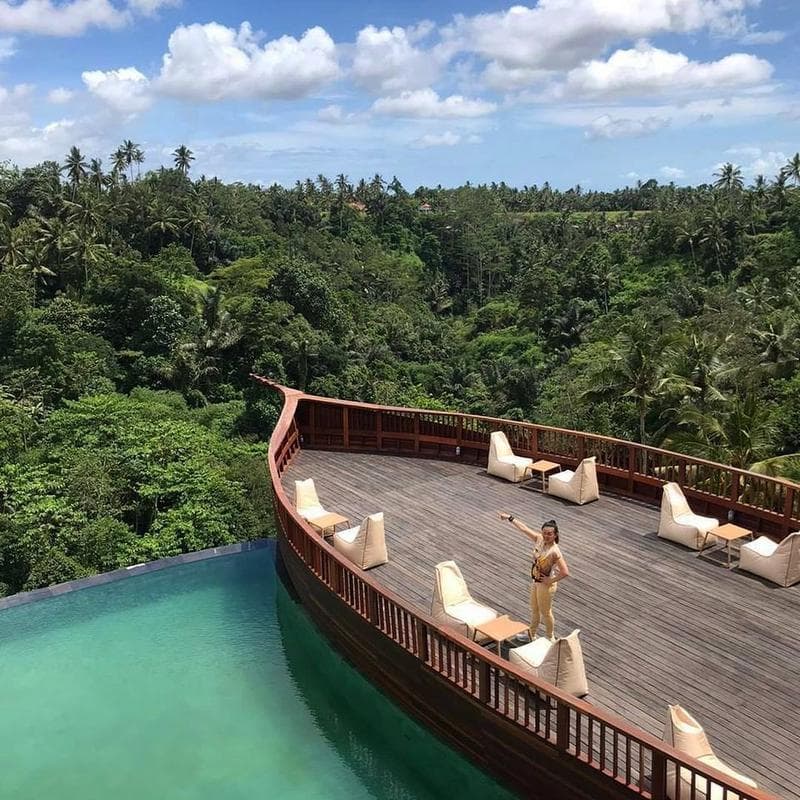
    West of town, the road through Sayan and Kedewatan runs along the rim of the Ayung River gorge. This is where the big valley resorts and villa estates sit, with pools facing a wall of jungle, and where many rafting trips begin. Central Ubud is 4 to 7 km away, 15 to 30 minutes by car depending on traffic. Ask whether your resort runs a shuttle into town; otherwise every dinner out needs a ride.

    Best for: Honeymoons and resort stays where the view matters more than walking

  4. 04

    Nyuh Kuning & Pengosekan

    Nyuh Kuning is a small village of quiet lanes, guesthouses and villas just south of the Monkey Forest, joined to the bottom of Monkey Forest Road. Pengosekan, to the east, has ARMA, cafés and spas, with The Yoga Barn a short walk north. Both are 15 to 25 minutes on foot from the market. Jalan Raya Pengosekan has been one-way northbound since September 2026 and backs up at rush hour.

    Best for: Couples and yoga students who want calm nights within walking distance

  5. 05

    Tegallalang & Keliki

    Tegallalang starts about 10 km north of the palace, along a road lined with craft shops that leads to the famous terraces. Keliki, on the ridge to the west, is a farming village known since the 1990s for miniature painting. Both have villas and small resorts with long rice-field and valley views, but you are 25 to 40 minutes from central Ubud in traffic and need a driver or scooter for everything.

    Best for: Villa stays with rice-field views for people happy to be driven around

  6. 06

    Mas, Peliatan & Lodtunduh

    South and east of the center, these villages trade cafés for workshops and paddies. Mas is Bali’s woodcarving village, Peliatan has its own small palace, and Lodtunduh, south-west of Mas, is mostly villas among rice fields. Rooms cost less than in the center and the nights are quieter. The catch is distance: you are 4 to 8 km from the palace, a scooter or driver is essential, and Peliatan’s main streets became one-way in September 2026.

    Best for: Budget-minded travelers and families who want space and a pool

Top Sights · 29 picks

Things to do in Ubud.

Ranked by how worth your time they are, with the practical detail you need before you go.

How we rank: how much each place adds to a first trip, weighed against cost, crowds and travel time from Ubud. Prices and hours checked 14 October 2026. Editorial policy

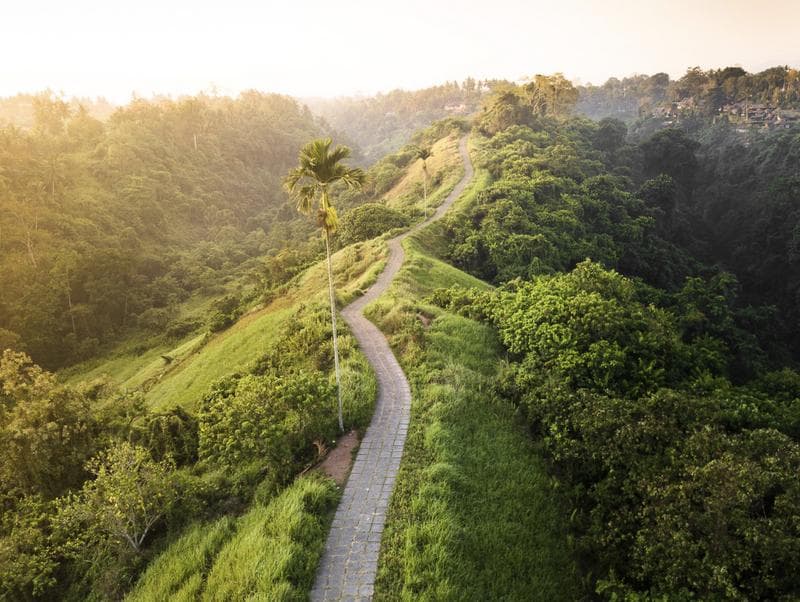
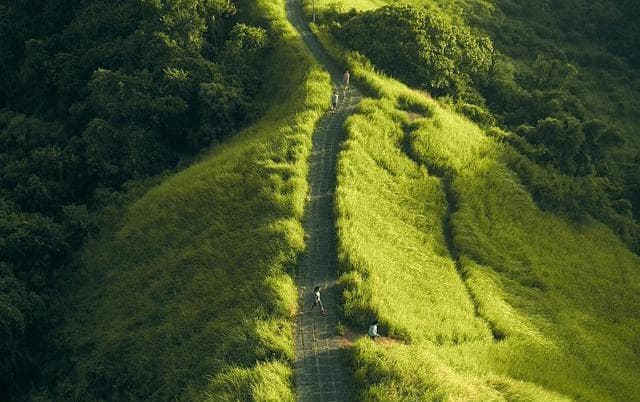
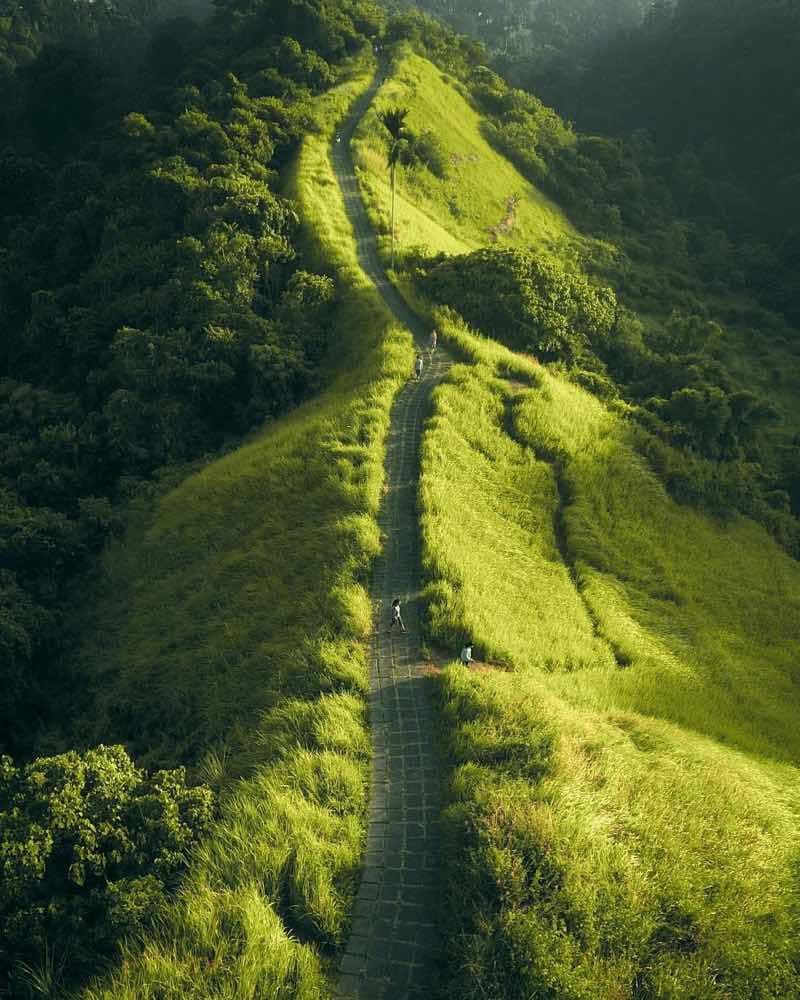
  1. Paved path running along the green Campuhan ridge between jungle valleys at sunrise01

    Nature

    Campuhan Ridge Walk

    Campuhan, 1.5 km west of Ubud Palace

    A paved path along a grassy ridge between two river valleys, starting beside Pura Gunung Lebah at the Campuhan bridge and running about 2 km north to Bangkiang Sidem village. It is free, takes 1.5 to 2 hours return with stops, and puts palms, tall grass and jungle on both sides within ten minutes of Jalan Raya Ubud. Cafés at the north end, such as Karsa Kafe, make it an easy breakfast walk.

    Tip: Go between 6:00 and 7:30 am or after 5 pm. There is no shade on the ridge, so midday is hard work.

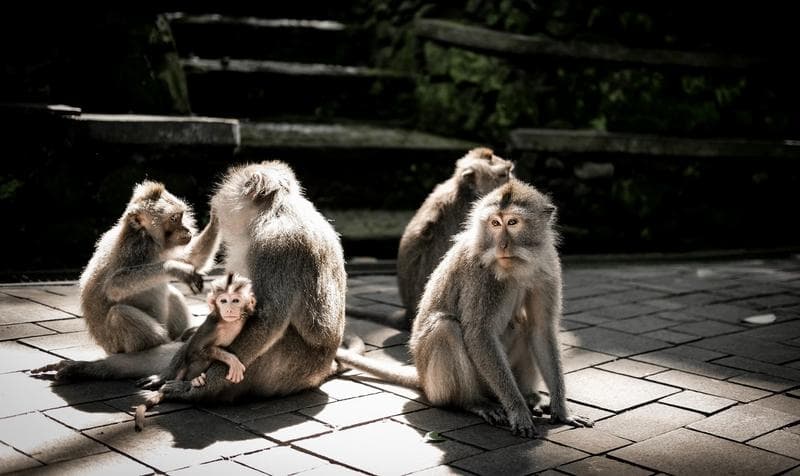
  2. Long-tailed macaques and a baby sitting on stone steps in the Ubud Monkey Forest02

    Nature

    Sacred Monkey Forest Sanctuary

    South end of Monkey Forest Road, central Ubud

    About 12.5 hectares of forest, ravines and moss-covered statues at the south end of Monkey Forest Road, home to more than 1,000 long-tailed macaques. Three temples stand inside, including Pura Dalem Agung Padangtegal; they are closed to visitors, but you see them from the paths. Come for the banyan-shaded ravine and old stone stairways as much as for the monkeys, and keep everything zipped. A first-aid clinic on site treats scratches and bites.

    Tip: IDR 130,000 adults, IDR 100,000 children (checked Oct 2026). Open 9 am–6 pm, last entry 5 pm. No food or plastic bags.

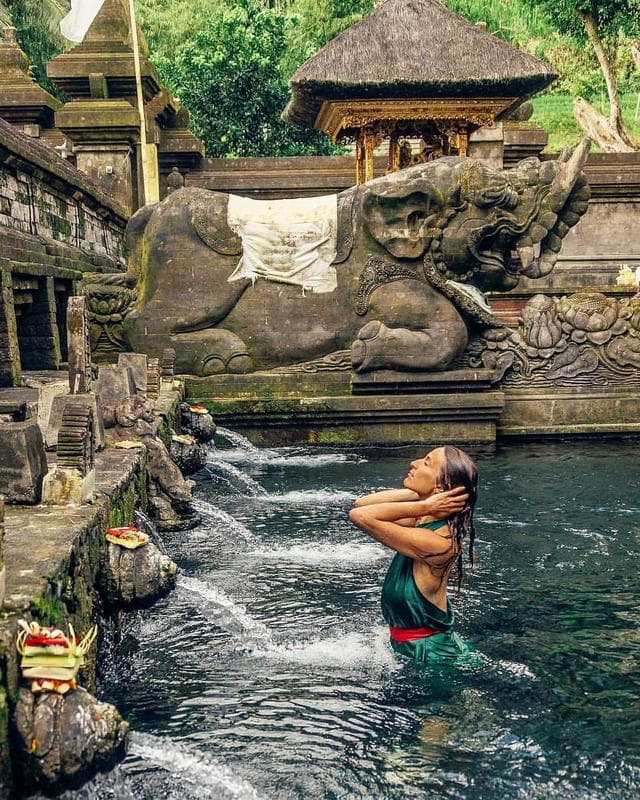
  3. Woman in a green sarong standing in the Tirta Empul pool beside a carved stone statue and spouts03

    Temple

    Tirta Empul

    Manukaya, Tampaksiring, 19 km north-east (30–40 min)

    A water temple founded around a spring in 962 AD, where Balinese families bathe under rows of carved spouts to cleanse body and mind. Visitors can join the ritual in a rented green sarong, starting on the left and skipping the two spouts reserved for ceremonies for the dead. Even without bathing, watching families arrive with offerings is worth the drive. Tampaksiring Palace, the presidential retreat Sukarno began building in 1957, looks down on the pools.

    Tip: About IDR 75,000 adults (checked Oct 2026), sarong included. Open 8 am–6 pm. Arrive before 10 am; full and new moon days are busiest.

  4. 04Culture

    Ubud Palace and the nightly dance

    Corner of Jalan Raya Ubud and Monkey Forest Road

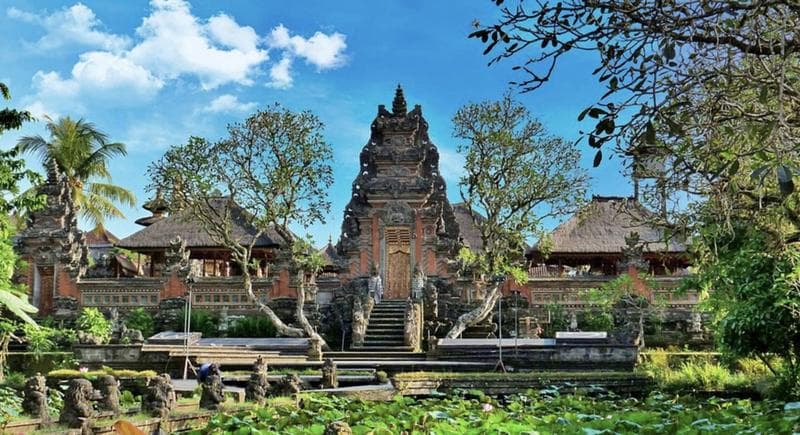
    Puri Saren Agung, home of Ubud’s royal family since the 19th century, faces the market at the main crossroads. Its outer courtyards, carved gates and pavilions are free to walk around by day; the inner compound is still a private home. At night the courtyard becomes a stage, and a dance with live gamelan starts at about 7:30 pm. Most often it is the Legong, traditionally danced by young girls who start training at about five.

    Tip: Tickets about IDR 100,000 (checked Oct 2026), sold at the gate and by sellers on Jalan Raya Ubud. Seating is unreserved, so arrive 30 minutes early.

  5. 05Temple

    Gunung Kawi Tampaksiring

    Tampaksiring, 18 km north-east (30–40 min)

    Ten shrines about 7 m tall, carved into niches in a cliff on both banks of the Pakerisan River in the 11th century and thought to honor King Anak Wungsu and his queens. You reach them by a long stairway through rice terraces, then cross the river to the second group. It is a few minutes from Tirta Empul and much quieter, and the mix of carved stone, rushing water and paddies is the best of the Pakerisan valley.

    Tip: Pair it with Tirta Empul on the same morning. Sarong required, and the climb back up is steep, so bring water.

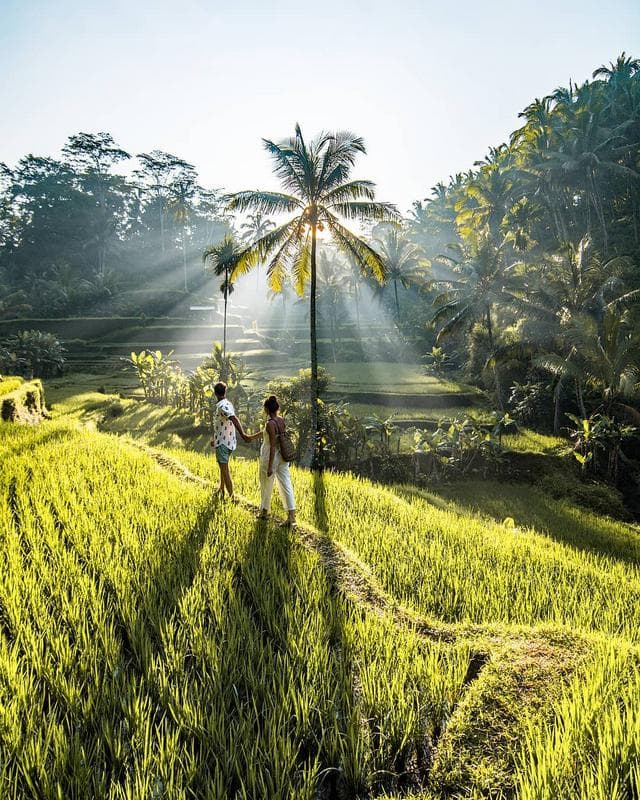
  6. Couple walking a paddy edge at Tegallalang with sun rays through coconut palms06

    Viewpoint

    Tegallalang Rice Terrace

    Ceking, Tegallalang, 10 km north (20–30 min)

    The terraces that sell Bali on postcards: steep, coconut-shaded paddies dropping into a valley about 10 km north of Ubud. Be honest about what you will get. By late morning the rim is lined with cafés, swing platforms and zip lines, and farmers ask for small donations at path crossings. Come at 7 am, walk down into the valley and up the far side, and you will see why the place became famous before the crowds.

    Tip: Bring small notes for the ticket, parking and donations. Skip midday; the paths are steep and slippery after rain.

Itinerary

How to spend your days in Ubud.

Routes that follow the light, the traffic and the opening hours, so you are in the right place at the right time.

One day in Ubud

On foot from central Ubud: about 12 km over the day with long breaks. Take a car for the 2 km hop from Campuhan to the Monkey Forest if the heat gets to you.

  1. 6:30

    Walk the Campuhan Ridge from Pura Gunung Lebah to Karsa Kafe at Bangkiang Sidem, about 2 km each way, and have breakfast at the north end.

  2. 9:00

    Walk about 2 km (30 minutes) along Jalan Raya Ubud and Monkey Forest Road to the Monkey Forest, and be at the gate at opening, before the tour groups.

  3. 11:00

    Walk back up Monkey Forest Road to the market, about 1.5 km uphill, then the palace courtyards opposite.

  4. 12:30

    Lunch at a warung, then an hour in the shaded gardens of Museum Puri Lukisan.

  5. 15:00

    Pura Taman Saraswati, two minutes from the museum, then the Juwuk Manis rice-field loop from Jalan Kajeng; allow about an hour.

  6. 17:00

    Back to your room to rest before the evening; this is when traffic peaks.

  7. 19:30

    A dance at Ubud Palace. Buy the ticket at the gate and arrive half an hour early for a good seat.

Three days in Ubud

Day 1 on foot, day 2 with a driver for the temples, day 3 for waterfalls and a class.

  1. Day 1, 6:30

    Campuhan Ridge, then cross to Penestanan and loop back through the village.

  2. Day 1, 10:00

    Monkey Forest, the market and the palace courtyards.

  3. Day 1, 19:30

    Dance at Ubud Palace or Pura Taman Saraswati.

  4. Day 2, 7:00

    Tegallalang Rice Terrace before the crowds and the heat.

  5. Day 2, 9:00

    Tirta Empul, then Gunung Kawi a few minutes away.

  6. Day 2, 14:00

    Goa Gajah on the drive back to Ubud through Bedulu.

  7. Day 2, 19:00

    Kecak in a temple courtyard if it is a Monday or Friday; otherwise a different dance.

  8. Day 3, 8:00

    Kanto Lampo before the photo queue, then Tibumana for a swim.

  9. Day 3, 15:30

    Afternoon cooking class, or ARMA and a class at The Yoga Barn.

Rainy day in Ubud

For wet-season days when waterfalls and field paths are off.

  1. 8:30

    Morning cooking class that starts with a market visit.

  2. 13:30

    Museum Puri Lukisan on Jalan Raya Ubud.

  3. 15:00

    ARMA in Pengosekan for its galleries and any workshop running that day.

  4. 17:00

    A Balinese massage at one of the spas in town.

  5. 19:30

    Check whether the evening dance is going ahead before you walk over.

Seasons

Best time to visit Ubud.

Ubud is wetter than the coast. It gets about 2,240 mm of rain a year, with January the wettest month (around 325 mm) and August the driest (around 90 mm). Daytime highs sit near 29–30°C all year and nights fall to about 21°C. April to October is the dry season and the best time for the ridge walk, waterfalls and the Batur trek. From November to March expect afternoon downpours, muddy field paths and waterfalls that turn brown and can be unsafe after heavy rain.

Early morning is the best time of day in any month: the light is soft, the paths are cooler and the big sights are quiet until mid-morning. Crowds peak in July and August and over Christmas and New Year, when central rooms cost the most and traffic is at its worst. The Ubud Writers & Readers Festival (21–25 October 2026) and the Ubud Food Festival (28–31 May in 2026) also fill central guesthouses.

Ceremony days change the town. On Galungan (next on 13 January and 11 August 2027) bamboo penjor poles line the streets and families crowd the temples, and Kuningan follows ten days later. Nyepi, the day of silence, falls on 8 March 2027: from 6 am to 6 am the airport closes and nobody goes out on the streets, so hotels keep guests inside. The evening before brings ogoh-ogoh parades and many restaurants close early.

Getting There

How to get to Ubud.

Travel times to Ubud
Bali airport (DPS)75–120 minAbout 38 km by car. Pre-book a transfer, or use Grab or Gojek from the airport pickup zone. Evening arrivals hit the worst traffic.
Seminyak, Kuta or Legian75–120 minAbout 38–40 km by car or driver. The Kura-Kura tourist shuttle runs four trips a day from Kuta; reservations required.
Canggu75–120 minAbout 30 km by car or scooter, with no direct shuttle. Traffic around Denpasar sets the time.
Sanur45–60 minAbout 25 km by car. Sanur is also the harbor for fast boats to Nusa Penida and Nusa Lembongan.
Uluwatu or Nusa Dua1.5–3 hoursAbout 45–60 km by car. The slowest common transfer on the island at rush hour; leave early.
Padang Bai (boats to Lombok and the Gilis)About 1.5 hoursAbout 37 km east by car.
Kintamani and Mount BaturAbout 1 hourAbout 34 km north by car. Batur trek pickups leave Ubud at about 2 am.

Getting around Ubud

Central Ubud is walkable: the palace, market, Saraswati temple, Monkey Forest and most cafés are within about 1.5 km of each other. Sidewalks are narrow, broken in places and often blocked by parked scooters, so walk single file and watch for open drains. Penestanan, Nyuh Kuning and the Campuhan ridge are all reachable on foot from the center.

For everything else you need wheels. A car with a driver for the day is the easiest way to link Tegallalang, Tirta Empul, Gunung Kawi and Goa Gajah in one loop. Scooters are quick, but the traffic is heavy and the valley roads are steep. Since 8 September 2026, Jalan Raya Ubud runs one-way eastbound from the Monkey Forest junction to the Arjuna statue and Jalan Raya Pengosekan one-way northbound, and tour buses are barred from the center and drop off at Dalem Puri. Allow extra time while the scheme settles. Cars park at Ubud Central Parking near the market; roadside parking is what jams the center between 1 and 3 pm and 5 and 7 pm.

Grab and Gojek drop you anywhere, but local transport groups still discourage app pickups in parts of central Ubud, especially around the palace and the Monkey Forest. Drivers may cancel or ask you to walk a few hundred meters to a side street. Your hotel’s driver or a pre-booked transfer avoids the problem, and for full-day trips a hired driver is simpler than chaining app rides.

Know Before You Go

Ubud tips that save time and trouble.

  1. 01Monkey Forest: bring no food or plastic bags, and keep nothing loose on your head. Avoid eye contact and never touch the monkeys; the clinic inside treats scratches and bites.
  2. 02Temples require a sarong and sash. Tirta Empul and Goa Gajah include one with the ticket; carry your own for smaller temples.
  3. 03Buy dance tickets at the gate or from sellers on Jalan Raya Ubud from late afternoon; the price is the same and seating is first come, first served.
  4. 04Start early. Tegallalang, Tirta Empul and the waterfalls are quietest before 9–10 am and busiest from late morning to early afternoon.
  5. 05Carry small notes. Waterfall tickets, parking and donations at Tegallalang are often cash only.
  6. 06Stay away from waterfalls and steep field paths during or right after heavy rain; water rises fast and stairs get slippery.
  7. 07Avoid driving across the center between 1 and 3 pm and between 5 and 7 pm, when parking and traffic lock up the main streets.
  8. 08Temples close to visitors during ceremonies, and Tirta Empul is busiest on full and new moon days, so keep a backup plan.
  9. 09Choose your base by how you will move: stay central without a scooter, and in Sayan or Tegallalang only if you are happy to be driven everywhere.

FAQ

Ubud questions, answered.

Is Ubud worth visiting?

Yes, if you want Bali’s culture, rice fields and temples more than beaches. Ubud has a dance show every night, the Campuhan ridge, the Monkey Forest, and Tirta Empul and Mount Batur within day-trip reach. It is not worth it if you only want beach time or hate traffic: the center is crowded and jams most afternoons.

How many days do you need in Ubud?

Three days covers central Ubud, a temple loop to Tegallalang, Tirta Empul and Gunung Kawi, and a waterfall morning. Add one or two days for a Mount Batur sunrise trek, a cooking class or a trip to Sidemen. One day is enough only for the ridge walk, the Monkey Forest, the market and an evening dance.

What is the best time to visit Ubud?

April to October, the dry season, is best for walks, waterfalls and the Batur trek; August is the driest month. November to March brings heavy afternoon rain but greener fields and fewer visitors. Avoid July, August and the Christmas holidays if you dislike crowds, and check the Nyepi date, when the whole island shuts down for 24 hours.

How do I get from Bali airport to Ubud?

By car. Ubud is about 38 km from the airport, a drive of 75 minutes to 2 hours depending on traffic. A pre-booked transfer or your hotel’s driver is easiest. Grab and Gojek can be booked from the airport’s pickup zone, and the Kura-Kura shuttle runs four trips a day from Kuta if you start in the south.

Where should I stay in Ubud?

Stay in central Ubud, around Monkey Forest Road, Hanoman or Goutama, if you want to walk everywhere. Pick Penestanan or Nyuh Kuning for quiet within walking distance, Sayan or Kedewatan for valley-view resorts, and Tegallalang or Keliki for rice-field villas where you will need a driver. The hotel guides below name specific places.

Is Ubud walkable?

The center is. The palace, market, Saraswati temple and Monkey Forest are all within about 1.5 km, and the Campuhan ridge starts at the edge of town. Sidewalks are narrow and uneven, and some streets have none. Anything farther out, including Tegallalang, Tirta Empul and the waterfalls, needs a driver or scooter.

Can you use Grab or Gojek in Ubud?

Yes for drop-offs, less reliably for pickups. Local transport groups still discourage app pickups in parts of central Ubud, so drivers may cancel or ask you to walk to a side street a few hundred meters away. For day trips, hire a driver for the day instead of chaining app rides.

Does Ubud have a beach?

No. Ubud is inland, in the hills of Gianyar. The nearest calm swimming beach is Sanur, 45 to 60 minutes away by car. If you want beach days as well as Ubud, split your stay between the two rather than commuting from Ubud every day.

How much is the Ubud Monkey Forest ticket?

IDR 130,000 for adults and IDR 100,000 for children (checked Oct 2026). The sanctuary is open 9 am to 6 pm with last entry at 5 pm. Come at opening for calmer monkeys and fewer people, bring no food or plastic bags, and secure your phone and sunglasses.

Is Tegallalang Rice Terrace worth visiting?

Only early. At 7 am the terraces are quiet and the light is soft; by late morning they are crowded, with swing platforms, cafés and donation points on the paths. If you want rice fields without the crowds, walk the Juwuk Manis or Sok Wayah paths in Ubud or drive to Jatiluwih in Tabanan.

Ubud or Canggu: which is better?

They suit different trips. Canggu is for surf, beach clubs and cafés; Ubud is for temples, dance, rice-field walks and yoga, with no beach and quieter nights. Many first-time visitors split a week, with three or four nights in Ubud and the rest on the coast. The drive between them takes about 75 minutes to 2 hours.

Nearby

Where to go after Ubud.

Areas that pair well with this one, with honest door-to-door times.

How we researched this

Sources and fact checks.

Prices, opening hours, show times and travel times in this Ubud guide were checked against official sites, government tourism pages and recent reporting on 14 October 2026. Where sources disagreed, we give the official figure and say so. Rankings are our editorial judgment, set out in our editorial policy.

We re-check the guide at least every three months and whenever we hear about a change. Spotted something out of date? Tell us.

Show all 56 sources ↓
  1. monkeyforestubud.com
  2. monkeyforestubud.com/visit
  3. monkeyforestubud.com/guidelines-faq
  4. baliholidaysecrets.com/ubud-monkey-forest
  5. baliholidaysecrets.com/campuhan-ridge-walk
  6. baliholidaysecrets.com/tirta-empul-temple
  7. indonesia.travel/uk/en/travel-ideas/pilgrimage/pura-tirta-empul
  8. setneg.go.id/baca/index/istana_tampak_siring
  9. baliholidaysecrets.com/goa-gajah
  10. baliholidaysecrets.com/ubud-palace
  11. baliholidaysecrets.com/ubud-palace-legong-dance
  12. baliholidaysecrets.com/ubud-water-palace
  13. baliholidaysecrets.com/ubud-art-market
  14. baliholidaysecrets.com/tukad-cepung-waterfall
  15. baliholidaysecrets.com/tibumana-waterfall
  16. baliholidaysecrets.com/kanto-lampo-waterfall
  17. baliholidaysecrets.com/tegenungan-waterfall
  18. baliholidaysecrets.com/mount-batur-sunrise-trek
  19. baliholidaysecrets.com/how-to-get-to-ubud
  20. baliuntold.com/getting-around/airport-to-ubud
  21. bali.live/p/ubuds-main-streets-turned-one-way-drivers-stu…
  22. ojs2.pnb.ac.id/index.php/senasketekniksipilan/article/download…
  23. suarasurabaya.net
  24. whatsnewindonesia.com/bali/feature/news/balis-government-commits-fund…
  25. thecommonwanderer.com/blog/tegalalang-rice-terraces-bali
  26. almostlanding-bali.com/walks-in-ubud
  27. ubudwritersfestival.com
  28. ubudfoodfestival.com
  29. thebalibible.com/guides/ubud-food-festival-2026-the-four-day-cul…
  30. indonesia.travel/id/en/travel-ideas/culture/tari-kecak
  31. armabali.com
  32. theyogabarn.com/contact
  33. paon-bali.com
  34. book.masonadventures.com/tours/indonesia/bali/white-water-rafting-bali
  35. balibirdpark.com
  36. kura2bus.com
  37. en.wikipedia.org/wiki/Ubud
  38. en.wikipedia.org/wiki/Tirta_Empul_Temple
  39. en.wikipedia.org/wiki/Gunung_Kawi
  40. en.wikipedia.org/wiki/Goa_Gajah
  41. en.wikipedia.org/wiki/Puri_Lukisan_Museum
  42. en.wikipedia.org/wiki/Neka_Art_Museum
  43. en.wikipedia.org/wiki/Agung_Rai_Museum_of_Art
  44. en.wikipedia.org/wiki/Balinese_art
  45. en.wikipedia.org/wiki/Penestanan
  46. en.wikipedia.org/wiki/Tegallalang
  47. en.wikipedia.org/wiki/Ayung_River
  48. en.wikipedia.org/wiki/Mount_Batur
  49. en.wikipedia.org/wiki/Kopi_luwak
  50. en.wikipedia.org/wiki/Legong
  51. en.wikipedia.org/wiki/Nyepi
  52. en.wikipedia.org/wiki/Galungan
  53. thebaliguideline.com/blog/incredible-places-to-visit-in-ubud
  54. thebaliguideline.com/blog/must-see-temples-in-bali
  55. thebaliguideline.com/blog/must-things-to-do-in-bali
  56. thebaliguideline.com/blog/best-events-and-festivals-culture-in-bali

Keep Exploring

Continue browsing Bali with the same curated lens.