
Ubud · Culture
ARMA Museum Ubud: A Visitor’s Guide to the Agung Rai Museum of Art
Classical Balinese painting, rare Spies and Raden Saleh works, and dance every night.
By The Bali Guideline Editorial TeamUpdated 12 November 2026
Overview
ARMA Museum, before you go.
ARMA, the Agung Rai Museum of Art, is a private art museum and cultural center about 2 km south of central Ubud. Entry is IDR 150,000 with a coffee or tea, and one to two hours covers the galleries. Go if you want to understand Balinese painting, from Kamasan to Walter Spies; stay for an evening dance on its open stage.
ARMA grew out of one man’s collecting. Agung Rai began in the late 1960s selling paintings and souvenirs to tourists on Kuta Beach, opened his first gallery in 1978 and spent the next two decades buying the works he wanted to keep. The ARMA Foundation was set up on 13 May 1996, and the museum was officially opened on 9 June 1996 by Wardiman Djojonegoro, then Indonesia’s Minister of Education and Culture. It sits in a garden of ponds, shrines and rice fields in Pengosekan, on the southern edge of Ubud, beside the resort of the same name that helps fund it.
The collection tells the story of Balinese painting in one walk. It starts with classical Kamasan narrative paintings, moves through the dark, crowded Batuan works of the 1930s and 1940s and the line drawings of I Gusti Nyoman Lempad, and reaches the foreign painters who settled in Bali, among them Rudolf Bonnet, Willem Hofker, Willem Dooijewaard, Arie Smit and Walter Spies. The museum says it holds the only works on Bali by the 19th-century Javanese painters Raden Saleh and Syarif Bustaman. A 2013 account described a Spies canvas of the Calonarang legend, with villagers watching an apparition in the night, and an 1837 Raden Saleh oil of a Javanese nobleman and his wife, kept in a separate room. Indonesian moderns such as Affandi and Srihadi Soedarsono round it out.
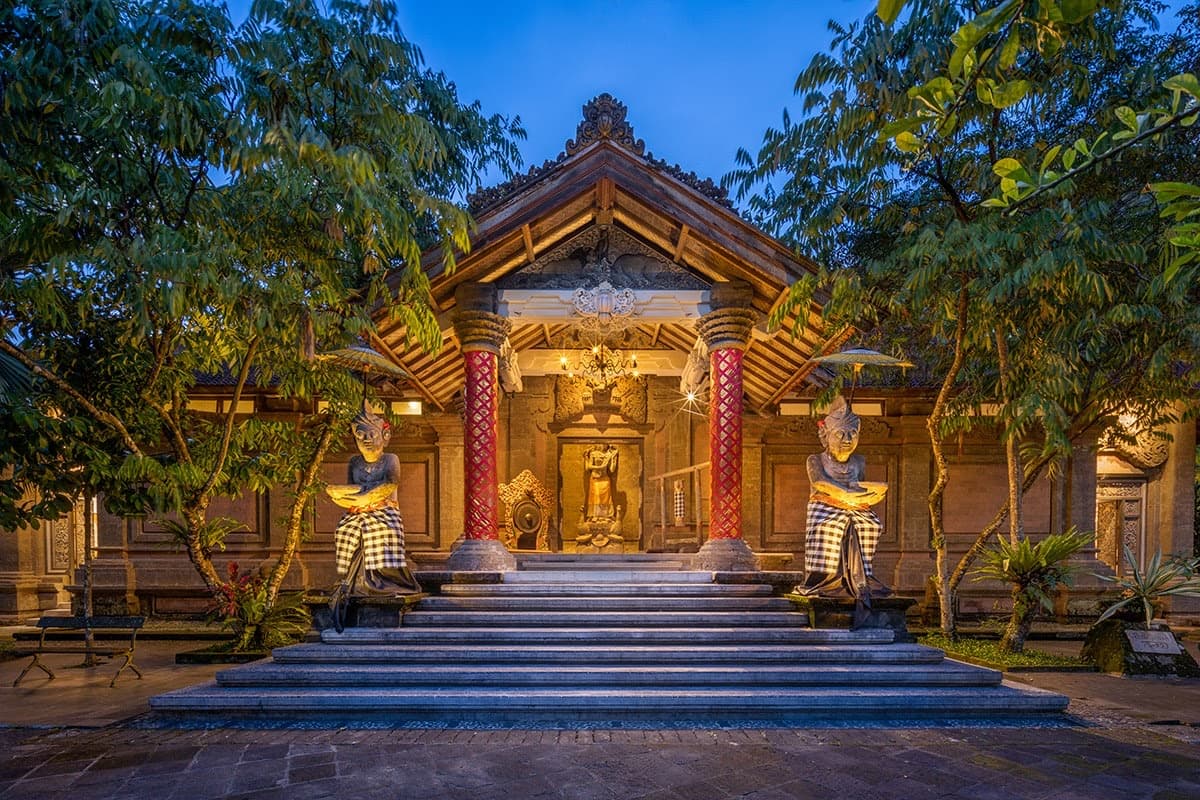
The galleries are in two large Balinese-style buildings, Bale Daja and Bale Dauh, with high thatched roofs; the 2013 account counted around 250 paintings on display. Labels are brief, so the paintings reward a guide or a slow look more than a quick lap. Ask at the desk whether photography is allowed in each room on the day.
ARMA is also a working cultural center, which is what sets it apart from Ubud’s other museums. Children practice Legong and gamelan in its pavilions, and the open stage holds a dance almost every night at 7 PM: Kecak on Mondays and Wednesdays, Barong on Tuesdays, Legong on Thursdays, the Ramayana ballet on Fridays and Barong Prakpak on Sundays, each IDR 150,000, with a Kecak and buffet dinner on Saturdays for IDR 350,000 (official site, checked Nov 2026). Workshops in painting, batik, offering making, egg painting and the bamboo rindik run on request.
A few practical notes. The ticket costs more than most Bali museums charge, though it includes a coffee or tea. Since 8 September 2026 the road past ARMA has been one-way northbound toward the Monkey Forest junction, which changes how drivers reach it. And it is a quiet, contemplative place, so families with young children may move faster than the art deserves.
- Opening hours
- Daily about 9 AM–6 PM; shows 7 PM (checked Nov 2026)
- Ticket
- IDR 150,000 adults incl. coffee or tea; under 6 free (checked Nov 2026)
- Time needed
- 1–2 hours; 3–4 with a workshop or evening show
- Best time
- Weekday mornings; any evening for the dance
- Dress code
- No dress code; cover shoulders and knees near the temple
- Location
- 2 km south of Ubud Palace, Pengosekan
Today at ARMA Museum
- Daylight
- to
- Hours of light
- 12 hr 29 min of light
Checking the weather in Ubud…
Times for this spot, in Bali time (WITA).
Jl. Raya Pengosekan, Ubud, Gianyar Regency, Bali 80571, Indonesia
Open in Google MapsWhat to See
What to see at ARMA Museum.
- 01
Classical Kamasan and Batuan painting
The traditional galleries start with Kamasan, the flat, many-figured narrative style from Klungkung that once told the epics on palace and temple ceilings. Then come the Batuan painters of the 1930s and 1940s, whose dark, crowded scenes of village life, magic and the sea are among the most distinctive art made in Bali. Seeing the two together explains how far Balinese painting moved in a single generation.
- 02
Walter Spies and the foreign painters
Walter Spies, the German artist who lived in Ubud from the late 1920s, holds a special place in the collection. A 2013 account described his Calonarang canvas of villagers facing a night apparition. Around him hang works by Rudolf Bonnet, Willem Hofker, Willem Dooijewaard and Arie Smit, the Europeans who painted Bali and shaped how local artists worked. Look for Spies’s soft, layered landscapes as well.
- 03
Raden Saleh and Syarif Bustaman
ARMA says it holds the only works on Bali by Raden Saleh, the 19th-century Javanese painter often called the father of Western-style Indonesian painting, and by Syarif Bustaman. A 2013 account described an 1837 oil of a Javanese nobleman and his wife, shown in a separate room. These pieces are the main reason art historians make the trip, so ask staff where they hang that day.
- 04
Lempad and the Balinese masters
I Gusti Nyoman Lempad, the Ubud artist and builder who was said to have lived past 100, drew spare, wiry ink scenes from the epics that look nothing like the crowded canvases around them. ARMA also shows Ida Bagus Made, Anak Agung Gede Sobrat and I Gusti Made Deblog, and Indonesian moderns such as Affandi and Srihadi Soedarsono, so you can follow the line from temple art to the 20th century.
- 05
Evening dance on the open stage
Most nights at 7 PM a dance group performs on ARMA’s open-air stage: Kecak on Mondays and Wednesdays, Barong on Tuesdays, Legong on Thursdays, the Ramayana ballet on Fridays and Barong Prakpak on Sundays, each IDR 150,000. On Saturdays a Kecak telling the story of the divine horse comes with a buffet dinner for IDR 350,000 (official site, checked Nov 2026). Confirm the program at the desk that afternoon.
- 06
Workshops and the painting lecture
ARMA runs two-hour workshops in Balinese painting, batik, offering making, egg painting and the bamboo rindik, plus a painting lecture and walking tour through Bale Daja and Bale Dauh that explains the styles and their meaning. Silver-making and yoga run two to three hours. Prices are quoted on booking, so ask the front desk a day ahead, especially in the busy months.
- 07
The gardens and the temple
Between the galleries, paths lead past lotus ponds, carved gates, shrines and a patch of working rice field, a reminder that ARMA was built as a Balinese compound, not a white-walled gallery. The museum has its own temple, and guests can sometimes join a ceremony there. Keep to the paths, and cover your shoulders and knees if you approach the shrines.
Seasons
Best time to visit ARMA Museum.
Weekday mornings are the quietest and coolest time to see the galleries, and ARMA is rarely crowded even at midday. Later in the day, combine an afternoon visit with the 7 PM dance on the open stage, which turns the museum into an evening out.
ARMA is a good wet-season plan, since the paintings are indoors and the show stage is the only part that depends on the weather. From November to March, afternoon storms are common in Ubud, so check whether an outdoor performance will go ahead.
On Nyepi, the Day of Silence, everything in Bali closes for 24 hours; the next one is on 8 March 2027. Around Galungan, next on 13 January 2027, Ubud fills with penjor poles and ceremonies, and the museum’s own temple may hold rites.
Coming between November and March? Read our Bali rainy season guide →
Getting There
How to get to ARMA Museum.
| From | Time | How |
|---|---|---|
| Central Ubud (Ubud Palace) | 5–15 min by car, 25–30 min on foot | About 2 km south via the Monkey Forest area and Pengosekan. Since September 2026 the road past ARMA has been one-way northbound, so drivers approach from the south and loop back north afterward. |
| Sacred Monkey Forest | 5–10 min by car, 15–20 min on foot | About 1.5–2 km from the forest’s southern side through Pengosekan, an easy pairing on foot. |
| Bali airport (DPS) | 1–1.5 hours | About 35 km by pre-booked car or Grab through Denpasar and Sakah. |
| Seminyak or Canggu | 1–1.5 hours | About 31 km by car. Leave by 3 PM if you want to see the galleries before a 7 PM show. |
| Sanur | 45–60 min | About 20 km by car via the bypass and Batubulan. |
| Uluwatu or Nusa Dua | 1.5–2 hours | About 50 km by car. A long day for the museum alone; pair it with central Ubud. |
Getting around ARMA Museum
ARMA has its own parking at the entrance, and drivers can wait there. Since Ubud’s third traffic phase began on 8 September 2026, the road past the museum runs one-way northbound toward the Monkey Forest junction, and turning into some side streets is banned. Your driver will know the loop; allow extra time at the evening peak.
Walking from central Ubud takes about 25 to 30 minutes, past galleries and the Monkey Forest’s southern edge. Sidewalks are narrow and broken in places, so it is easier by day than after an evening show. Grab and Gojek drop off at the entrance; for pickups after a show, book a driver or ask the desk to call one.
Inside, the grounds are mostly flat paved paths with a few steps into each gallery and some uneven stones in the gardens.
Tickets & Tours
ARMA Museum tours on Klook.
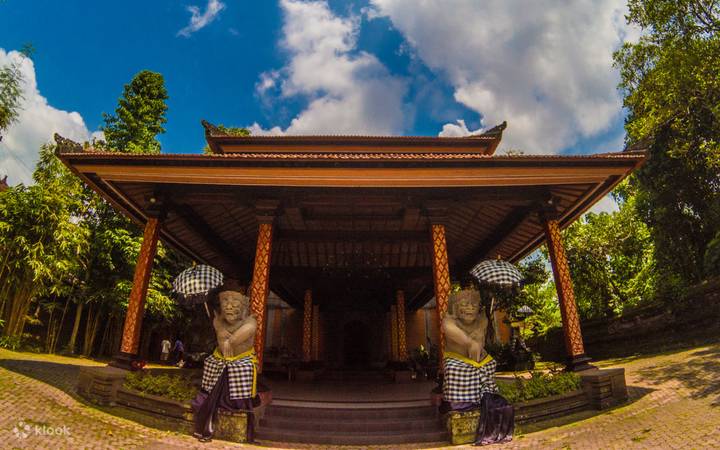
You can visit on your own with the details above. If you would rather have the driver, guide or entry sorted, these Klook tours include ARMA Museum. Prices, pick-up areas and what is included vary, so check the listing before you book.
Affiliate links: we may earn a commission if you book, at no extra cost to you. Affiliate disclosure
Know Before You Go
ARMA Museum tips that save time and trouble.
- 01Bring cash or a card for the IDR 150,000 ticket, and claim the included coffee or tea at the museum café.
- 02Children under 6 enter free (official site, checked Nov 2026).
- 03Ask at the desk whether photography is allowed in the galleries that day.
- 04Book an evening show at the desk in the afternoon; the Saturday Kecak with dinner costs IDR 350,000.
- 05Pair ARMA with the Sacred Monkey Forest, 15 to 20 minutes north on foot, for an easy half day on foot.
- 06Book workshops a day ahead and confirm the price, which is not published online.
- 07Use a driver who knows the new one-way loop, or walk from the center in daylight.
- 08Take a sarong or cover your shoulders and knees if you plan to look at the temple.
FAQ
ARMA Museum questions, answered.
How much is the ARMA Museum ticket?
IDR 150,000 for adults, and children under 6 enter free (official site, checked Nov 2026). The ticket includes a coffee or tea at the museum café. Evening dance shows are separate, at IDR 150,000 each, or IDR 350,000 for the Saturday Kecak with a buffet dinner. Workshops are priced on booking.
What are ARMA Museum’s opening hours?
Daily from about 9 AM to 6 PM (checked Nov 2026). The evening dance performances on the open stage start at 7 PM, after the galleries close. ARMA closes on Nyepi, the Day of Silence, with the rest of Bali; the next one is on 8 March 2027.
Is ARMA Museum worth visiting?
Yes, if you care about art or want to understand Balinese painting. It holds classical Kamasan and Batuan works, Lempad drawings and paintings by Walter Spies and Raden Saleh that are rare on Bali. If museums bore you, skip the galleries and come for an evening dance on its open stage instead.
ARMA or Neka Museum: which is better?
They complement each other. ARMA is stronger on the classical styles and holds the Spies and Raden Saleh works, and it doubles as a cultural center with nightly dance and workshops. Neka, north of central Ubud, has a broad survey of Balinese and foreign painters and a well-known keris collection. With time for only one, choose ARMA for classical painting and evening dance, or Neka for a broad survey and the keris.
What dance shows are at ARMA Ubud?
Most nights at 7 PM: Kecak on Mondays and Wednesdays, Barong on Tuesdays, Legong on Thursdays, the Ramayana ballet on Fridays and Barong Prakpak on Sundays, each IDR 150,000. Saturdays bring a Kecak about the divine horse with a buffet dinner for IDR 350,000 (official site, checked Nov 2026).
How long do you need at ARMA Museum?
One to two hours for the galleries and gardens at a steady pace. Add two hours for a workshop or the painting lecture tour, or plan an evening around a 7 PM show. Art lovers who stop at every label can easily spend half a day.
How do I get to ARMA from central Ubud?
Walk about 25 to 30 minutes south past the Monkey Forest, or take a car for 5 to 15 minutes. Since 8 September 2026 the road past ARMA runs one-way northbound toward the Monkey Forest junction, so drivers reach it from the south and loop back. Grab and Gojek can drop you at the entrance.
Who founded ARMA Museum?
Agung Rai, a Balinese collector who started out selling paintings to tourists on Kuta Beach in the late 1960s and opened his first gallery in 1978. The ARMA Foundation was set up on 13 May 1996, and Minister of Education and Culture Wardiman Djojonegoro opened the museum on 9 June 1996.
Can you take classes at ARMA?
Yes. ARMA runs two-hour workshops in Balinese painting, batik, offering making, egg painting and rindik, plus longer silver and yoga sessions and a painting lecture tour. Children’s dance and gamelan classes also run in its pavilions. Book at the front desk a day ahead and confirm the price.
Nearby
Where to go after ARMA Museum.
Places close by that fit into the same trip, with realistic travel times.
5–10 min by car, 15–20 min on foot (1.5–2 km)
Sacred Monkey Forest Sanctuary
The temple forest and its long-tailed macaques, an easy walk north from ARMA.
Visitor guide5–15 min by car, 25–30 min on foot
Ubud Palace
The royal palace in the center of town, with its own evening dance in the courtyard.
Visitor guide25–30 min on foot (2 km)
Ubud Art Market
Stalls of sarongs, baskets and carvings opposite the palace, for after the paintings.
Visitor guide10–15 min by car (7 km)
Goa Gajah (Elephant Cave)
An old cave temple with a carved demon-mouth entrance and bathing pools.
Visitor guide15–25 min by car (8 km)
Tegenungan Waterfall
The big waterfall closest to Ubud, about 200 steps down to the river.
Visitor guide15–20 min by car (4 km)
Campuhan Ridge Walk
An easy ridge path through grass and palms, best at sunrise or late afternoon.
Visitor guide
More in Ubud
Plan the rest of your time in Ubud.
Area guide
Ubud travel guide
Read the guide
Nature
Sacred Monkey Forest Sanctuary
Visitor guide
Temple
Tirta Empul
Visitor guide
Viewpoint
Tegallalang Rice Terrace
Visitor guide
Temple
Goa Gajah (Elephant Cave)
Visitor guide
Nature
Campuhan Ridge Walk
Visitor guide
Nature
Tegenungan Waterfall
Visitor guide
Culture
Ubud Palace (Puri Saren Agung)
Visitor guide
Temple
Gunung Kawi Tampaksiring
Visitor guide
Nature
Tukad Cepung Waterfall
Visitor guide
Nature
Tibumana Waterfall
Visitor guide
Family
Bali Bird Park
Visitor guide
Temple
Saraswati Temple (Pura Taman Saraswati), Ubud
Visitor guide
Market & Shopping
Ubud Art Market (Pasar Seni Ubud)
Visitor guide
Nature
Kanto Lampo Waterfall
Visitor guide
Family
Bali Zoo
Visitor guide
Read Next
More ARMA Museum guides.
Guide
24 Best Places to Visit in Ubud (2026): Temples, Waterfalls & Walks
Guide
13 Best Day Trips from Seminyak (2026): Ubud, Nusa Penida & Uluwatu
Guide
10 Amazing Festivals, Cultures, Traditions, Arts And Celebrations You Need To Experience In Bali (2020)

Guide
22 Romantic Things to Do in Bali (2026) for Couples
How we researched this
Sources and fact checks.
Prices, opening hours, show times and travel times in this ARMA Museum guide were checked against official sites, government tourism pages and recent reporting on 12 November 2026. Where sources disagreed, we give the official figure and say so. Rankings are our editorial judgment, set out in our editorial policy.
We re-check the guide at least every three months and whenever we hear about a change. Spotted something out of date? Tell us.
Show all 15 sources ↓Hide sources ↑
- router.project-osrm.org
- armabali.com/collection
- armabali.com/museum
- armabali.com/performance
- armabali.com/cultural-workshops
- armabali.com/about-arma
- en.wikipedia.org/wiki/Agung_Rai_Museum_of_Art
- indonesiaexpat.id/travel/history-culture/ubuds-museum-mile-for-ar…
- traveloka.com/en-en/activities/indonesia/product/912977113260…
- artsandculture.google.com/partner/arma-museum
- bali.live/p/ubuds-main-streets-turned-one-way-drivers-stu…
- bali.live/p/a-new-traffic-layout-in-ubud-has-pushed-the-j…
- thebaliguideline.com/blog/incredible-places-to-visit-in-ubud
- thebaliguideline.com/destination/ubud
- nominatim.openstreetmap.org