The best time to visit Bali is April to June and September, when the weather is mostly dry and sunny but the island is calmer than at its July–August peak. July and August are the driest months but also the busiest, while December to February is the wettest stretch, with long-term averages of about 290–350 mm of rain a month at Ngurah Rai Airport.
Bali by month at a glance
- January: The wettest month, with about 350 mm of rain on average. Busy until about 5 January, then quieter. Galungan falls on 13 January 2027 and Kuningan on 23 January.
- February: Very wet (about 290 mm), and BMKG expects the 2026–27 rainy-season peak this month. One of the quietest months for foreign arrivals. Chinese New Year falls on 6 February 2027.
- March: Still wet (about 230 mm). Hotel occupancy is usually the lowest of the year, but Nyepi on 8 March 2027, followed by Idul Fitri on 10–11 March, makes 6–15 March a domestic holiday peak.
- April: A transition month (about 105 mm), with far fewer rain days than March. Arrivals start to climb with Australian school holidays. BaliSpirit Festival runs 22–25 April 2027.
- May: Mostly dry (about 95 mm) and sunny, with moderate crowds. A domestic holiday block runs 17–20 May 2027 (Idul Adha and Waisak).
- June: Dry (about 70 mm), with cooler nights. Busier from late June as Australian winter school holidays begin. The Bali Arts Festival usually opens in mid-June.
- July: The driest month (about 30 mm) and the busiest for foreign arrivals. Kite season is under way on the beaches of Sanur.
- August: Very dry (about 35 mm), the most dependable dry month, with the coolest nights. Peak crowds and the year’s highest hotel occupancy. Galungan falls on 11 August 2027 and Kuningan on 21 August.
- September: Dry (about 60 mm) and sunny. Arrivals ease a little, but hotels stay busy, especially once Australian school holidays start in the second half of the month. Mola mola season peaks.
- October: Mostly dry (about 65 mm), with showers becoming more frequent. Arrivals fall. The Ubud Writers & Readers Festival runs 20–24 October 2027.
- November: A transition month (about 130 mm) and the warmest on average. One of the quieter months. In 2026, BMKG expects rain to reach the central highlands from late November.
- December: Very wet (about 325 mm); in 2026 the rains should reach Denpasar and most of the island during the month. Quiet early on, then the year’s peak from about 20 December to 5 January.
In this guide9 sections
01 Dry Season (April to October): Sunshine and Peak Crowds
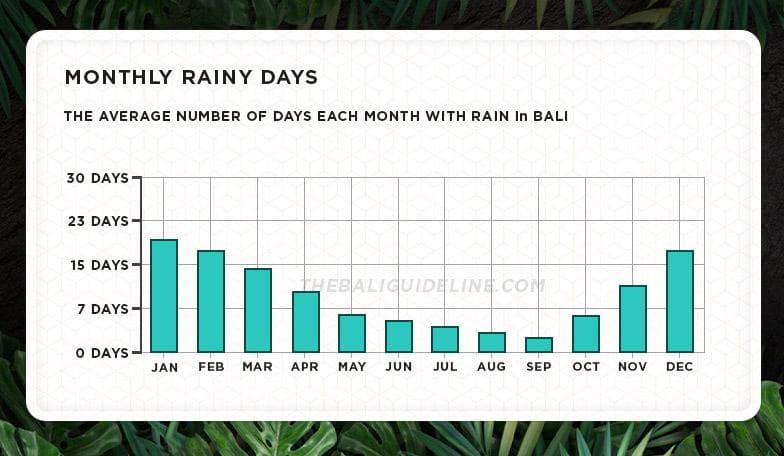
Bali’s dry season runs from about April to October. At Ngurah Rai Airport on the south coast, each of these months averages under 110 mm of rain, and July and August average only about 30–35 mm (long-term averages for 1991–2020). August is the most dependable month: the airport weather station logged about 8 mm in both August 2024 and August 2025. BMKG’s older 1961–1990 averages count about four rain days in July and August, against 27 in January.
Sunshine follows the same pattern. Weather-station records published by BPS, Indonesia’s statistics agency, average about 8.5 hours of sunshine a day in August, against about 6 hours in January. Temperatures barely change, with averages staying within about two degrees all year, and nights are coolest from June to August, when the dry-season winds blow in from Australia.
That reliable weather draws the crowds. July and August are the busiest months for foreign arrivals, at about 697,000 in July 2025 and 698,000 in July 2026, and star-hotel occupancy peaks in August, at about 70% in both 2024 and 2025.
The dry season is also the time for the Mount Batur sunrise trek, with the clearest skies from June to September, although the summit is cold before dawn. For surfers, the southeast trade winds blow offshore at Uluwatu, Padang Padang, Bingin, Canggu and Kuta, and the biggest swells arrive from June to August. For a base near the breaks, see where to stay in Uluwatu.
02 Wet Season (November to March): Rain, Lower Prices and Green Fields
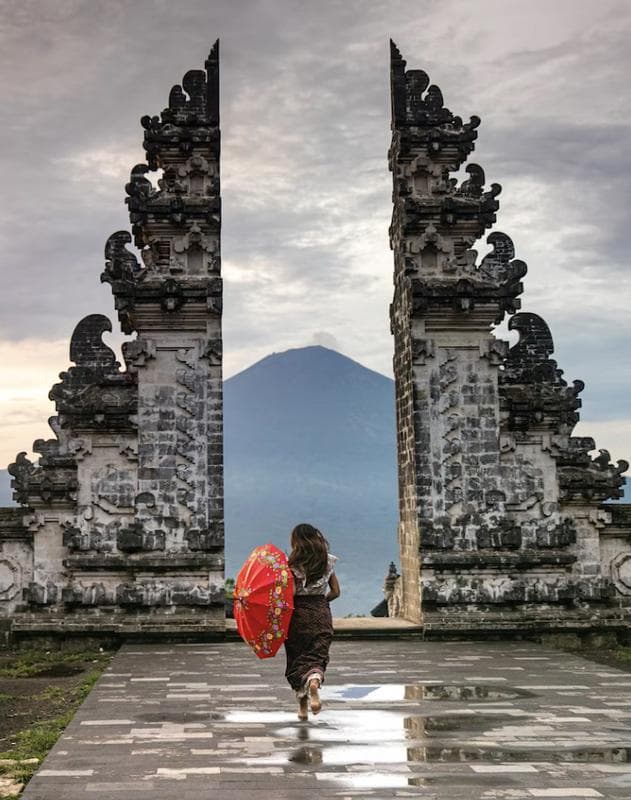
About three-quarters of Bali’s annual rain falls between November and March. On long-term averages, December, January and February each bring roughly 290–350 mm at Ngurah Rai Airport, and individual years can be far wetter: the airport recorded about 850 mm in December 2024.
For 2026–27, BMKG, Indonesia’s weather agency, expects a late start. The central highlands should turn wet in late November 2026, and Denpasar and most of the island during December, with the peak in February 2027 across most of Bali. A strong El Niño and a positive Indian Ocean Dipole are expected to make the season shorter than usual, with the onset and the peak close together, which can mean intense rain in a short window.
The wet season is not all low season. Christmas and New Year are the island’s busiest weeks, and Badung’s hotel association projected about 97% occupancy for New Year 2025–26. On the west coast, the monsoon washes trash onto beaches such as Kuta, Legian, Seminyak and Jimbaran from about November to March, at its worst from December to February.
The rewards are quieter weeks from mid-January to March (outside the Nyepi and Idul Fitri holidays), lower hotel occupancy, good surf on the east coast and full waterfalls. Boat crossings, flooding, dengue and rainy-day plans are covered in the Bali wet season guide.
03 The Shoulder Months: April to June and September
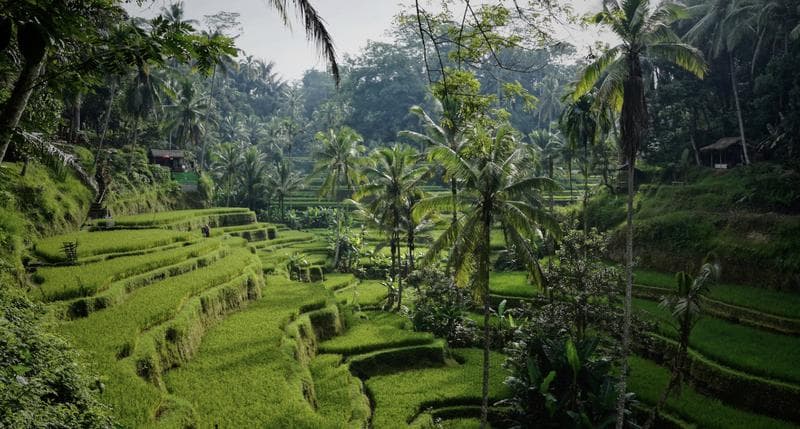
April to June and September combine dry-season weather with fewer visitors than July and August. Long-term average rainfall at Ngurah Rai Airport is about 105 mm in April, 95 mm in May, 70 mm in June and 60 mm in September, against about 230 mm in March and 350 mm in January.
The crowd figures point the same way. BPS counted about 591,000 foreign arrivals in April 2025, 602,000 in May and 638,000 in June, compared with 697,000 in July. Star-hotel occupancy was 57–58% in April and May 2025 and 65% in June, against almost 70% in August.
September is a special case. The weather is at its best, with about 60 mm of rain on average, but hotel occupancy stays close to August levels (68% in September 2025), and Australian arrivals reach their second-highest month of the year as school holidays begin in the second half of the month. Aim for the first half.
April has its own catches. Australian school holidays run through much of April 2027, and wet spells can linger in some years: April 2024 brought about 260 mm. May and June are the most balanced choice, with dry, sunny days, cooler nights from June and only short domestic holiday breaks, such as 17 to 20 May 2027.
04 Peak Season, Holidays and Prices
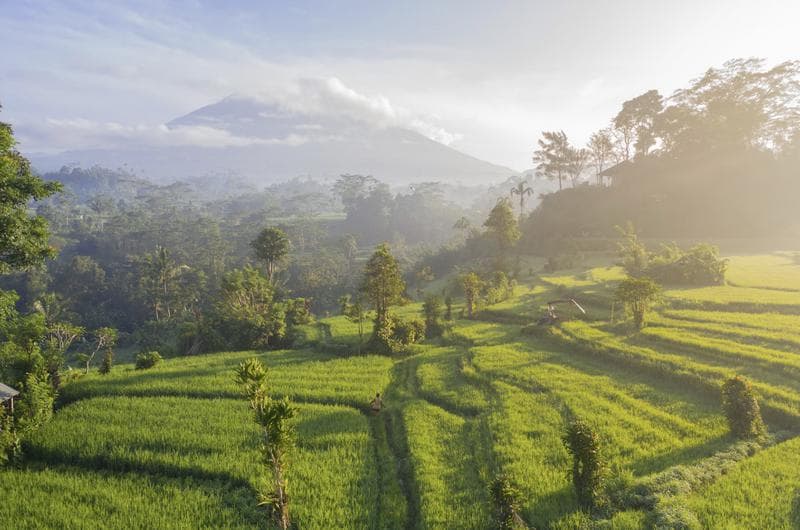
Bali has two main peaks. The first is July and August, when Northern Hemisphere summer vacations, Australian winter school holidays and Indonesian holidays overlap. In 2027, Australian winter school holidays run from about 3 to 18 July in Western Australia, 5 to 16 July in New South Wales and roughly 26 June to 11 July in Victoria. European arrivals peak in August.
The second is Christmas and New Year, from about 20 December to 5 January. For 2025–26, Badung’s hotel association projected about 78% occupancy at Christmas and around 97% at New Year, against roughly 70% in early December. Australian summer holidays begin on 18 December 2026 in Western Australia and New South Wales and run to late January.
Shorter spikes follow Indonesian and regional holidays:
- Chinese New Year: Saturday 6 February 2027, with a government-declared day off on Friday 5 February. See Chinese New Year feasts in Bali.
- Nyepi and Idul Fitri: Nyepi on 8 March 2027 and Idul Fitri on 10–11 March, with government-declared days off on 9, 12 and 15 March. Domestic arrivals passed 1 million in the month of the Lebaran (Idul Fitri) holidays in each of 2024, 2025 and 2026.
- Easter: Good Friday 26 March and Easter Sunday 28 March 2027, followed by Australian autumn school holidays in April.
- Idul Adha and Waisak: a four-day block from 17 to 20 May 2027.
No official index of Bali room rates exists, so hotel occupancy is the best guide to prices. BPS figures put star-hotel occupancy lowest in March and February and highest in August. Book peak dates early, and expect more choice in the quiet months. To compare rates for your dates, search Bali stays on Booking.com.
05 Nyepi, Galungan and Festivals in 2026–27
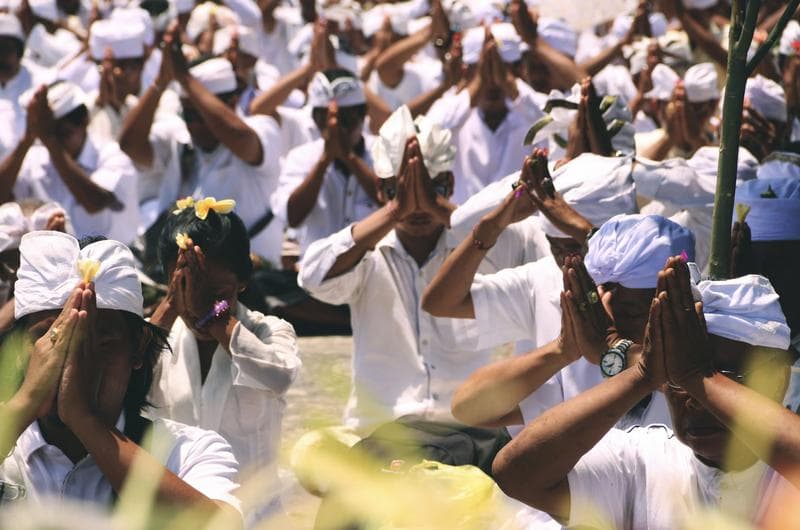
Bali’s religious calendar does not follow fixed Western dates. Galungan and Kuningan run on a 210-day cycle, so both fall twice in 2027, and Nyepi follows the Saka lunar calendar.
- Galungan: Wednesday 13 January and Wednesday 11 August 2027. Tall bamboo penjor poles go up along the roads the day before, and visits to the main temples can be restricted during ceremonies.
- Kuningan: Saturday 23 January and Saturday 21 August 2027, ten days after Galungan; ceremonies finish by midday.
- Nyepi: Monday 8 March 2027, the Day of Silence and Saka New Year. On the evening of Sunday 7 March, villages parade ogoh-ogoh effigies through the streets. From 6 AM on 8 March to 6 AM on 9 March the island falls silent, with no traffic, no lights and no going outside, so visitors stay in their hotels; see Nyepi staycation ideas. Ngurah Rai Airport and the seaports close for those 24 hours every year; the 2027 notice has not yet been issued, so confirm with your airline.
- BaliSpirit Festival: 22–25 April 2027 in Ubud (preliminary dates), with yoga, dance and music. For longer stays, see the best wellness retreats in Bali.
- Bali Arts Festival: mid-June to mid-July at the Taman Werdhi Budaya Art Centre in Denpasar, opening with a parade. The 2026 edition ran from 13 June to 11 July; 2027 dates are still to be announced.
- Kite season: roughly June to September, when the trade winds blow, with the main events on Padang Galak and Mertasari beaches in Sanur.
- Ubud Writers & Readers Festival: 20–24 October 2027.
06 Best Time for Surfing, Diving and Other Activities
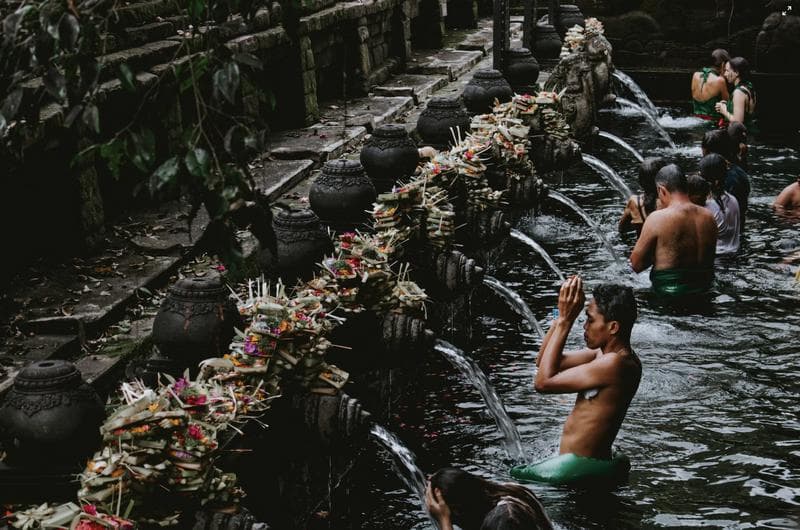
Most outdoor plans suit the dry season, but some work as well or better in the wet months.
Klook and Booking.com links are affiliate links: we may earn a commission if you book, at no extra cost to you.
- Surfing, west coast and Uluwatu: April to October (beginner surf lessons run all year), with the biggest swells from June to August at Uluwatu, Padang Padang, Bingin, Canggu and Kuta.
- Surfing, east coast: November to March, when westerly winds blow offshore at Keramas, Sanur, Serangan and the Nusa Dua reefs.
- Mola mola, Nusa Penida and Nusa Lembongan: July to October, peaking in August and September at Crystal Bay and Blue Corner. Strong, cold currents mean these dives are for experienced divers only. Book a Nusa Penida dive trip.
- Manta rays, Nusa Penida: year-round at Manta Point and Manta Bay, with the calmest crossings from April to October. Nusa Penida day tours and Lembongan snorkeling trips leave from Sanur and the south.
- Diving at Tulamben and Amed (east Bali): year-round on the sheltered northeast coast, with the best visibility from April to November.
- Mount Batur sunrise trek: April to October, clearest from June to September and quieter in April, May and September. The trail closes around Nyepi. Batur sunrise trek with hotel pickup.
- Dolphin watching, Lovina: April to October for the calmest sea, with boats leaving at about 6 AM; the dolphins are there all year. Lovina dolphin trip.
- Rice terraces: planting is staggered, so there is no single best month. Fields at Jatiluwih and Tegallalang tend to be greenest from about February to June and again around October and November.
- Waterfalls: fullest from December to March, although paths are slippery and some falls close after heavy rain; April and May balance good flow with drier trails. Ubud waterfall day tour.
- Rafting on the Ayung River: year-round, with bigger water from December to March and gentler grade II–III runs for families from April to October. Ayung River rafting.
07 Ubud, the Highlands and the Coasts: How the Weather Differs
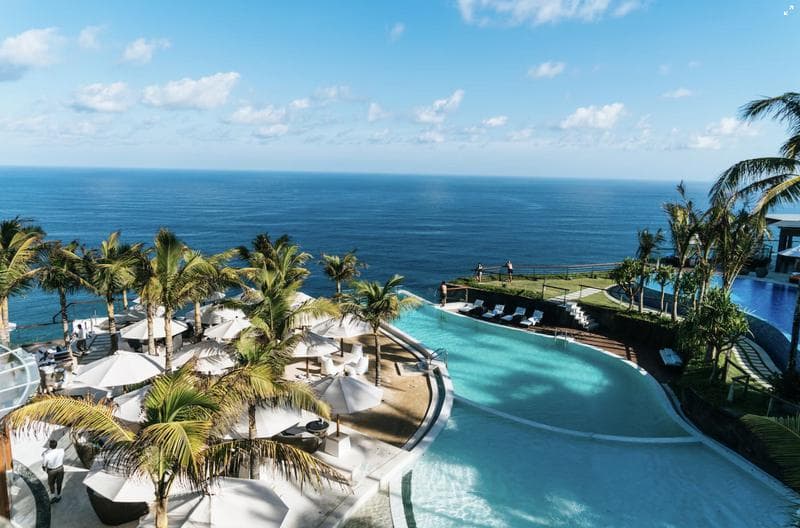
Most published Bali weather figures come from Ngurah Rai Airport on the south coast, a fair guide for Kuta, Seminyak, Jimbaran, Sanur and Nusa Dua. Away from the coast, conditions change quickly with altitude.
The central highlands around Kintamani, Bedugul and Munduk are cooler and wetter. Nights in the highlands are markedly colder than on the coast, especially from June to August. BMKG has no temperature station there, so local readings vary. The highlands also catch the heaviest rain: Bali’s highest ten-day total in March 2024, 229.5 mm, fell at Baturiti near Bedugul, and the central highland zones are the first to turn wet, from late November in 2026.
Ubud sits inland in the foothills. BMKG forecasts for 21–22 June 2024 put nighttime lows at 21°C around Ubud and the hills north of it, against 24°C in Denpasar, so a light layer is useful on dry-season evenings.
The north and east coasts are the driest parts of the island. In 2023, the longest rain-free spells were 121 days in Kubu, Karangasem, the district that includes Tulamben, and 120 days in Kubutambahan, Buleleng; in 2026 the longest was 123 days at Sumberklampok in the far northwest. The north coast is calmer in the dry season too: in late July 2025, BMKG warned of 4–6 m waves off southern Bali but no more than 2.5 m in northern waters, which suits Lovina, Amed and Tulamben. For the 2026–27 wet season, however, BMKG expects above-normal rain along the north coast and in eastern Karangasem.
08 Which Month Suits You? First-Timers, Families, Surfers and Budget Trips
Match the month to the trip rather than chasing a single best date.
- First-timers: May, June or the first half of September, for dry weather, long sunny days and fewer crowds than in July and August. Read the first-timer tips and experiences not to miss.
- Families: if school holidays set the dates, book July, August or the Christmas break well ahead. Families free to choose will find May and June calmer, with gentle dry-season rafting on the Ayung and calm morning boats at Lovina. See things to do in Bali with kids.
- Couples and honeymooners: May, June and early September balance dry weather with quieter resorts. Avoid 20 December to 5 January unless you can book early. See the best honeymoon villas and romantic things to do.
- Surfers: June to August on the west coast and around Uluwatu for the biggest swells; November to March on the east coast at Keramas and Sanur.
- Divers: August and September for mola mola off Nusa Penida (see where to stay in Nusa Penida); April to November for the clearest water at Tulamben and Amed.
- Hikers: June to September for clear sunrises on Mount Batur, or April, May and September for a quieter trail.
- Budget trips: February, March (outside 6–15 March 2027) and November, the months with the fewest foreign arrivals in 2025 and lower hotel occupancy. See affordable hotels in Ubud and the best cheap eats.
- Culture: plan around Galungan (13 January or 11 August 2027), Nyepi (8 March 2027) or the Bali Arts Festival from mid-June.
Once the dates are set, compare the best hotels in Ubud, beachfront hotels, family-friendly hotels, Kuta and Legian hotels and bamboo hotels, or check rates for your dates on Booking.com. On arrival, a private airport transfer and an eSIM save time.
Best time to visit Bali: FAQ
What is the best month to visit Bali?
May, June and September are the strongest single months. They fall in the dry season, averaging about 60–95 mm of rain at Ngurah Rai Airport, with plenty of sunshine and fewer visitors than July and August. In September, aim for the first half, before Australian school holidays begin.
What is the cheapest and quietest time to visit Bali?
February and March have the lowest star-hotel occupancy, at about 47–55% in recent years, and February 2025 had the fewest foreign arrivals of that year. November is also quiet. Avoid 6–15 March 2027, when Nyepi and Idul Fitri bring a domestic holiday rush, and the Christmas–New Year peak from about 20 December to 5 January.
When should you not go to Bali?
It depends on what you want to avoid. For rain, December to February is the wettest stretch, averaging about 290–350 mm a month. For crowds, the busiest times are 20 December to 5 January and July to August. Avoid flying on Nyepi, 8 March 2027, because the airport closes for 24 hours.
What are the hottest and coolest months in Bali?
Temperatures change very little through the year. On long-term averages, November is the warmest month, with daytime highs of around 31–32°C on the south coast, and July and August are the coolest, with highs around 29°C and nighttime lows near 24°C. The highlands are much cooler, and nights around Kintamani can be cold in the dry season.
Is December a good time to visit Bali?
It can be, if you don't mind rain. December averages about 325 mm, and in 2026 BMKG expects the wet season to reach Denpasar in mid-December. The first half of the month is fairly quiet, with Badung hotels around 70% full in early December 2025, but from about 20 December to 5 January Bali is at its busiest, so book early. For weather, crowds and what's on week by week, see our guide to Bali in December.
When is Nyepi in 2027?
Nyepi falls on Monday 8 March 2027. Ogoh-ogoh parades take place on the evening of Sunday 7 March, and the island stays silent from 6 AM on 8 March to 6 AM on 9 March. Ngurah Rai Airport closes for those 24 hours every year; the 2027 notice has not yet been issued, so confirm flight times with your airline. Idul Fitri follows on 10–11 March, so expect busy roads and hotels from about 6 to 15 March.