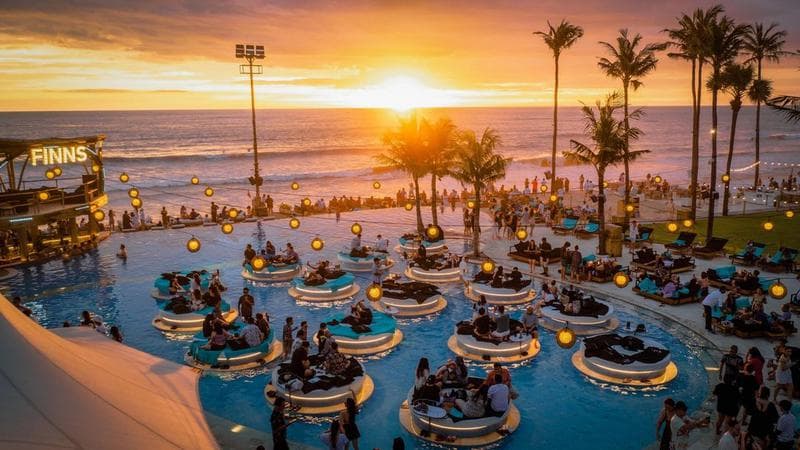
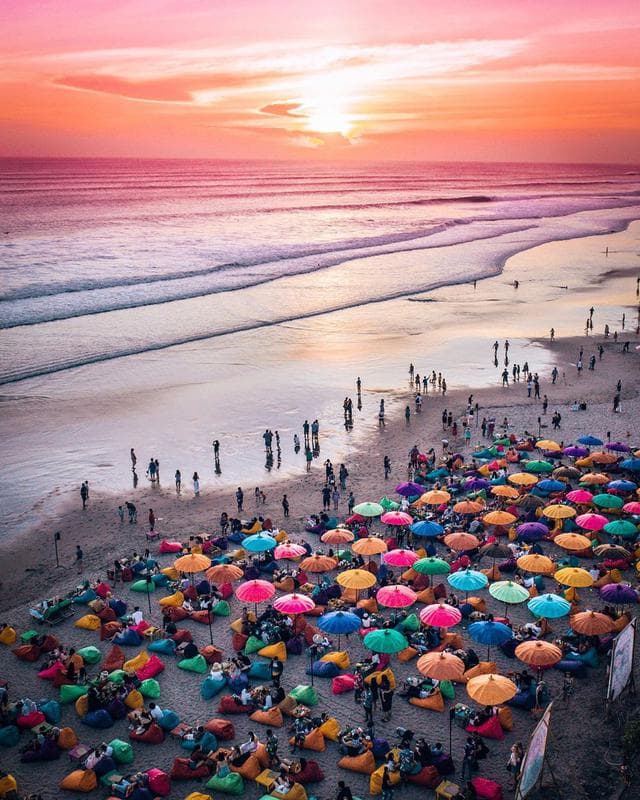
The beach is a long, open surf beach of grey-gold sand, not a calm bay. Lifeguards post red-and-yellow flags around Double Six and Petitenget, and currents pull hard on bigger days. From about November to April, strong winds and swollen rivers push plastic onto the sand, and Seminyak is one of the beaches that gets hit. Heavy rain also floods low streets: in December 2024 a hotel on Jalan Dewi Saraswati had guests taken out by rubber boat, and Seminyak, Legian and Kerobokan Kelod flooded again in December 2025.
Traffic is the other honest caveat. Jalan Petitenget is narrow, the junctions toward Kerobokan and Sunset Road back up from late afternoon, and a one-way scheme on Jalan Raya Kerobokan has been on trial since December 2025. Plan to walk or use the beach in the evening, and start day trips early.
How it compares: Legian, directly south on the same sand, is cheaper, more family-oriented and less styled. Canggu, 20 to 45 minutes north, has better surf, the café and coworking scene and better value in long-stay villas, but it is farther from the airport and harder to walk. Seminyak sits between them: grown-up, convenient and a little more expensive, best for a short stay built around food, shopping, spas and sunsets.


 01