
Ubud · Viewpoint
Tegallalang Rice Terrace: An Honest Visitor’s Guide
Ubud’s famous terraces at Ceking: what you pay, when to go and when to skip them
By The Bali Guideline Editorial TeamUpdated 14 October 2026
Overview
Tegallalang Rice Terrace, before you go.
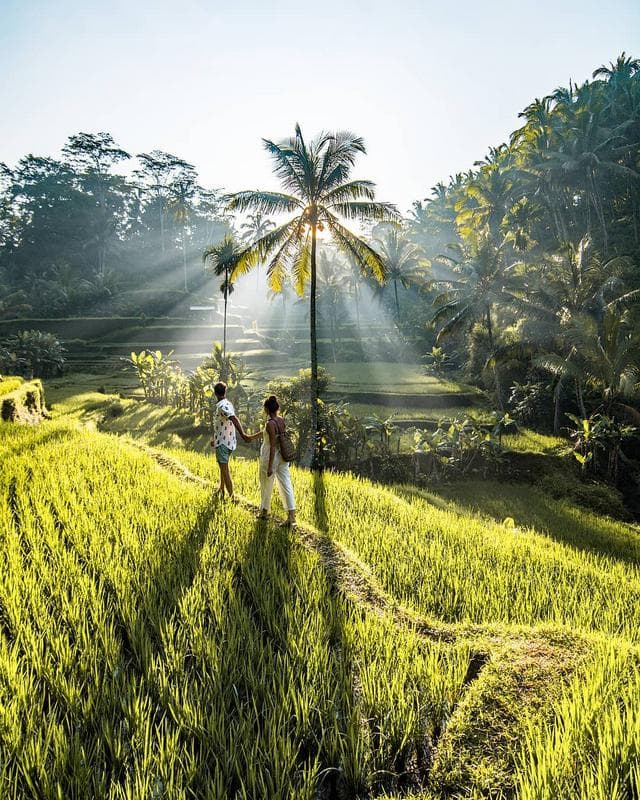
Tegallalang Rice Terrace is the steep, palm-shaded valley of paddies at Ceking, about 10 km north of central Ubud, and the most photographed rice field in Bali. It is worth it if you arrive around 7 am and walk down into the terraces. At midday it is a crowded strip of cafés, swings and donation booths, and calmer rice walks exist.
Tegallalang is a district in Gianyar, and the terraces everyone means sit at Ceking, on the main road north from Ubud toward Kintamani. The road runs along the west rim of a small river valley; the paddies you see in photos step down the far, east side under rows of coconut palms. They are working fields, not a park. Mongabay reported in 2020 that the east bank belongs to fewer than ten landowning families from Banjar Tangkub and Banjar Kebon in Kedisan village, while the cafés and shops line the opposite rim.
Bali’s rice terraces are watered by subak, cooperatives that share water from a spring or weir through canals and small temples, a system UNESCO dates to the 9th century. In 2012 UNESCO listed five sites as the Cultural Landscape of Bali Province: the Catur Angga Batukaru terraces that include Jatiluwih, the Pakerisan river valley near Tampaksiring, Lake Batur, the temple of Pura Ulun Danu Batur and the royal water temple of Pura Taman Ayun. Tegallalang is not one of them. Antara in 2013 and Mongabay in 2020 both reported that the Ceking owners are not organized as a registered subak and rely on water running down from upstream.
That ownership explains much of what you meet on the paths. Gianyar handed the site to the customary village of Tegallalang in March 2012, and its management body collects the gate and parking money. In 2013 Antara reported that this brought in more than IDR 100 million a month while one farmer received IDR 500,000 a month for upkeep. By 2020 the payments to owners had stopped, the owners set up mirrors to glare at the cafés in protest, and the bridge linking the café side to the terraces had been cut. Farmer donation boxes, private entry fees and paid paths are the result.
Today the rim is lined with cafés, swing platforms, nests and zip lines, and the Google Maps listing has more than 55,000 reviews. Come at 7 am and you share the valley with farmers and a few photographers. Come at noon and you queue for swings, pay at several points and sweat up steep, uneven steps. If you want quiet rice fields rather than this one famous view, Jatiluwih, Sidemen or the Penestanan and Juwuk Manis walks in Ubud will suit you better.
- Opening hours
- Open access; booths and cafés about 8 am–6 pm (checked Oct 2026)
- Ticket
- No single ticket; booths ask about IDR 15,000–20,000 (checked Oct 2026)
- Time needed
- 1–2 hours, including the walk down and back
- Best time
- 6–8:30 am, before the tour buses
- Dress code
- No dress code; wear shoes with grip, not flip-flops
- Location
- Ceking, Tegallalang, 10 km north of central Ubud (20–30 min)
Jl. Raya Tegallalang, Tegallalang, Gianyar, Bali 80561
Open in Google MapsWhat to See
What to see at Tegallalang Rice Terrace.
- 01
The view from the Ceking rim
The classic view costs nothing. Stand at the low walls along Jalan Raya Tegallalang, or take a table at one of the cafés on the west rim, and the terraces fill the slope opposite under rows of coconut palms. Early morning gives soft light through the palms, and late afternoon, from about 3:30 pm, is the second good window. By 10 am the roadside is lined with parked cars and the front café tables are taken.
- 02
Walking down into the terraces
Paths and steps drop from the rim to a small river at the bottom, then climb the far side between the paddies. Allow 30 to 60 minutes for a loop, longer if you stop for photos. The steps are uneven and slick after rain, and the climb back up in midday heat is the hard part. Since the old bridge was cut in 2020, crossing to the east bank has usually meant going through a swing park or a private path with its own fee.
- 03
Donation points and private paths
Expect to pay more than once. Booths at the entry points ask about IDR 15,000–20,000 a person, landowners and farmers on the east side ask IDR 10,000–20,000 at path crossings, and entering through a café or swing park can cost IDR 50,000 or a minimum spend. Carry small notes. The donations go to the people who keep the terraces planted, who have long said they see little of the gate money.
- 04
Swings, nests and zip lines
Swing parks on the rim, including Uma Ceking, and bigger parks such as Alas Harum on the same road sell rides out over the valley, nest photo spots and flying foxes. In mid-2026 swing packages were listed at about IDR 250,000–400,000, with long dresses rented on top. A 2023 legal study of Tegallalang’s swing businesses found no specific operating standards and patchy safety enforcement, so check the harness, the second line and the staff before you sit down.
- 05
Reading the crop cycle
Each plot runs from a flooded mirror to bright green shoots, golden heads, harvest and brown stubble. Owners plant on their own timing, so neighboring terraces can be at different stages and no calendar month guarantees green. Modern rice varieties allow up to three crops a year, while one Ceking couple told Mongabay their local rice takes about six months. Look at the newest photos on the Google Maps listing a day or two before you go.
- 06
Sunrise and the first hour
The best hour is the first. Between about 6 and 8:30 am the air is cooler, farmers are already in the fields, booths may not be staffed yet, and the tour buses have not arrived; they start coming at about 9 am. Cafés and swings usually open between 8 and 9 am, so an early visit trades coffee and swings for space and quiet paths.
Seasons
Best time to visit Tegallalang Rice Terrace.
Come between about 6 and 8:30 am. The light is soft, the paths are cool and the farmers are at work; tour buses start arriving around 9 am, and from late morning to mid-afternoon the rim, swings and paths are at their busiest. Late afternoon, from about 3:30 to 5:30 pm, is the second-best window, with warm light and thinning crowds.
April to October, the dry season, is best for walking: the paths are firmer and rain is less likely to cut a visit short. Ubud gets about 2,240 mm of rain a year, with January the wettest month (around 325 mm) and August the driest (around 90 mm). In the wet season, from November to March, go early, before the afternoon downpours, and skip the steep paths after heavy rain.
Season does not decide whether the terraces are green; the crop does. Guides name different green months, from January–March to September–October, because each owner plants on their own schedule. July, August and the Christmas holidays bring the biggest crowds.
Getting There
How to get to Tegallalang Rice Terrace.
| From | Time | How |
|---|---|---|
| Central Ubud | 20–30 min | About 10 km north by car or scooter on the road toward Kintamani. Grab and Gojek will drop you off; book your ride back in advance. |
| Bali airport (DPS) | 1.5–2.5 hours | By car or pre-booked transfer, through Denpasar and Ubud. Most visitors come on a day tour or from an Ubud hotel rather than straight from a flight. |
| Seminyak or Kuta | 1.5–2.5 hours | By car with a driver, usually as part of an Ubud day trip. Leave by 5:30 am to reach the terraces before the tour buses. |
| Canggu | 1.5–2.5 hours | By car or scooter across Denpasar; morning traffic sets the time. Combine it with Tirta Empul so the long drive pays off. |
| Sanur | 1–1.5 hours | By car north via Ubud. The closest of the beach bases for an early start. |
| Kintamani (Penelokan) | 35–50 min | Downhill by car on the same road. Easy to add on the way back from a Mount Batur sunrise trek. |
Getting around Tegallalang Rice Terrace
Paid parking lots line the main road: about IDR 5,000 for a scooter and IDR 10,000 for a car (checked Oct 2026). They fill by late morning, and on busy days drivers drop you at the rim and wait farther along the road. Some cafés and swing parks have their own parking for customers.
Most visitors come with a hired driver, often on a loop with Tirta Empul and Gunung Kawi. Grab and Gojek will bring you here, but pickups from the terraces can be restricted by local transport groups, so arrange your return ride before you start walking or keep your driver waiting.
Everything below the rim is on foot. The paths are narrow, the steps are steep and uneven, and there are no railings on the paddy edges. Walk single file, give way to farmers carrying loads, and keep off the planted plots and the small water channels that feed them.
Know Before You Go
Tegallalang Rice Terrace tips that save time and trouble.
- 01Arrive by 7 am. It changes the visit more than any other choice you make.
- 02Carry small notes for the booths, farmer donations and parking; most of it is cash only.
- 03Wear sandals or shoes with grip. Flip-flops and the steep mud steps are a bad mix.
- 04Bring water and a hat. There is little shade on the terraces and the climb back up is hot.
- 05If a farmer asks for a donation at a crossing, IDR 10,000–20,000 a person is the usual amount.
- 06Agree the price of a swing package, what it includes and the number of photos before you pay.
- 07Check recent Google Maps photos so you know whether the paddies are green, flooded or harvested.
- 08Do not fly a drone over people working in the fields without asking first.
- 09Pair it with Tirta Empul and Gunung Kawi, 15 to 30 minutes away, for a full morning.
FAQ
Tegallalang Rice Terrace questions, answered.
Is Tegallalang Rice Terrace worth visiting?
Yes, if you go early. At 7 am the terraces are quiet, the light is soft and you can walk down among the paddies. By late morning the rim is crowded with cafés, swings and donation points. If you want rice fields without the crowds, go to Jatiluwih in Tabanan, Sidemen in Karangasem or the Juwuk Manis walk in central Ubud.
How much is the Tegallalang Rice Terrace entrance fee?
There is no single official ticket. Booths at the entry points ask about IDR 15,000–20,000 a person (checked Oct 2026), farmers ask IDR 10,000–20,000 at some crossings, and entering through a café or swing park can cost IDR 50,000 or a minimum spend. Older guides quote IDR 10,000–15,000, so expect to pay a little more than you read.
What time does Tegallalang Rice Terrace open?
The terraces have no gate, so you can walk the rim at any hour. Google Maps lists 8 am to 6 pm, which is roughly when booths are staffed and cafés are open (checked Oct 2026). Early visitors often find nobody collecting yet. Swings and cafés usually open between 8 and 9 am.
What is the best time to visit Tegallalang?
Between about 6 and 8:30 am, before tour buses arrive around 9 am. The light is softer, the air is cooler and farmers are working the fields. Late afternoon, from about 3:30 to 5:30 pm, is the next best time. For walking, the dry season from April to October is easier than the wet season.
When are the Tegallalang rice terraces green?
Whenever the crop is growing, which is not tied to one season. Each owner plants on their own timing, so some plots can be green while others are flooded or freshly harvested. Guides name different green months for that reason. The surest check is the newest photos on the Google Maps listing a day or two before you go.
How much is the Tegallalang swing, and is it safe?
Swing packages on the rim were listed at about IDR 250,000–400,000 in mid-2026, with dress rental extra. Safety varies by operator. A 2023 legal study of Tegallalang’s swing businesses found no specific operating standards and patchy enforcement, so check for a full harness and a second safety line, and skip it in rain.
How long do you need at Tegallalang Rice Terrace?
Allow one to two hours. Twenty minutes is enough for the view from the rim and a coffee. Walking down to the river and up the far side takes 30 to 60 minutes, and a swing session with its queue and photos can add another hour on busy days.
Is Tegallalang a UNESCO World Heritage Site?
No. The UNESCO Cultural Landscape of Bali Province, listed in 2012, covers five sites: the Catur Angga Batukaru terraces including Jatiluwih, the Pakerisan river valley near Tampaksiring, Lake Batur, Pura Ulun Danu Batur and Pura Taman Ayun. Tegallalang is outside all of them, though it shows the same terraced farming.
How do I get from Ubud to Tegallalang?
By car or scooter, about 10 km north on the road toward Kintamani, a drive of 20 to 30 minutes. A hired driver is simplest, since app pickups from the terraces can be restricted. Grab or Gojek can drop you off, but book your return before you start walking.
Tegallalang or Jatiluwih: which is better?
Jatiluwih, if you have the time. Its terraces are part of the UNESCO listing, far wider and much calmer. It is about 1.5 hours from Tegallalang. Tegallalang wins on convenience: it is 20 to 30 minutes from Ubud and fits into a morning with Tirta Empul.
Nearby
Where to go after Tegallalang Rice Terrace.
Places close by that fit into the same trip, with honest travel times.
15–20 min by car
Tirta Empul
The spring-fed water temple where Balinese come to bathe in the purification pools.
Visitor guideAbout 10 min by car
Pura Gunung Kawi Sebatu
A spring temple used for melukat purification, smaller and far quieter than Tirta Empul.
25–30 min by car
Goa Gajah
The 11th-century Elephant Cave and its bathing pools, on the way back south.
Visitor guide25–35 min by car
Campuhan Ridge Walk
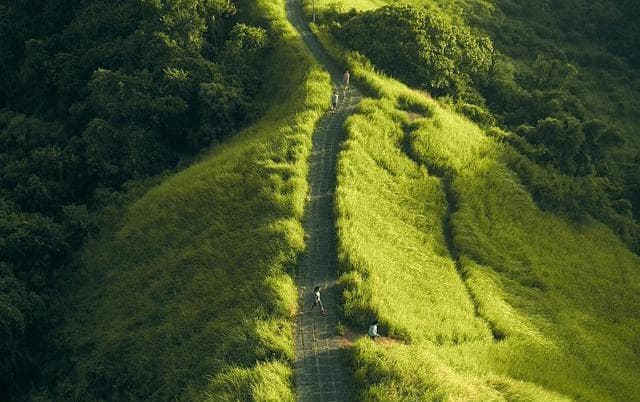
A free ridge path between two river valleys in Ubud, best at dawn.
Visitor guide35–50 min by car
Kintamani and Mount Batur
Caldera views over Lake Batur and the island’s best-known sunrise trek.
Read Next
More Tegallalang Rice Terrace guides.
How we researched this
Sources and fact checks.
Prices, opening hours, show times and travel times in this Tegallalang Rice Terrace guide were checked against official sites, government tourism pages and recent reporting on 14 October 2026. Where sources disagreed, we give the official figure and say so. Rankings are our editorial judgment, set out in our editorial policy.
We re-check the guide at least every three months and whenever we hear about a change. Spotted something out of date? Tell us.
Show all 20 sources ↓Hide sources ↑
- whc.unesco.org/en/list/1194
- disparda.baliprov.go.id/ceking-terasering
- bali.antaranews.com/berita/42433/ceking-suguhkan-panorama-alam-lest…
- mongabay.co.id/2020/08/09/gejolak-di-balik-indahnya-panorama-t…
- ejournal2.undiksha.ac.id/index.php/JIH/article/view/2605
- google.com/maps/place/Tegallalang+Rice+Terrace/@-8.4317112…
- google.com/maps/dir/Puri+Saren+Agung+Ubud/Tegallalang+Rice…
- alasharum.com/en
- en.wikipedia.org/wiki/Tegallalang
- en.wikipedia.org/wiki/Subak_(irrigation)
- en.wikipedia.org/wiki/Jatiluwih
- en.wikipedia.org/wiki/Gunung_Kawi
- en.wikipedia.org/wiki/Melukat
- baliholidaysecrets.com/tegalalang-rice-terrace
- thecommonwanderer.com/blog/tegalalang-rice-terraces-bali
- walkmyworld.com/posts/tegalalang-rice-terraces
- finnsbeachclub.com/guides/tegallalang-rice-terrace
- thebaliguideline.com/blog/incredible-places-to-visit-in-ubud
- thebaliguideline.com/blog/11-most-instagrammable-spot-bali
- thebaliguideline.com/blog/best-day-trips-from-seminyak