

Candidasa · Temple
Goa Lawah Temple: A Visitor’s Guide to Bali’s Bat Cave Temple
A directional sea temple at the mouth of a cave full of bats, on Bali’s east coast road.
By The Bali Guideline Editorial TeamUpdated 9 November 2026
Overview
Goa Lawah Temple, before you go.
Pura Goa Lawah is a Hindu sea temple on Bali’s southeast coast, 16 km west of Candidasa, whose shrines stand at the mouth of a cave packed with bats. It is one of the island’s directional temples and a key stop in Balinese funeral rites. Give it 30 to 45 minutes on the way east; it rarely justifies a trip on its own.
Lawah means bat in Balinese, and the name is literal: the temple is built against a low cliff on the coast road in Klungkung, around a cave whose ceiling is carpeted with thousands of roosting bats. Tradition credits the founding to Mpu Kuturan, the priest who shaped Bali’s temple system; palm-leaf texts give 929 Saka, or 1007 CE, though historians treat that date as tradition rather than record. Dang Hyang Nirartha, the later Javanese priest, is said to have stopped here on his way from Gelgel and built the padmasana shrine.
The temple matters to Balinese far beyond its size. In the Padma Bhuwana, the scheme of nine temples that guard Bali’s directions, Goa Lawah holds the southeast and is the seat of the god Maheswara, a form of Shiva. Lists of the sad kahyangan jagat, the six sanctuaries of the world, differ between palm-leaf texts and regions, but many include Goa Lawah alongside Besakih, Lempuyang Luhur, Uluwatu, Batukaru and Pusering Jagat at Pejeng.
Balinese believe the cave is home to Naga Basuki, the serpent that keeps the world in balance, and that it runs underground to Goa Raja at Besakih on Mount Agung, a claim nobody has proven. That sea-and-mountain pairing explains what you see most days. After the post-cremation rite called nyekah, families perform nyegara gunung, giving thanks at the sea and the mountain, and Goa Lawah is the sea half. Expect groups in temple dress with offerings in the courtyard and on the black-sand beach across the road.
The visit itself is short and flat. You pay at the counter, borrow a sarong and sash, and walk through a split gate into a courtyard shaded by old trees. The shrines stand right at the cave mouth, and visitors watch from the courtyard; the cave is closed, and the innermost shrines are for worshipers. The smell of guano is noticeable but rarely strong. Sarong and souvenir sellers wait in the parking lot, and a 2026 visitor report warns of monkeys.
The temple has a place in colonial history too. In 1849 the Dutch landed at Padang Bai and occupied Goa Lawah and Kusamba, until a night attack led by Dewa Agung Istri Kanya of Klungkung killed their commander, General Michiels. Come for the bats and the living ritual, not grand architecture, and Goa Lawah is a worthwhile half-hour on any trip east.
- Opening hours
- Daily about 8 AM–6 PM for visitors (checked Nov 2026)
- Ticket
- About IDR 25,000–30,000 cash; sarong may be extra (checked Nov 2026)
- Time needed
- 30–45 minutes; longer at dusk or during a ceremony
- Best time
- Morning for worshipers, about 5–6 PM for the bats
- Dress code
- Sarong and sash for everyone, available at the ticket counter
- Location
- Pesinggahan, Klungkung, 16 km west of Candidasa (25–35 min)
Today at Goa Lawah Temple
- Daylight
- to
- Hours of light
- 12 hr 29 min of light
Checking the weather in Candidasa…
Times for this spot, in Bali time (WITA).
Jl. Raya Goa Lawah, Pesinggahan, Dawan, Klungkung Regency, Bali 80761, Indonesia
Open in Google MapsWhat to See
What to see at Goa Lawah Temple.
- 01
The cave mouth and its bats
This is the reason everyone stops. From the courtyard you look straight into a dark opening in the cliff where thousands of fruit and nectar bats hang in dense clusters from the rock, shifting, squeaking and dropping off to circle inside. You cannot go in, and you do not need to: the roost starts just above the shrines, close enough to watch individual bats without a zoom lens.
- 02
Shrines built into the cliff
Small shrines and carved gates stand right against the cave, so worshipers pray directly beneath the roost. Look for the three meru towers in the inner sanctum, one dedicated to Shiva, and for the coiled dragon carvings of Naga Basuki along the steps of a pavilion. Early 20th-century photos show the shrines studded with Chinese porcelain plates; a few survive. Stay outside the inner area unless you are praying.
- 03
Nyegara gunung rites
Most days you will see families who have come to close the long cycle of rites for their dead, bringing offerings to the cave and to the sea before they continue to Besakih. The ritual is private and serious. Watch from the edge of the courtyard, keep below anyone who is praying, and ask before you photograph people. This is the part of Goa Lawah that tour stops often miss.
- 04
The bats at dusk
Around sunset, roughly 6 PM to 6:30 PM depending on the season, the colony starts to leave the cave in waves to feed. The visitor counter usually closes at 6 PM, so arrive by about 5:15 PM, ask at the counter whether you can stay, and watch from the courtyard or the parking lot. On cloudy evenings the flight begins a little earlier.
- 05
The black-sand beach across the road
Opposite the temple, a strip of black sand faces the Badung Strait with Nusa Penida on the horizon. Families carry offerings to the water here during ceremonies, and on calm mornings fishing boats line the shore. It is a place for a short look, not for swimming or sunbathing. Cross the coast road carefully: trucks and buses to Padang Bai port run fast.
- 06
Salt makers of Kusamba and Pesinggahan
Along this shore, a few farmers still make salt the old way, spreading seawater over leveled sand to dry, then concentrating the brine and crystallizing it in troughs cut from tree trunks. Mongabay counted about 14 farmers in 2026, down from some 180 in the 1970s, and the fields are shrinking with erosion. Ask your driver to stop on a dry morning, when the work is visible.
Seasons
Best time to visit Goa Lawah Temple.
Mornings bring the most worshipers, as families arrive with offerings, and the heat is easier. For the bats, aim for the late afternoon and stay into dusk; the midday light inside the cave is flat and the courtyard is at its hottest. Tour groups heading east to Lempuyang and Amed pass mostly in mid-morning.
Ceremony days bring big crowds and more to see. The temple’s anniversary (piodalan) falls on Anggara Kasih Medangsia in the 210-day Balinese calendar, the same day as Uluwatu’s; the next is Tuesday 2 February 2027. Galungan, on 13 January 2027, and Kuningan, on 23 January, are also busy. In the days before Nyepi, on 8 March 2027, villages bring their temple treasures to the coast for Melasti purification, and on Nyepi itself the whole island stays home.
Season matters less here than at beaches or waterfalls, since the visit is short and partly under cover. From November to March, afternoon storms are common, so a dry-season visit from April to October makes the beach and the salt fields more pleasant.
Coming between November and March? Read our Bali rainy season guide →
Getting There
How to get to Goa Lawah Temple.
| From | Time | How |
|---|---|---|
| Candidasa | 25–35 min | About 16 km west by car or scooter on the coast road, past Padang Bai. Easy to pair with Tenganan or a run to the airport. |
| Padang Bai | 10–15 min | About 8 km west on the coast road. A short stop before or after the ferry or fast boat. |
| Sidemen | 30–40 min | About 19 km south by car through Klungkung (Semarapura) to the coast road. |
| Ubud | 50–75 min | About 30 km by car through Gianyar and Klungkung, often combined with Kertha Gosa and Besakih on a day loop with a driver. |
| Sanur | 40–60 min | About 33 km east on the coast bypass, the quickest run from any of the southern bases. |
| Bali airport (DPS) | 1.25–2 hours | About 48 km by car through Denpasar and along the coast bypass. Pre-book a driver; it works as a stop on a transfer to Candidasa or Amed. |
| Seminyak or Canggu | 1.5–2.5 hours | About 45–49 km by car. Leave early to beat South Bali traffic, and plan a full day in the east rather than a round trip just for the temple. |
Getting around Goa Lawah Temple
The temple sits right on the main coast road, with a parking lot beside it. A 2026 guide lists parking at IDR 5,000 for a car and IDR 2,000 for a scooter, paid in cash. From the lot it is a few steps to the ticket counter, and the courtyards are almost level, with only a few low steps, so it is one of the easiest Balinese temples for anyone who avoids stairs.
Most visitors come with a driver booked for the day, as a stop between the south and Candidasa, Amed or Sidemen. There is no useful public transportation. Grab or Gojek may drop you off, but a ride back from this stretch of coast can be slow to find, so keep your driver or book the return first. On a scooter, the coast road is wide but heavy with trucks heading to Padang Bai.
Guides are not needed. The counter lends the sarong and sash, and you return them on the way out. Sellers in the parking lot may press you to buy a sarong at a higher price; a smile and a polite no are enough.
Tickets & Tours
Goa Lawah Temple tours on Klook.
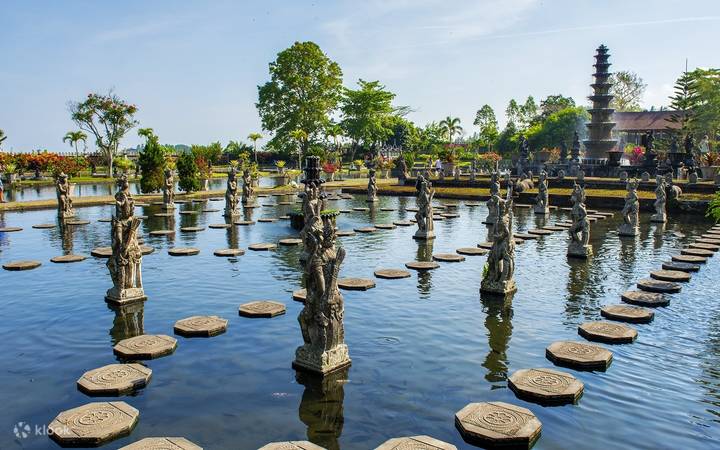
You can visit on your own with the details above. If you would rather have the driver, guide or entry sorted, these Klook tours include Goa Lawah Temple. Prices, pick-up areas and what is included vary, so check the listing before you book.
Affiliate links: we may earn a commission if you book, at no extra cost to you. Affiliate disclosure
Know Before You Go
Goa Lawah Temple tips that save time and trouble.
- 01Carry small cash for the ticket, parking and an offering donation; the site has no ATM.
- 02Wear clothes that cover your shoulders and knees under the sarong, and keep the sash tied around your waist.
- 03Do not try to enter the cave or step past the barrier; it is sacred and closed to visitors.
- 04Keep your voice low and stay behind anyone praying, especially families performing funeral rites.
- 05By Balinese custom, women who are menstruating do not enter the temple.
- 06Keep food, sunglasses and loose items in your bag; recent visitors report monkeys around the site.
- 07For the bat flight, arrive by about 5:15 PM and confirm at the counter that you can stay past 6 PM.
- 08Pair it with Kertha Gosa in Klungkung or Tenganan near Candidasa; on its own, the temple is a short stop.
FAQ
Goa Lawah Temple questions, answered.
How much is the Goa Lawah entrance fee?
About IDR 25,000 to 30,000 for a foreign adult and about IDR 15,000 to 25,000 for a child (checked Nov 2026). Klungkung does not publish a current list, and guides disagree on whether the sarong is included, so carry small cash. Parking is about IDR 5,000 for a car and IDR 2,000 for a scooter.
What are the opening hours of Goa Lawah Temple?
Daily from about 8 AM to 6 PM for visitors (checked Nov 2026). Worshipers come at any hour, which is why Google Maps lists it as open 24 hours, but the ticket counter keeps day hours. Staff sometimes let visitors stay a little past 6 PM to watch the bats leave, so ask on arrival.
Why is Goa Lawah important to Balinese Hindus?
It is one of the nine directional temples that guard Bali, holding the southeast as the seat of Maheswara, a form of Shiva, and many lists count it among the six holiest sanctuaries. It is also where families come for nyegara gunung, the sea half of the rite that closes the ceremonies for their dead, before going to Besakih.
Can you go inside the bat cave?
No. The cave is sacred and closed to visitors, and the innermost shrines in front of it are for worshipers. You watch from the courtyard, a few meters from the cave mouth, which is close enough to see the bats clearly. Tradition says the cave runs underground to Besakih and is guarded by the serpent Naga Basuki.
When do the bats fly out at Goa Lawah?
Around dusk, roughly 6 PM to 6:30 PM depending on the time of year, when the colony leaves in waves to feed. That is close to the visitor closing time, so arrive by about 5:15 PM. During the day the bats stay in the cave, hanging from the ceiling and moving around inside.
What should I wear to Goa Lawah?
Clothes that cover your shoulders and knees, plus the sarong and sash available at the ticket counter; men need them too. Comfortable sandals are fine, since the courtyards are flat. You do not need to buy a sarong from the sellers in the parking lot.
Is Goa Lawah worth visiting?
Yes, as a stop of 30 to 45 minutes on the way east, especially if you are curious about Balinese religion or want to see the bats. It is small, and the cave is closed, so it rarely justifies a special trip from South Bali. Pair it with Kertha Gosa, Padang Bai or Tenganan.
How far is Goa Lawah from Candidasa and Ubud?
About 16 km, or 25 to 35 minutes, from Candidasa, and about 30 km, or 50 to 75 minutes, from Ubud. Padang Bai is only 8 km away, and the airport is about 48 km, or 1.25 to 2 hours by car depending on traffic.
Who built Goa Lawah Temple?
Tradition credits Mpu Kuturan, the 11th-century priest who shaped Bali’s temple system, and palm-leaf texts give 929 Saka, or 1007 CE. Dang Hyang Nirartha, the later Javanese priest, is said to have visited and built the padmasana shrine. The exact dates are tradition rather than documented history.
Can you visit Goa Lawah during a ceremony?
Usually yes, but expect crowds and keep to the edges. On the temple anniversary, next on 2 February 2027, and on Galungan and Kuningan, thousands of worshipers come, and parts of the courtyard fill with offerings. Funeral-related rites happen most days. On Nyepi, 8 March 2027, nobody may travel.
Nearby
Where to go after Goa Lawah Temple.
Places close by that fit into the same trip, with realistic travel times.
About 5 min by car (2 km)
Kusamba salt fields
One of the last places in Bali where farmers make salt by hand on black sand, in troughs cut from tree trunks.
15–20 min by car (9 km)
Kertha Gosa, Semarapura
The Klungkung kings’ hall of justice, with its painted ceiling, and the floating pavilion beside it.
25–35 min by car (17 km)
Tenganan Pegringsingan
A walled Bali Aga village known for double-ikat geringsing cloth, just above Candidasa.
Visitor guide45–60 min by car (31 km)
Besakih Temple
Bali’s mother temple on Mount Agung, the mountain half of the nyegara gunung pairing.
Visitor guide40–50 min by car (27 km)
Taman Ujung Water Palace
A seaside water palace near Amlapura, with pools, bridges and pavilions; quiet in the late afternoon.
Visitor guide10–15 min by car (8 km)
Padang Bai
The ferry and fast-boat port for Lombok and the Gilis, with the small Blue Lagoon beach for snorkeling.
More in Candidasa
Plan the rest of your time in Candidasa.

How we researched this
Sources and fact checks.
Prices, opening hours, show times and travel times in this Goa Lawah Temple guide were checked against official sites, government tourism pages and recent reporting on 9 November 2026. Where sources disagreed, we give the official figure and say so. Rankings are our editorial judgment, set out in our editorial policy.
We re-check the guide at least every three months and whenever we hear about a change. Spotted something out of date? Tell us.
Show all 17 sources ↓Hide sources ↑
- id.wikipedia.org/wiki/Pura_Goa_Lawah
- en.wikipedia.org/wiki/Pura_Goa_Lawah
- en.wikipedia.org/wiki/Dutch_intervention_in_Bali_(1849)
- baliholidaysecrets.com/goa-lawah-temple
- baliholidaysecrets.com/bali-entrance-fees
- nashaplaneta.net/asia/indonesia/bali-goa-lawah-temple_en
- bali.com/places/goa-lawah-bat-cave-temple
- asiaforvisitors.com/indonesia/bali/east/goa-lawah-temple
- balinese-temple.blogspot.com/p/pura-goalawah-location-pura-goa-lawah.html
- dictionary.basabali.org/Nyegara_gunung
- thebalisun.com/tourists-visiting-bali-must-be-aware-of-changes…
- mongabay.co.id/2026/07/03/hadapi-berbagai-tantangan-garam-kusa…
- bali.bpk.go.id//wp-content/uploads/2014/10/PERDA-NO-3-TAHUN-20…
- pasal.id/peraturan/perda/perda-kab-klungkung-8-2023
- antaranews.com/berita/5748023/daftar-libur-nasional-2027-dan-c…
- map.project-osrm.org
- thebaliguideline.com/blog/things-to-do-in-bali