
Kintamani · Culture
Penglipuran Village: A Visitor’s Guide to Bali’s Tidiest Village
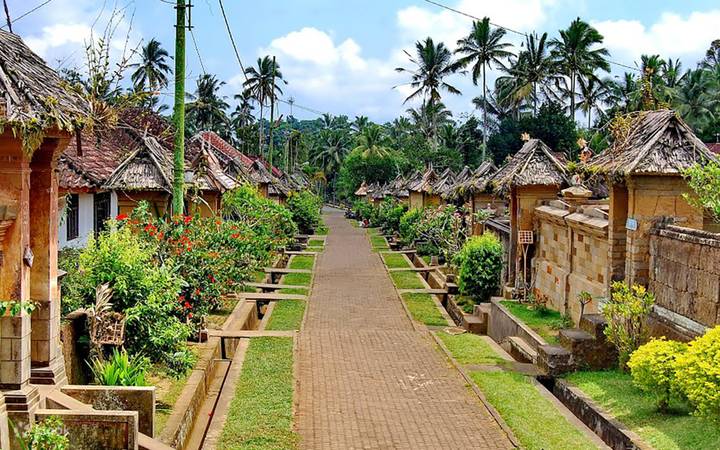
A car-free stone street of matching family gates, with a bamboo forest behind it.
By The Bali Guideline Editorial TeamUpdated 12 November 2026
Overview
Penglipuran Village, before you go.
Penglipuran is a traditional village in Bangli, famous for one long, car-free street of identical family gates. It lies 30 to 40 minutes below the Kintamani rim and about an hour from Ubud. Entry is IDR 50,000 for foreign adults, insurance included, and an hour or two is enough. Come early, before the tour buses, and walk on into the bamboo forest.
Penglipuran is a customary village of about 112 hectares in Kubu, 5 km north of Bangli town, at roughly 500 to 600 meters above sea level. Its people trace their roots to Bayung Gede, an old mountain village near Kintamani, and tradition says Bangli’s kings gave them this land as a resting place. The name is read either as pengeling pura, a place to remember the ancestors, or as pelipur, comfort. In 1993 Bangli regency made it a tourism village, and it has been one of Bali’s best-known day trips ever since.
What you come to see is the layout. A single paved street climbs gently north toward the mountains between grass verges. On either side, the family compounds open onto it through near-identical angkul-angkul gates of earth, stone and thatch. The village follows the Balinese Tri Mandala: the temple of origin, Pura Penataran, stands at the top, the houses fill the middle, and the cemetery and death temple sit at the lower end. Behind the houses, a bamboo forest of about 45 hectares, about 40 percent of the village’s land, protects the springs and supplies building material. It won Penglipuran a national Kalpataru environment award in 1995.
Rules shape daily life. Motor vehicles are kept out of the main street, smoking is banned in the village core, and bins stand every 30 meters, which is why the place is so often called one of the cleanest villages in the world. Customary law forbids polygamy, and a plot at the edge of the village, the Karang Memadu, is set aside for anyone who breaks the rule. It has stayed empty. In October 2023 UN Tourism named Penglipuran among its 54 Best Tourism Villages worldwide.
That fame has a cost. The village averaged about 2,000 visits a day in May 2026, and by late morning the street fills with tour groups and phones held up for the same symmetrical photo. Many front courtyards are now shops selling snacks, crafts and loloh cemcem, a sour green herbal drink made from the leaves of the hog plum. You can still see real home life behind the stalls, but it is a showcase as much as a working village.
Two things have changed recently. Since May 2026 the ticket has included personal accident insurance at no extra cost, with no change in price. And in July 2026 a state-run DAMRI bus route began serving the village from Denpasar for as little as IDR 5,000, giving independent travelers their first easy public-transport option.
- Opening hours
- Daily about 8 AM–6:30 PM; closed on Nyepi (checked Nov 2026)
- Ticket
- Foreign adult IDR 50,000, child IDR 30,000; insurance incl. (checked Nov 2026)
- Time needed
- 1–1.5 hours; 2 with the bamboo forest
- Best time
- Before 9 AM or after 3:30 PM; Galungan
- Dress code
- Modest clothes; sarong only for temple areas
- Location
- Kubu, 5 km north of Bangli; 30–40 min from Kintamani
Today at Penglipuran Village
- Daylight
- to
- Hours of light
- 12 hr 28 min of light
Checking the weather in Ubud…
Times for this spot, in Bali time (WITA).
Desa Adat Penglipuran, Kubu, Bangli, Bangli Regency, Bali 80611, Indonesia
Open in Google MapsWhat to See
What to see at Penglipuran Village.
- 01
The main street and the angkul-angkul gates
The village is built along one stepped stone street that runs gently downhill from the temple at the top. Grass verges and flower beds line it, and on both sides the family compounds face it through matching angkul-angkul gates, each roofed in thatch or bamboo. The symmetry is the famous view. Walk the full length in both directions; the look changes as the light moves, and the lower end is quieter.
- 02
The bamboo forest
About 45 hectares of bamboo, about 40 percent of the village’s land, rise behind the houses. A paved path leads in from the upper part of the village; it stays cool and shaded even at midday, and the stems creak in the wind. Villagers protect the forest under customary rules because it holds the soil and the water, and it earned Penglipuran a Kalpataru environment award in 1995. Allow 20 to 30 minutes for a loop.
- 03
Pura Penataran at the top of the village
The temple of origin stands at the highest, most sacred end of the street, in line with the Balinese idea that holy places face the mountains. Visitors may look from outside the walls and photograph the gate, but the inner courtyards are for worship. Keep your voice low, never climb on walls or statues, and step aside for anyone carrying offerings.
- 04
Inside a family compound
Many families invite visitors through their gate, often to show the kitchen, the sleeping pavilions and the household shrine, and sometimes to sell a drink or a snack. It is the best way to see how a Balinese compound works. Ask before you step in, take your shoes off when asked, and buy something small or leave a tip if a family has taken time to show you around.
- 05
Loloh cemcem and tipat cantok
Penglipuran’s signature drink is loloh cemcem, a sour, slightly spicy herbal infusion made from the leaves of the hog plum, sold in plastic bottles from front courtyards. Villagers say it helps digestion; most visitors find it an acquired taste. For a snack, try tipat cantok, rice cakes and boiled vegetables under a peanut sauce pounded to order. Both are cheap and sold all along the street.
- 06
The hero’s monument
Captain Anak Agung Gde Anom Mudita, who coordinated the independence struggle across East Bali, was killed fighting Dutch-backed NICA troops at Penglipuran on 20 November 1947. A monument and hero’s cemetery in the village honor him, and Bangli holds a remembrance there every November. Bangli regency has proposed him as a national hero; the decision was still pending in late 2025.
- 07
Galungan and the village festival
Around Galungan, next on 13 January 2027, every gate gets a penjor, a tall arched bamboo pole hung with palm-leaf decorations, and the street is at its most photogenic. The Penglipuran Village Festival, with parades, dance, food and a zero-waste theme, ran from 9 to 11 July 2026. Earlier editions were held in December, so check the festival’s official channels for the 2027 dates.
Seasons
Best time to visit Penglipuran Village.
Come at opening, around 8 AM, or after about 3:30 PM. Tour buses arrive from mid-morning, and with an average of about 2,000 visits a day in 2026, the street is crowded by 11 AM. Early light also gives the best photos of the gates.
The dry season, April to October, brings clearer skies and drier paths in the bamboo forest. From November to March, afternoon rain is common at this altitude, so visit in the morning. Penglipuran is a little cooler than Ubud, but not cold; a light layer is enough.
Galungan, next on 13 January 2027, and Kuningan ten days later are the most photogenic days, with penjor poles at every gate, though some families are busy with ceremonies. The village holds its Ngusaba rite before Nyepi; on Nyepi itself, 8 March 2027, it closes with the rest of Bali.
Coming between November and March? Read our Bali rainy season guide →
Getting There
How to get to Penglipuran Village.
| From | Time | How |
|---|---|---|
| Kintamani (Penelokan rim) | 30–40 min | About 18 km south by car down the main Bangli road. Easy to combine with Mount Batur or Pura Ulun Danu Batur on the same morning. |
| Ubud | 45–60 min | About 29 km by car via Tegallalang or Tampaksiring. Pair it with Tirta Empul on the way. |
| Bali airport (DPS) | 1.5–2 hours | About 56 km by pre-booked car via the bypass, Gianyar and Bangli town. |
| Sanur | 1–1.5 hours | About 41 km by car via Gianyar and Bangli. |
| Seminyak or Canggu | 1.5–2.5 hours | About 54 km by car. Leave by 7:30 AM to arrive before the tour buses. |
| Denpasar by public bus | About 1.5–2 hours | Since July 2026, DAMRI Perintis buses from Denpasar toward Catur, Hulundanu and Penarukan pass the village, with fares from IDR 5,000. Check times with DAMRI before you set out. |
Getting around Penglipuran Village
Cars and scooters stop at the parking areas outside the village: about IDR 5,000 for a car and IDR 2,000 for a motorbike (2025 report). There are three entrances; the main one is the gate marked Desa Tradisional Penglipuran, where you buy your ticket. From there everything is on foot, since motor vehicles are not allowed in the main street.
The street is paved and climbs gently, with low steps between the terraces, so it suits most visitors, including families with strollers, as long as you are ready to lift them now and then. The bamboo forest path is uneven in places and slippery after rain.
Grab and Gojek can drop you off, but pickups in Bangli are unreliable, so ask your driver to wait. Most visitors come on a driver day that also covers Kintamani, Tirta Empul or Tegallalang.
Tickets & Tours
Penglipuran Village tours on Klook.
You can visit on your own with the details above. If you would rather have the driver, guide or entry sorted, these Klook tours include Penglipuran Village. Prices, pick-up areas and what is included vary, so check the listing before you book.
 Day tripPenglipuran Bali Traditional Tour with Ubud, Nature and TempleSee it on Klook (opens in a new tab)
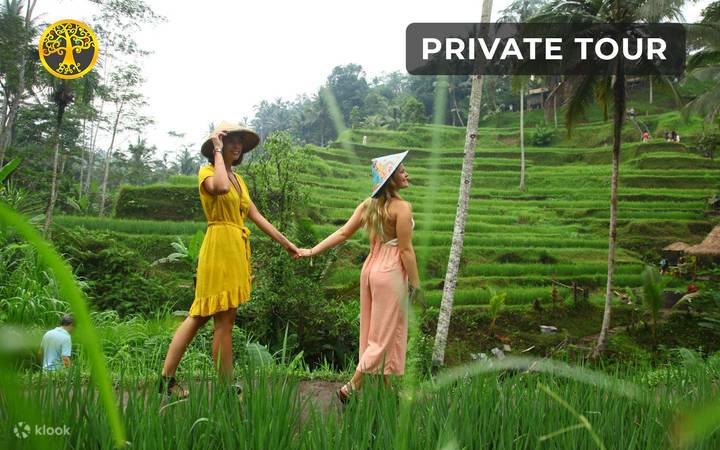 Day tripUbud Nature Walk with Flying Fox, Spa or Jungle SwingSee it on Klook (opens in a new tab)
Affiliate links: we may earn a commission if you book, at no extra cost to you. Affiliate disclosure
Know Before You Go
Penglipuran Village tips that save time and trouble.
- 01Bring cash for the ticket and parking: IDR 50,000 for foreign adults and IDR 30,000 for children (checked Nov 2026).
- 02Arrive by 9 AM or after 3:30 PM to avoid the tour-bus crowds.
- 03Do not smoke in the village core, and carry your trash out; bins stand every 30 meters.
- 04Drones are not allowed over the village.
- 05Ask before entering a family compound or photographing people inside their homes.
- 06Try a bottle of loloh cemcem, but start with a sip; it is sour and herbal.
- 07Walk into the bamboo forest for shade and quiet when the street gets busy.
- 08Combine it with Kintamani or Tirta Empul; on its own it is a long drive for an hour’s walk.
- 09If you drive on toward Kintamani, Bangli regency’s area fee applies on the main roads there.
FAQ
Penglipuran Village questions, answered.
How much is the entrance fee to Penglipuran Village?
Foreign visitors pay IDR 50,000 per adult and IDR 30,000 per child; Indonesians pay IDR 25,000 and IDR 15,000 (checked Nov 2026). Since May 2026 the ticket has included personal accident insurance at no extra cost. Parking is extra, about IDR 5,000 for a car. Bring cash in small bills.
What are the opening hours of Penglipuran?
Daily from about 8 AM to 6:30 PM (checked Nov 2026); the national tourism portal lists 8:15 AM to 6:30 PM. The village closes on Nyepi, the Day of Silence, which next falls on 8 March 2027. Arrive at opening for the quietest street and the best light.
Is Penglipuran Village worth visiting?
Yes, if you are already heading to Kintamani, Tirta Empul or Tegallalang. The car-free street of matching gates and the bamboo forest are unlike anywhere else in Bali, and the village keeps real customary rules. By late morning, though, it is busy and commercial, so it is not worth a special trip from the south for one hour.
Why is Penglipuran called the cleanest village in the world?
The village keeps motor vehicles out of its main street, bans smoking in the core, places bins every 30 meters and organizes regular cleaning under customary rules. Travel media have long listed it among the world’s cleanest villages, and in October 2023 UN Tourism named it one of 54 Best Tourism Villages worldwide.
How far is Penglipuran from Ubud?
About 29 km, or 45 to 60 minutes by car via Tegallalang or Tampaksiring. A common driver day goes Ubud, Tegallalang, Tirta Empul, Penglipuran and the Kintamani rim, then back to Ubud. From Kintamani it is about 18 km, or 30 to 40 minutes, downhill.
What should I wear to Penglipuran?
Modest, comfortable clothes that cover your shoulders and knees, and shoes that grip on damp paving. You do not need a sarong to walk the street, but bring one if you want to look at a temple during a ceremony. A light layer helps on cloudy days, as Penglipuran is a little cooler than Ubud.
What is Karang Memadu?
Karang Memadu is a plot of land at the edge of Penglipuran set aside under customary law for any villager who takes a second wife. Polygamy is forbidden, and anyone who breaks the rule must live there, apart from the community. The plot has stayed empty, which villagers point to as proof that the rule works.
When is the Penglipuran Village Festival?
The 2026 festival ran from 9 to 11 July, with parades, dance, local food and a zero-waste theme, and entry to the village as usual. Earlier editions were held in December. The 2027 dates had not been announced as of November 2026; watch the festival’s official channels.
Can you get to Penglipuran by public transport?
Yes, since July 2026. DAMRI Perintis buses from Denpasar toward Catur, Hulundanu and Penarukan pass the village, with fares from IDR 5,000, according to state transport reports. Services are infrequent, so confirm the timetable with DAMRI and plan your return before you go. Most visitors still hire a driver.
Can you stay overnight in Penglipuran?
Yes. Some families run simple homestays, and there are camping spots near the bamboo forest. Staying the night lets you see the street in the early morning and evening, without the tour groups. Book ahead and expect basic rooms; Ubud and Kintamani have more choice.
Nearby
Where to go after Penglipuran Village.
Places close by that fit into the same trip, with realistic travel times.
5–10 min by car (4 km)
Pura Kehen
Bangli’s great state temple, with a giant banyan and terraces climbing a hillside; far quieter than the big-name temples.
15–25 min by car (11 km)
Tukad Cepung Waterfall
A fall inside a narrow canyon, where morning light cuts through the gap in the rock.
Visitor guide20–30 min by car (16 km)
Tirta Empul
The spring-water temple where Balinese bathe under carved spouts.
Visitor guide30–40 min by car (22 km)
Pura Ulun Danu Batur
The great temple to the lake goddess on the Kintamani rim, facing Mount Batur.
Visitor guide30–40 min by car (23 km)
Kerta Gosa
The old Klungkung court pavilion, its ceiling painted in the Kamasan style.
Visitor guide40–50 min by car to the trailhead
Mount Batur sunrise trek
Climb the volcano at dawn and stop at Penglipuran on the drive back down.
Visitor guide
More in Kintamani
Plan the rest of your time in Kintamani.
Read Next
More Penglipuran Village guides.
How we researched this
Sources and fact checks.
Prices, opening hours, show times and travel times in this Penglipuran Village guide were checked against official sites, government tourism pages and recent reporting on 12 November 2026. Where sources disagreed, we give the official figure and say so. Rankings are our editorial judgment, set out in our editorial policy.
We re-check the guide at least every three months and whenever we hear about a change. Spotted something out of date? Tell us.
Show all 13 sources ↓Hide sources ↑
- bali.antaranews.com/berita/406089/desa-penglipuran-beri-asuransi-wi…
- indonesia.travel/gb/en/travel-ideas/heritage/intip-yuk-daya-tari…
- indonesia.travel/id-id/events/event-detail/penglipuran-village-f…
- untourism.int/news/unwto-names-its-best-tourism-villages-2023
- lovebali.baliprov.go.id/article/detail/1700194585565/penglipuran-villag…
- goodnewsfromindonesia.id/indonesiana/wisata/desa-wisata-penglipuran-bali
- en.wikipedia.org/wiki/Penglipuran
- bali.antaranews.com/berita/393545/pemkab-bangli-tunggu-pusat-soal-u…
- ekonomi.bisnis.com/read/20260719/98/1989157/damri-buka-rute-ke-des…
- bloombergtechnoz.com/detail-news/114828/cara-ke-desa-wisata-penglipu…
- thebaliguideline.com/blog/must-things-to-do-in-bali
- thebaliguideline.com/destination/kintamani
- nominatim.openstreetmap.org