
Seminyak · Temple
Petitenget Temple, Seminyak: The Sea Temple of the Eerie Chest
A small, active sea temple at the north end of Seminyak Beach, with a legend to match.
By The Bali Guideline Editorial TeamUpdated 12 November 2026
Overview
Petitenget Temple, before you go.
Pura Petitenget is the sea temple at the north end of Seminyak Beach, tied to the 15th-century priest Dang Hyang Nirartha and a forest ogre who guarded his chest. It is small: most visits take 15 to 30 minutes. Go if you are already on the beach, ideally in the late afternoon, and plan a longer stop on a ceremony day.
Pura Petitenget stands at the beach end of Seminyak’s northern strip, in Kerobokan Kelod, where the sand meets a small parking lot and a row of frangipani trees. It is a Dang Kahyangan temple, one of the coastal sanctuaries along Bali’s southwest coast that tradition links to Dang Hyang Nirartha, also called Dang Hyang Dwijendra, the Javanese priest who reached Bali in the late 15th century and is credited with Tanah Lot and Uluwatu as well. The neighborhood around it takes its name from the temple.
The legend explains the name. Traveling along the coast, Nirartha rested in the forest of Kerobokan, the domain of a green giant called Ki Bhuto Ijo. He left a chest of his belongings, his pecanangan or betel box, in the giant’s care and walked on south toward Uluwatu. Later, villagers who cut wood in the forest fell ill. Nirartha told them the guardian of the chest was angry and asked them to build a shrine for him, and the sickness ended. Peti means chest and tenget means spiritually charged, so the name is often translated as “the eerie chest.” Kerobokan’s customary village still looks after the temple.
The compound holds two temples behind one entrance. Steps guarded by stone dragons lead up to a split gate. Inside, Pura Masceti Ulun Tanjung sits on the right and Pura Petitenget on the left, around a small shared courtyard. Petitenget’s inner yard has carved pavilions, a shrine to Ki Bhuto Ijo and a padmasana, the high stone throne for the supreme god. A large white statue of Ki Bhuto Ijo stands behind the temple. Across the lane, a big open pavilion hosts dance rehearsals before festivals.
This is a working temple first. Its anniversary, the pujawali, falls every 210 days on Buda Cemeng Merakih in the Balinese calendar, when the shrines are wrapped in checked cloth and the village prays and dances for several days. On full and new moons, people come to ask for holy water for cleansing and healing, and a few days before Nyepi, processions from Kerobokan and its neighbors bring their shrines to the beach in front for Melasti.
Set your expectations. The site is compact, there is little signage to explain it, and parts of it close to visitors without notice during rituals. The IDR 50,000 ticket, sold at the beach parking booth, surprises some visitors for such a short stop; the guide who offers to accompany you is included. What makes it worth the stop is the setting: a living village temple wedged between beach clubs and villas, a minute from the sand at sunset.
- Opening hours
- No set hours; visitors admitted roughly 7 AM to dusk (checked Nov 2026)
- Ticket
- IDR 50,000 per person, cash, sarong included (checked Nov 2026)
- Time needed
- 15–30 minutes; longer on a ceremony day
- Best time
- Late afternoon before sunset; anniversary days for ritual
- Dress code
- Sarong and sash required (lent at the gate); shoulders covered
- Location
- North end of Seminyak Beach; 30–60 min from the airport
Today at Petitenget Temple
- Sunset
- Sunrise
- Daylight
- 12 hr 29 min
Checking the weather in Seminyak…
Times for this spot, in Bali time (WITA).
Pura Petitenget, Jalan Petitenget, Kerobokan Kelod, Kuta Utara, Badung, Bali 80361, Indonesia
Open in Google MapsWhat to See
What to see at Petitenget Temple.
- 01
The dragon steps and split gate
The approach sets the tone: a flight of steps lined with carved stone dragons climbs to a candi bentar, the split gate that marks the entrance to many Balinese temples, with the shared outer courtyard beyond. The red brick and gray sandstone weather quickly in the salt air, so expect moss and lichen on the carvings. Look back from the top step for a view down to the beach.
- 02
Pura Petitenget’s inner courtyard
On the left of the shared courtyard, a red sandstone gate leads into Petitenget’s inner yard, with several small pavilions, finely carved shrines and a padmasana, the tall stone seat left empty for the supreme god. Visitors are often allowed in when no ceremony is running; ask the attendant first. Stay off the shrine steps and platforms, and never stand higher than the shrines or a praying worshiper.
- 03
Pura Masceti Ulun Tanjung
On the right side of the courtyard stands the second temple of the compound, Pura Masceti Ulun Tanjung, a seat of the deity of Pura Masceti, a major sea temple on the Gianyar coast. Its inner courtyard is more often closed to visitors, so you may see it only through the gate. The pairing of two temples in one compound is common on this coast and easy to miss.
- 04
The Ki Bhuto Ijo statue
Behind the temple, on the side away from the entrance, a large white statue of Ki Bhuto Ijo, the ogre of the legend, glowers at passersby. It is free to see from the path around the compound. In the story he is no villain: Nirartha left his chest in the ogre’s care, and the villagers built him a shrine inside the temple that still receives offerings.
- 05
The pujawali, every 210 days
The temple anniversary falls on Buda Cemeng Merakih, a Wednesday in the 210-day Pawukon calendar, and the festivities run over several days. Shrines are dressed in black-and-white checked cloth and yellow umbrellas, women carry tall towers of fruit and cakes on their heads, and gamelan and sacred dances go late into the night. By the Pawukon cycle the next falls on 3 March 2027; confirm the date locally.
- 06
Melasti on the beach in front
A few days before Nyepi, villages from across this part of Badung carry their temple shrines to the sea at Petitenget for Melasti, a purification rite. On 16 March 2026 processions from Kerobokan, Padang Luwih and Padang Sambian set off around 7 AM, reached the beach by about 11 AM and finished near 1 PM. Nyepi falls on 8 March 2027, so Melasti will be a few days earlier.
- 07
Sunset on Petitenget Beach
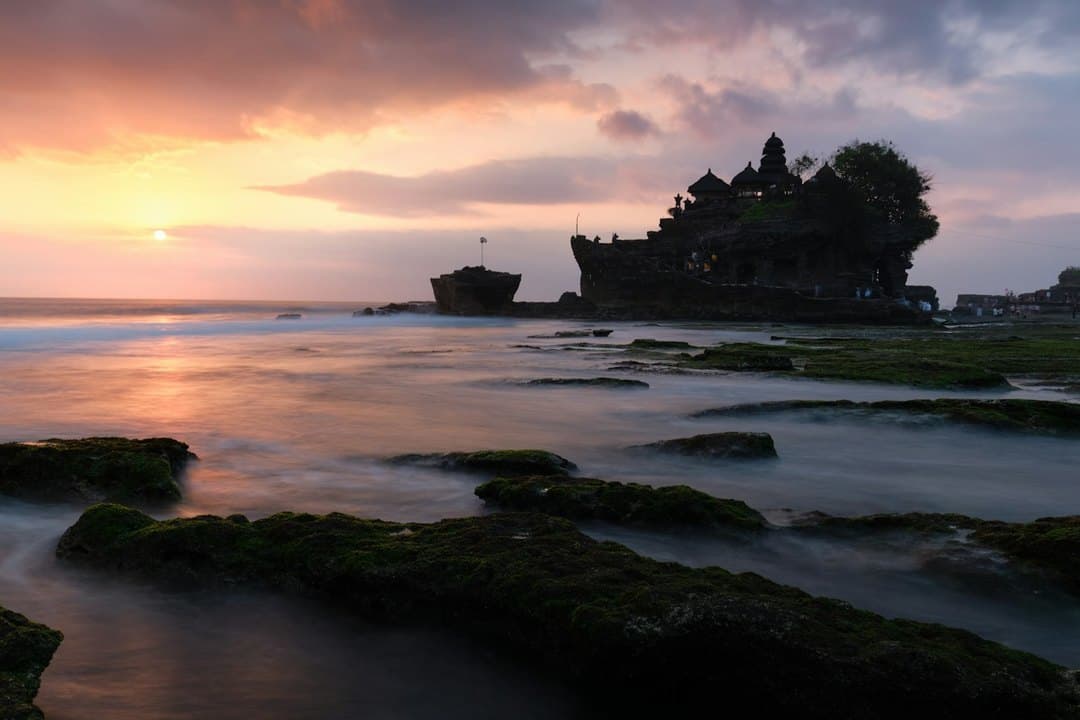
The temple is a minute from the sand, which faces west over open sea. Visit in the late afternoon, then walk down to the beach for the sunset, which falls between about 6:05 and 6:45 PM depending on the month. From here you can walk south along the beach to central Seminyak in about 15 minutes, or to Double Six in about 25 to 30 minutes.
Seasons
Best time to visit Petitenget Temple.
Late afternoon works best: the stone glows in the low sun, the heat has eased, and you can walk down to the beach for the sunset afterward. Mornings are quieter if you want the courtyards to yourself. The temple is poorly lit after dark, and visitors are normally admitted only in daylight.
Ceremony days are the most rewarding and the most restricted. On the pujawali every 210 days, on full and new moons, and around Melasti before Nyepi, the temple fills with offerings and worshipers in white, and the inner courtyards may close to visitors. Watch respectfully from the side; this is the best chance to see the temple doing what it was built for.
There is no bad season, but the dry months from April to October bring clearer sunsets. Bali stops completely for Nyepi on 8 March 2027, when nobody may go out. In the days before, the roads around Petitenget close for the Melasti processions.
Coming between November and March? Read our Bali rainy season guide →
Getting There
How to get to Petitenget Temple.
| From | Time | How |
|---|---|---|
| Seminyak Beach (central access lanes) | 12–15 min on foot | Walk north along the sand for about 1 km; the temple stands just behind the beach parking lot. |
| Central Seminyak | 5–20 min by car or scooter | Drive or ride to the beach end of the Petitenget strip; the road is one-way through Kerobokan Kelod and jams from late afternoon. |
| Ngurah Rai Airport (DPS) | 30–60 min, longer at rush hour | Car, about 12 km via Kuta or the bypass. Book Grab or Gojek, or use the airport taxi counter or a hotel transfer. |
| Canggu | 25–50 min, longer after 4 PM | Car or scooter, about 12 km via Umalas or the Berawa shortcut. At low tide you can also walk the beach from Berawa, about 3 km. |
| Kuta and Legian | 20–45 min by car | About 6–11 km through Legian and Seminyak, or walk north along the beach from Double Six in 25–30 minutes. |
| Ubud | 1 hour 15 min–2 hours | Private car with driver, about 32 km through Denpasar. Pair it with the sunset on the beach. |
| Uluwatu | 1–1.5 hours, 2 hours or more from 3 to 6 PM | Car via Jimbaran and the bypass, about 30 km. |
Getting around Petitenget Temple
The temple shares the Petitenget Beach parking lot, where attendants charge about IDR 2,000 for a scooter and IDR 5,000 for a car (checked Nov 2026). The temple ticket is sold at the same booth; there is no separate ticket office. Bring cash, because cards are not accepted and the nearest ATMs are a fair walk away.
The lot fills from about 4 PM, and the narrow road leading to it is one-way and slow at sunset. A scooter or a Grab or Gojek drop-off is easier than driving yourself, and many visitors simply walk along the beach from their hotel. For a ride home after dark, walk a few minutes inland before booking.
From the parking lot it is a few steps to the dragon staircase, then a short flight up to the gate. The courtyards are paved but uneven, with high thresholds and more steps into the inner yards, so a wheelchair or stroller will not get far beyond the outer area. Toilets are near the beach parking lot.
Know Before You Go
Petitenget Temple tips that save time and trouble.
- 01Bring IDR 50,000 per person in cash for the ticket, plus small bills for parking.
- 02Wear clothes that cover your shoulders; the sarong and sash are lent at the entrance.
- 03Ask the attendant before entering an inner courtyard, and accept a no during rituals.
- 04Never step on shrines or offerings, and do not stand higher than a priest or someone praying.
- 05Balinese custom asks women who are menstruating, and anyone with an open wound, not to enter temple grounds.
- 06Ask before photographing people at prayer, and put the drone away.
- 07The guide who greets you is included in the ticket; you can politely decline if you prefer to look around alone.
- 08Combine the visit with the sunset on Petitenget Beach, a minute away.
- 09Do not confuse it with Pura Masceti on the Gianyar coast, a separate, larger temple.
FAQ
Petitenget Temple questions, answered.
How much is the entrance fee for Petitenget Temple?
IDR 50,000 per person (checked Nov 2026), paid in cash at the Petitenget Beach parking booth, which doubles as the ticket office. The fee includes the loan of a sarong and sash and, usually, a guide. Parking is separate: about IDR 2,000 for a scooter and IDR 5,000 for a car.
What does Petitenget mean?
It is usually translated as “the eerie chest.” Peti means chest or box and tenget means sacred or spiritually charged. The name comes from the legend that the priest Dang Hyang Nirartha left his chest, a betel box, in the care of a forest ogre called Ki Bhuto Ijo, who guarded it so fiercely that villagers fell ill until they built him a shrine.
What is the dress code at Petitenget Temple?
A sarong and a sash around the waist are required for everyone, and both are lent at the entrance. Cover your shoulders as well: a T-shirt is fine, a bikini top or tank top is not. Balinese custom also asks women who are menstruating, and anyone with an open wound, not to enter temple grounds.
What are the opening hours of Petitenget Temple?
There are no official hours. Visitors are admitted while the parking and ticket booth is staffed, roughly from 7 AM until dusk (checked Nov 2026). The courtyards are poorly lit after dark, and parts of the temple close without notice during ceremonies, so come in daylight and ask the attendant what is open.
Can tourists go inside Petitenget Temple?
Into the outer courtyard, yes, and often into Petitenget’s inner courtyard when no ritual is under way; the attendant will tell you. The inner courtyard of Pura Masceti Ulun Tanjung, the second temple in the compound, is more often closed. During the anniversary and other ceremonies the inner areas are for worshipers.
Who built Petitenget Temple?
Tradition credits Dang Hyang Nirartha, also called Dang Hyang Dwijendra, the Javanese priest who reached Bali in the late 15th century and is linked to many of the island’s sea temples, including Tanah Lot and Uluwatu. In the local story, the people of Kerobokan built it on his advice to honor the guardian of his chest. Sources date it to the 15th or 16th century.
When is the Petitenget Temple ceremony?
The anniversary, or pujawali, falls every 210 days on Buda Cemeng Merakih, a Wednesday in the Balinese Pawukon calendar, and the festivities run for several days. By that cycle the next falls on 3 March 2027, a few days before Nyepi, but confirm locally. Full and new moons and Melasti before Nyepi also bring crowds of worshipers.
Is Petitenget Temple worth visiting?
Yes, if you are already in Seminyak. It is a short, inexpensive stop that shows a working village temple and comes with a good story, and the beach for sunset is a minute away. It is not worth a special trip from Ubud or Uluwatu; Tanah Lot and Uluwatu Temple are bigger and more dramatic sea temples.
How long do you need at Petitenget Temple?
About 15 to 30 minutes. The compound is small, and most visitors see the courtyards, the dragon steps and the ogre statue in under half an hour. Allow longer on a ceremony day, and add an hour or two if you plan to stay on the beach for the sunset.
Is Petitenget Temple in Seminyak or Kerobokan?
Both, in practice. Officially it sits in Kerobokan Kelod, in North Kuta district, and Kerobokan’s customary village looks after it. For visitors it is the north end of Seminyak Beach, at the beach end of the Petitenget strip, about 1 km north of the central Seminyak access lanes.
Nearby
Where to go after Petitenget Temple.
Places close by that fit into the same trip, with realistic travel times.
1 min on foot
Seminyak Beach
The west-facing sand in front of the temple, for sunset and a walk south toward Double Six.
Visitor guide25–30 min on foot along the sand
Double Six Beach
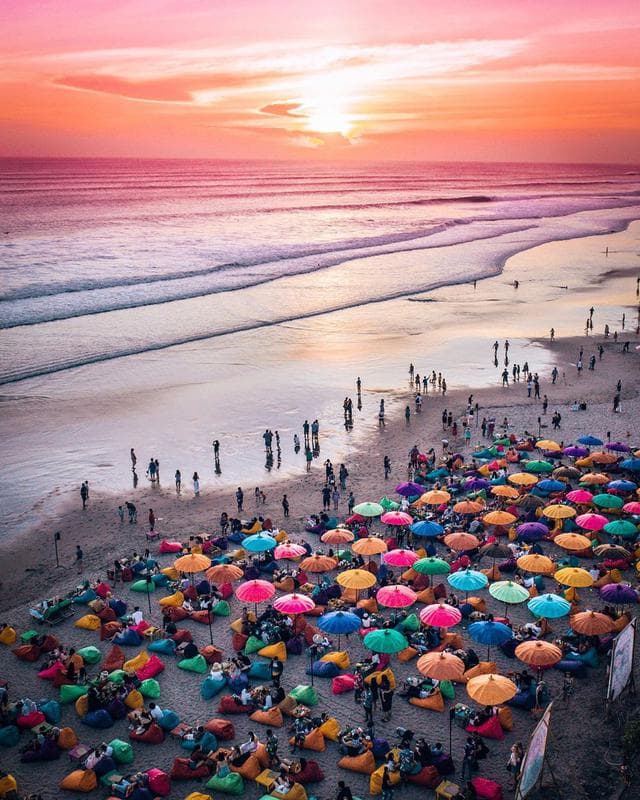
The south end of the same beach, with rows of bean bags at sunset and learner waves.
Visitor guide25–50 min by car (12 km)
Batu Bolong Beach, Canggu
Canggu’s surf beach, with another small sea temple on the rocks above the sand.
Visitor guide45–80 min by car (18 km)
Tanah Lot
The best known of the sea temples linked to Nirartha, on a rock in the surf.
Visitor guide1–1.5 hours by car
Uluwatu Temple
The cliff temple that, in the legend, Nirartha walked on to after leaving his chest at Petitenget.
Visitor guide
More in Seminyak
Plan the rest of your time in Seminyak.
Read Next
More Petitenget Temple guides.

How we researched this
Sources and fact checks.
Prices, opening hours, show times and travel times in this Petitenget Temple guide were checked against official sites, government tourism pages and recent reporting on 12 November 2026. Where sources disagreed, we give the official figure and say so. Rankings are our editorial judgment, set out in our editorial policy.
We re-check the guide at least every three months and whenever we hear about a change. Spotted something out of date? Tell us.
Show all 15 sources ↓Hide sources ↑
- router.project-osrm.org
- budayabali.com/the-mysterious-story-behind-petitenget-temple-t…
- nowbali.co.id/pura-petitenget-temple-haunted-chest
- thehoneycombers.com/bali/petitenget-temple-bali-indonesia
- baliholidaysecrets.com/petitenget-temple
- baliuntold.com/things-to-do/temples/petitenget-temple
- ejournal.unhi.ac.id/index.php/vidyawertta/article/download/672/517
- core.ac.uk/download/478493018.pdf
- jurnal.harianregional.com/ecs/id-66878
- 30sundays.club/blog/petitenget-temple
- bali.live/p/how-balis-melasti-ceremony-unfolded-thousands…
- pickyourtrail.com/attractions/bali/pura-petitenget-temple-kuta
- en.wikipedia.org/wiki/Nirartha
- nominatim.openstreetmap.org/ui/search.html
- map.project-osrm.org