
Seminyak · Beach
Seminyak Beach: Sunset, Surf and Swimming Safely
Two kilometers of west-facing sand between Double Six and Petitenget, best at sunset.
By The Bali Guideline Editorial TeamUpdated 12 November 2026
Overview
Seminyak Beach, before you go.
Seminyak Beach is the free public stretch of gray-gold sand on Bali’s southwest coast, running about 2 km from Double Six north to Pura Petitenget. Come for the sunset, a long beach walk and a morning surf lesson. It is not a calm swimming beach: the rips are strong, so swim only between the lifeguards’ flags.
Seminyak Beach is the middle section of the long surf beach that runs unbroken from Kuta to Canggu. There is no gate, sign or ticket. Locally, the name covers the sand from Double Six north past the central Seminyak access lanes to Petitenget, where the sea temple stands: roughly 2 km in all. North of the temple it carries on as Batu Belig and then Berawa in Canggu.
What you get is space. The beach is wide and flat, faces almost due west, and has no headland to block the sunset, which falls between about 6:05 and 6:45 PM depending on the month. In the morning it belongs to joggers, dog walkers and surf schools. From about 4 PM the beach stands drag out bean bags and umbrellas, the big beach clubs behind the sand fill up, and by sunset everyone on the beach is facing the same way. Walking the waterline and sitting on a towel cost nothing.
The water is the catch. This is an open Indian Ocean beach break with shifting sandbanks and strong rip currents, and people drown here. On 3 August 2025, a 47-year-old father from Dalung died after going in after his son, who had been pulled out by a rip at Seminyak Beach; the boy survived. In February 2024, a 61-year-old man swimming with his grandchild drowned at the Double Six end at about 7 PM. Lifeguards from Balawista, Badung’s beach rescue service, patrol the busiest sections and move their red-and-yellow flags with the sandbanks. Swim only between them, in daylight, and not at all under a solid red flag.
The coast itself is changing. In October 2025, Indonesia’s infrastructure minister said about 5.3 km of shoreline from Kuta to Seminyak had eroded, retreating 15 to 20 meters since the 1980s. A Japanese-funded project is adding about 610,000 cubic meters of sand and building breakwaters, mostly off Kuta; it was 18 percent done in October 2025, with completion targeted for 2026. Expect fenced sections, pipes and machinery on parts of the beach until the work ends.
The other catch is seasonal. From about November to April, the west monsoon washes plastic, wood and branches onto this coast, and Badung’s cleanup crews rake the sand from early morning. In the dry months the beach is usually clean, the sunsets are reliable and the surf is at its best.
- Opening hours
- Public beach, open all day; no swimming after dark (checked Nov 2026)
- Ticket
- Free; parking about IDR 2,000 scooter, IDR 5,000 car (checked Nov 2026)
- Time needed
- 1–2 hours for sunset; add 2 hours for a surf lesson
- Best time
- From 4:30 PM for sunset; April–October for clean sand
- Dress code
- Swimwear on the sand; cover up when you walk inland
- Location
- Double Six to Petitenget; 30–60 min from the airport
Today at Seminyak Beach
- Sunset
- Sunrise
- Daylight
- 12 hr 29 min
Checking the weather in Seminyak…
Times for this spot, in Bali time (WITA).
Pantai Seminyak, Seminyak, Kuta, Badung, Bali 80361, Indonesia
Open in Google MapsWhat to See
What to see at Seminyak Beach.
- 01
Sunset from the sand
The beach faces west over open sea, so the sun drops straight into the water on clear evenings, with surfers silhouetted on the last sets. Arrive between 4:30 and 5 PM to pick a spot. The bean bag stands usually let you sit for the price of a drink, but terms vary, so ask about a minimum spend first. A towel near the waterline gives the same view for free.
- 02
The beach walk to Petitenget and Double Six
The best way to see Seminyak Beach is on foot along the firm sand near the tideline. From the central access lanes it is about 1 km north to Pura Petitenget and about 1 km south to Double Six. Keep going south and you reach Legian and Kuta; head north past the temple and you reach Batu Belig. At sunset the beach is often faster than the jammed roads inland.
- 03
Pura Petitenget at the north end
The sea temple at the north end of the beach is one of the chain of coastal temples linked to the priest Dang Hyang Nirartha. Red-brick steps guarded by stone dragons lead to the courtyards, and visitors pay at the beach parking booth and borrow a sarong at the gate. During its anniversary, held every 210 days, and in the days before Nyepi, the beach in front fills with worshipers in white.
- 04
Surf lessons and sandbank peaks
Seminyak is a sand-bottom beach break with lefts and rights that shift with the sandbanks. On a small swell and a mid-to-high tide, the whitewater suits first lessons, and surf schools and freelance instructors work from the sand, mostly in the morning. Bigger days and low tide bring fast, hard closeouts that are better left to experienced surfers. Ask locally which peak is working that day.
- 05
Reading the lifeguard flags
Balawista lifeguards watch the busiest stretches of the Kuta, Legian and Seminyak coast from towers on the sand. Red-and-yellow flags mark where swimming is allowed; a solid red flag means no swimming, surfing or water games. The patrolled zone moves from day to day with the rips and sandbanks, so check the flags every time you go in, and keep children within arm’s reach.
- 06
Melasti processions before Nyepi
A few days before Nyepi, the Balinese Day of Silence, villages carry their temple shrines to the sea to purify them. Petitenget is one of the main Melasti sites in Badung: on 16 March 2026 processions from Kerobokan and neighboring villages set off around 7 AM and finished at about 1 PM. Nyepi falls on 8 March 2027, so Melasti will be a few days earlier.
- 07
Early mornings
Before 8 AM the beach is almost empty: a few surfers catching the glassy water before the wind picks up, runners on the hard sand and dogs off the leash. In the dry season this is the coolest and cleanest time to walk. In the wet season, this is when cleanup crews rake the night’s debris into piles, so the sand looks better by late morning.
Seasons
Best time to visit Seminyak Beach.
For sunset, arrive between 4:30 and 5 PM and stay until the light fades; the sun sets between about 6:05 and 6:45 PM through the year. For a quiet walk or a surf lesson, come before 10 AM, when the dry-season wind is light or offshore and the sand is close to empty.
April to October is the best season, with dry weather, clean sand and the most reliable sunsets. July, August and the Christmas to New Year weeks bring the biggest crowds. From about November to April, the west monsoon brings rain, onshore wind and trash, usually at their worst from January to March. Big-swell days with red flags are common from June to August.
For surfing, the tide matters more than the month: mid to high tide on a small swell for lessons, and stay out of the water at low tide on a big swell. Bali shuts down for Nyepi on 8 March 2027, when nobody may go to the beach. Melasti processions fill Petitenget a few days before.
Coming between November and March? Read our Bali rainy season guide →
Getting There
How to get to Seminyak Beach.
| From | Time | How |
|---|---|---|
| Central Seminyak | 5–15 min on foot | Walk down any of the beach access lanes off the main restaurant strip; you are rarely more than 1 km from the sand. |
| Legian and Double Six | 15–30 min on foot | Walk north along the sand from Double Six, about 1 km to the central access lanes and 2 km to Pura Petitenget. |
| Ngurah Rai Airport (DPS) | 30–60 min, longer at rush hour | Car, about 11–12 km through Kuta or along the bypass. Book Grab or Gojek from the airport pickup zones, or use the official taxi counter or a hotel transfer. |
| Canggu | 25–50 min, up to 90 min after 4 PM | Car or scooter, about 12 km through Umalas or the Berawa shortcut. At low tide you can also walk the sand south from Berawa in about an hour. |
| Kuta | 20–40 min by car, 50–60 min on foot | About 6–11 km by road depending on the access point, or walk the whole way north along the beach. |
| Ubud | 1 hour 15 min–2 hours | Private car with driver, about 32 km through Denpasar. Leave Ubud by early afternoon to make the sunset. |
| Uluwatu | 1–1.5 hours, 2 hours or more from 3 to 6 PM | Car via Jimbaran and the bypass, about 30 km. The Jimbaran junction is the bottleneck. |
Getting around Seminyak Beach
There are several ways onto the sand. The main ones are the Double Six access at the south end, the beach lanes at the end of two main side streets in central Seminyak, and the beach parking lot beside Pura Petitenget at the north end. At Petitenget attendants charge about IDR 2,000 for a scooter and IDR 5,000 for a car (checked Nov 2026); the smaller lanes have their own attendants and similar small fees.
Car parking near the sand is limited, and the last few hundred meters of every beach lane jam from about 5 PM. A scooter, a Grab or Gojek drop-off, or walking from your hotel is far easier than a rental car. After sunset everyone wants a ride at once, so walk a few minutes inland to a main road before booking, and agree on a pickup point before the light goes.
On the beach everything is on foot, with no stairs to climb at the main access points. Parts of the sand may be fenced off during the 2026 coastal works, so you may have to walk around a section. Bring small bills for parking, coconuts and the bean bag stands, since card machines are not guaranteed on the sand.
Tickets & Tours
Seminyak Beach tours on Klook.
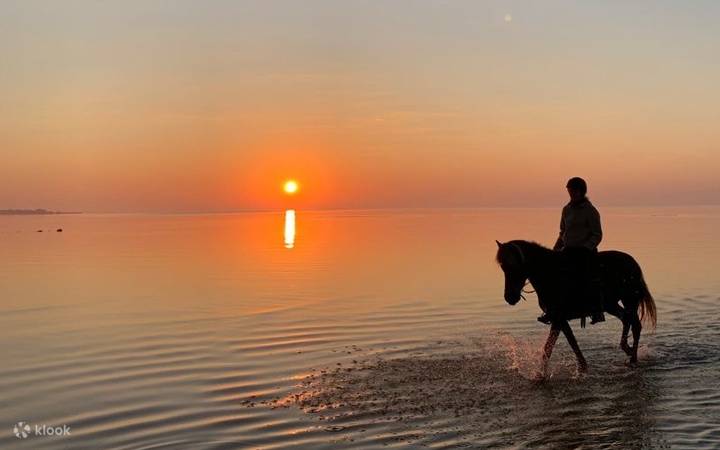
You can visit on your own with the details above. If you would rather have the driver, guide or entry sorted, these Klook tours include Seminyak Beach. Prices, pick-up areas and what is included vary, so check the listing before you book.
Affiliate links: we may earn a commission if you book, at no extra cost to you. Affiliate disclosure
Know Before You Go
Seminyak Beach tips that save time and trouble.
- 01Swim only between the red-and-yellow flags, and stay out of the water when a red flag is up.
- 02Do not swim after dark or after drinking; several recent drownings on this coast happened on evening swims.
- 03If a rip pulls you out, do not fight it: float, raise an arm for the lifeguards and swim parallel to the beach.
- 04Ask about a minimum spend or seat charge before you sit on a bean bag, and check whether tax and service are added.
- 05Walk along the sand instead of driving between Double Six, central Seminyak and Petitenget at sunset.
- 06Keep phones and bags with you, and never leave them on the sand while you swim.
- 07From November to April, come from late morning, after the cleanup crews have raked the night’s trash.
- 08Book a surf lesson for the morning on a mid-to-high tide, and agree on the price, board and lesson length first.
- 09Dress modestly and stay well back if you meet a ceremony or a procession on the sand.
FAQ
Seminyak Beach questions, answered.
Can you swim at Seminyak Beach?
Yes, but only between the lifeguards’ red-and-yellow flags, in daylight and in small surf. Seminyak is an open surf beach with strong rip currents, and people drown here, including a father who went in after his son on 3 August 2025. Stay out under a red flag and after dark. For calm water, Sanur, Nusa Dua and Jimbaran have far gentler bays.
Is Seminyak Beach free?
Yes. The beach is public, with no gate or ticket. You pay only for parking, about IDR 2,000 for a scooter and IDR 5,000 for a car at the Petitenget lot (checked Nov 2026), and for whatever you order if you sit on a bean bag or at a beach club. A towel on the sand costs nothing.
What time is sunset at Seminyak Beach?
Between about 6:05 and 6:45 PM, depending on the month: earliest around October and November, latest in late January and February. The beach faces west over open sea, so nothing blocks the view. Arrive between 4:30 and 5 PM to choose a spot, especially on weekends and in July and August, and plan your ride home before dark.
Where does Seminyak Beach start and end?
There is no fence or sign. Locally, Seminyak Beach runs about 2 km from Double Six in the south to Pura Petitenget in the north. The same sand carries on south through Legian to Kuta and north through Batu Belig to Berawa in Canggu, so you can walk well beyond it in either direction.
Is Seminyak Beach good for surfing?
For beginners on the right day, yes. It is a sand-bottom beach break, and on a small swell and a mid-to-high tide, the whitewater suits lessons. Low tide and bigger swells bring hard closeouts and stronger rips. Experienced surfers usually head to Canggu’s reef breaks or to Uluwatu, an hour or more away.
Is Seminyak Beach dirty?
It can be, from about November to April, when the west monsoon washes plastic, wood and branches onto Bali’s southwest coast. Badung’s crews rake the beaches from early morning, so the sand looks better by late morning. From about April to October it is usually clean. River mouths along this coast can be murky after heavy rain.
What is being built on Seminyak Beach?
A Japanese-funded coastal protection project for Kuta, Legian and Seminyak, adding about 610,000 cubic meters of sand and building breakwaters, mostly off Kuta. Officials said in October 2025 that about 5.3 km of this coast had eroded and that the work was 18 percent done, with completion targeted for 2026. Expect fenced sections until it ends.
Is Seminyak Beach better than Kuta Beach?
For sunset and a quieter, more upmarket feel, many visitors prefer Seminyak: there are fewer hawkers and more space. Kuta has the gentler learner waves, the turtle hatchery and the cheaper beach stalls. It is all one beach, so you can walk from one to the other in about an hour.
Can you walk from Seminyak Beach to Canggu?
Yes, along the sand. From Pura Petitenget it is roughly 3 km north past Batu Belig to Berawa, 40 to 45 minutes on foot, and about 4 km to Batu Bolong. Go at low or mid tide, when the sand is wider, and check that the river mouths along the way are shallow enough to cross.
Is Seminyak Beach good for kids?
For the sand, yes; for swimming, only with close care. The beach is wide and flat with no stairs, and there is room for digging and kites. The surf and rips are another matter: keep children in the shallows between the flags, within arm’s reach, and out of the water on red-flag days and after dark.
Is Seminyak Beach worth visiting?
Yes, for a sunset, a beach walk and a morning surf lesson. It is free, easy to reach from anywhere in Seminyak, and the sunset is one of the best on the south coast. Skip it if you want calm, clear water for swimming or snorkeling, and lower your expectations in the trash months from January to March.
Nearby
Where to go after Seminyak Beach.
Places close by that fit into the same trip, with realistic travel times.
10–15 min on foot along the sand
Pura Petitenget
The sea temple at the north end of the beach, tied to the legend of the priest Dang Hyang Nirartha and a guardian ogre.
Visitor guide10–25 min on foot
Double Six Beach
The south end of the same sand, with rows of bean bags at sunset and learner waves in the morning.
Visitor guide25–40 min on foot
Legian Beach
Quieter, resort-backed sand farther south, with its own surf peaks.
Visitor guide25–50 min by car (12 km)
Batu Bolong Beach, Canggu
Canggu’s surf beach, with soft waves for longboarders and a small sea temple on the rocks.
Visitor guide45–80 min by car (18 km)
Tanah Lot
The sea temple on its rock, for a different sunset farther up the west coast.
Visitor guide20–40 min by car
Waterbom Bali
A big water park in Kuta for a day away from the open sea, popular with families.
Visitor guide
More in Seminyak
Plan the rest of your time in Seminyak.
Read Next
More Seminyak Beach guides.
Guide
22 Best Sunset Spots in Bali (2026): Temples, Beaches & Sunset Times
Guide
13 Best Day Trips from Seminyak (2026): Ubud, Nusa Penida & Uluwatu

Guide
26 Best Restaurants in Seminyak (2026): Fine Dining, Beachfront & Local Favourites
Guide
20 Best White Sand Beaches in Bali (2026): Fees, Access & Swimming

Guide
Bali Rainy Season 2026–27: Wet Season Month by Month

Guide
Best Time to Visit Bali (2026–27): Month-by-Month Guide
How we researched this
Sources and fact checks.
Prices, opening hours, show times and travel times in this Seminyak Beach guide were checked against official sites, government tourism pages and recent reporting on 12 November 2026. Where sources disagreed, we give the official figure and say so. Rankings are our editorial judgment, set out in our editorial policy.
We re-check the guide at least every three months and whenever we hear about a change. Spotted something out of date? Tell us.
Show all 16 sources ↓Hide sources ↑
- router.project-osrm.org
- detik.com/bali/nusra/d-8158021/ahy-tinjau-proyek-5-breakw…
- kumparan.com/kumparannews/ahy-5-3-km-garis-pantai-kuta-semin…
- investortrust.id/business/65001/jepang-kucurkan-pinjaman-rp-786-…
- mongabay.co.id/2026/02/17/bagaimana-selamatkan-pantai-bali-dar…
- rri.co.id/en/national/2178546/japan-continues-bali-beach-…
- detik.com/bali/berita/d-7219266/lansia-tewas-digulung-omb…
- heybali.info/news/seminyak-drowning-incident
- bali.antaranews.com/berita/304347/tim-sar-evakuasi-jasad-wisatawan-…
- bali.live/p/how-balis-melasti-ceremony-unfolded-thousands…
- baliholidaysecrets.com/petitenget-temple
- baliuntold.com/things-to-do/temples/petitenget-temple
- thejakartapost.com/news/2020/01/07/colombian-man-found-dead-after-…
- thebaliguideline.com/blog/best-sunset-spots-bali
- nominatim.openstreetmap.org/ui/search.html
- map.project-osrm.org