
Sanur · Culture
Le Mayeur Museum, Sanur: The Painter’s House on the Beach
A Belgian artist’s home and studio on Sanur Beach, kept much as he left it in 1958.
By The Bali Guideline Editorial TeamUpdated 12 November 2026
Overview
Le Mayeur Museum, before you go.
The Le Mayeur Museum is the house and studio of the Belgian painter Adrien-Jean Le Mayeur, on the beach path at the north end of Sanur. About 88 of his paintings hang in carved Balinese rooms he shared with his wife, the dancer Ni Pollok. The house is quiet and a little faded, and it makes a rewarding hour for anyone interested in art, old Bali or Sanur’s history.
Adrien-Jean Le Mayeur de Merprès was born in Ixelles, Brussels, on 9 February 1880 and had painted his way through Europe, Africa and India before he landed in north Bali in 1932, already in his fifties. There he met Ni Nyoman Pollok, a young Legong dancer who modeled for him for about three years. An exhibition in Singapore in 1933 sold well, and with the money he bought land on the beach at Sanur, then a fishing village, and built a house. He and Pollok married in 1935.
The house became the subject of his work. He painted Pollok and her friends in soft, sunlit colors: in the garden, by the lotus ponds and on the sand, often bare-shouldered or bare-breasted, as Balinese women dressed at the time. During the Japanese occupation in World War II, when canvas was impossible to find, he painted on sacking, plywood and paper. Those works are part of the museum’s character today.
In 1956 Indonesia’s education minister, Bahder Djohan, visited the house and suggested it become a museum. On 28 August 1957 Le Mayeur signed the house over to Pollok, who later gave the property and its contents to the Indonesian government. He died in 1958, aged 78. Pollok died on 27 July 1985, aged 68.
The collection holds about 88 paintings: 28 on canvas, 25 on hardboard, 22 on sacking and the rest on plywood and paper. They hang in four rooms of the house, along with his carved furniture, cabinets, ceramics, statues and books. The doors, window frames and room dividers are richly carved, and the whole compound, with its garden, shrines and stone statues, is as much a part of the visit as the art.
The museum belongs to the Bali provincial government and is run by the same office as the Bali Museum in Denpasar. The house shows its age. Sea air and humidity are hard on the paintings, many of which sit behind glass that reflects the light, and the labels are basic. When Indonesia’s culture minister visited on 31 August 2026, he named fading color as the main problem, said some works need conservation and announced that a team from the National Gallery would assess them. Reports from the same visit put attendance at only about 100 visitors a month, most of them from Europe.
That is part of the appeal. You will often have the rooms to yourself, with the sound of the sea outside. There is no air conditioning, audio guide or café. Instead you get a well-kept garden, a dim, carved house and a painter’s private world on the edge of Sanur Beach.
- Opening hours
- About 8 AM–3:30 PM; Fri to 12:30 PM; closed holidays (checked Nov 2026)
- Ticket
- Foreign adults about IDR 50,000; Indonesians less (checked Nov 2026)
- Time needed
- 45 minutes to 1.5 hours
- Best time
- Weekday mornings, before the rooms get hot and humid
- Dress code
- Casual; covered shoulders are polite in the house
- Location
- North Sanur, on the beach path; 30–50 min from the airport
Today at Le Mayeur Museum
- Daylight
- to
- Hours of light
- 12 hr 29 min of light
Checking the weather in Seminyak…
Times for this spot, in Bali time (WITA).
Museum Le Mayeur, Jl. Hang Tuah, Sanur Kaja, Denpasar Selatan, Denpasar, Bali 80227
Open in Google MapsWhat to See
What to see at Le Mayeur Museum.
- 01
The portraits of Ni Pollok
Pollok is everywhere in the collection. Le Mayeur painted her dancing, weaving, resting in the garden and walking on the sand with other young women, in a warm palette of pinks, greens and gold. Look for the paintings that show the house itself, the ponds and the beach in front, because you can still match them to the views outside. Photographs of the couple hang among the canvases.
- 02
The wartime paintings on sacking
During the Japanese occupation, Le Mayeur could not get canvas, so he painted on rough sacking, known locally as bagor, as well as plywood and paper. Twenty-two of the museum’s works are on sacking. The weave shows through the paint and gives them a softer, grainier look than the canvases. They are also the most fragile pieces, and the fading the culture minister warned about in 2026 shows clearly in some of them.
- 03
The carved house and furniture
The house is a Balinese compound of carved wood and stone. Window frames and doors are cut with floral patterns, room dividers are carved wooden panels, and the cabinets, beds, tables and other furniture belonged to the couple. Le Mayeur’s books and ceramics sit in the cases. Step back and look at the ceilings and door frames as well as the walls.
- 04
The garden and the beach front
Stone statues, small shrines and frangipani trees fill the garden between the house and the beach. Le Mayeur used it as a studio and a setting for his paintings, and he received guests and buyers in a pavilion here. A monument to the couple stands just north of the museum building. The museum gate opens straight onto the Sanur beach path, so you can walk in from the sand.
- 05
Early works from his travels
Before Bali, Le Mayeur painted his way around Europe, Africa and India, and a few works from those years hang in the museum. They help explain the light, loose style he brought to Bali. Compare the brushwork with the Balinese scenes, where his palette softens and the figures grow larger, and you will see how much the island changed his work.
- 06
A slow hour on the beach path
The museum fits easily into a morning on Sanur Beach. Walk or cycle up the paved path from Sindhu, about 2 km and 30 minutes on foot, and stop on the way back for a swim if the tide is up. The harbor for Nusa Penida and Nusa Lembongan boats is a couple of minutes’ walk north, so the museum also fills a gap before an afternoon boat.
- 07
Sanur before the resorts
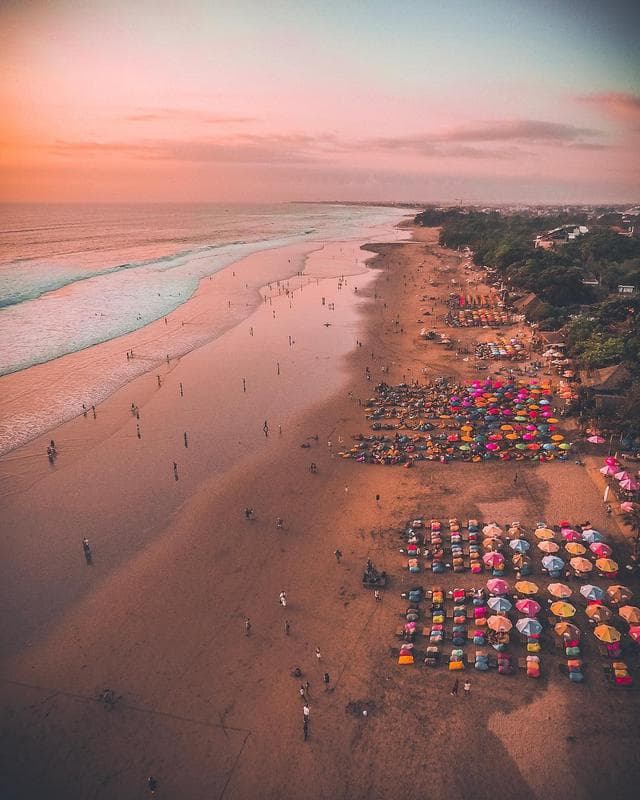
When Le Mayeur built here in the 1930s, Sanur was a fishing village with coconut palms behind the sand. The 10-story Bali Beach Hotel went up just along the shore in 1966, and Sanur became Bali’s first beach resort. His paintings of the shore, the ponds and the women of the village are one of the best records of the place before that change. Walk out of the gate and compare.
Seasons
Best time to visit Le Mayeur Museum.
Go in the morning, ideally on a weekday. The rooms are cooler and the light through the doorways is softer, which helps with the glare on the glass. Remember the short Friday hours: the museum closes at about 12:30 PM, so a Friday visit has to happen before lunch.
The museum is closed on public holidays, including Nyepi, when all of Bali shuts down; Nyepi falls on 8 March 2027. Check the Balinese calendar around Galungan and Kuningan, when staff may take time off for ceremonies.
It works in any season and makes a good rainy-day stop in Sanur. In the wet months from November to March, combine it with a covered lunch rather than a long walk on the beach path.
Coming between November and March? Read our Bali rainy season guide →
Getting There
How to get to Le Mayeur Museum.
| From | Time | How |
|---|---|---|
| Sindhu Beach, central Sanur | 25–35 min on foot | About 2 km north along the beach path, or 10 minutes by bicycle. You can rent bikes along the main strip. |
| Sanur Harbour | 2–5 min on foot | Walk south along the beach path from the harbor terminal. Easy before or after a boat to the Nusa islands. |
| Bali airport (DPS) | 30–50 min | About 17 km by car via the bypass or the toll road. |
| Seminyak or Kuta | 35–60 min | About 17 km by car or Grab via the bypass, longer at rush hour. |
| Ubud | 45–75 min | About 21 km by car south through Denpasar. |
| Canggu | 50–80 min | About 20 km by car across Denpasar. |
| Nusa Dua | 30–45 min | About 21 km by car via the toll road. |
Getting around Le Mayeur Museum
Cars and Grab rides drop you at the beach end of the lane in north Sanur, near the old Bali Beach Hotel grounds and the harbor. From there it is about 100 meters along the beach path to the museum gate. Parking near the beach costs a small cash fee.
The easiest approach is on foot or by bicycle along the Sanur beach path, which passes right in front of the museum. It is flat and paved, and closed to cars and motorbikes.
Inside, the house is on one level, with a few steps between rooms and garden paths. Rooms are dim and naturally ventilated, so they get warm by midday.
Know Before You Go
Le Mayeur Museum tips that save time and trouble.
- 01Bring cash for the ticket; card payment is not reliable.
- 02Plan Friday visits for the morning; the museum closes at about 12:30 PM.
- 03Do not use flash or a tripod in the galleries; the paintings are fragile.
- 04Come early on a weekday to have the rooms to yourself.
- 05Read a little about Le Mayeur and Pollok first; labels inside are brief.
- 06Combine it with a walk or bike ride on the beach path from Sindhu.
- 07Allow time for the garden and the carved doors, not just the paintings.
- 08Ask staff if any rooms are closed for conservation before you pay.
FAQ
Le Mayeur Museum questions, answered.
What are the Le Mayeur Museum opening hours?
About 8 AM to 3:30 PM, with a short Friday from about 8:30 AM to 12:30 PM, and closed on public holidays (checked Nov 2026). Sources differ by up to an hour, and one official listing gives a 4:30 PM close every day, so arrive by early afternoon to be safe and plan Friday visits for the morning.
How much is the Le Mayeur Museum entrance fee?
A 2026 guide lists IDR 50,000 for foreign adults and IDR 25,000 for foreign children, with lower prices for Indonesians (checked Nov 2026). Indonesian adults pay IDR 10,000 in the Ministry of Tourism listing and IDR 20,000 in a May 2026 report, so expect IDR 10,000–20,000. Older guides quoted IDR 100,000 for foreigners, so bring cash and check the board at the gate.
Who was Le Mayeur?
Adrien-Jean Le Mayeur de Merprès was a Belgian painter, born in Brussels in 1880, who arrived in Bali in 1932 and settled on the beach at Sanur. He married the Legong dancer Ni Nyoman Pollok in 1935 and painted her and Balinese life for more than two decades. He died in 1958, and his house became the museum.
Who was Ni Pollok?
Ni Nyoman Pollok was a Legong dancer who became Le Mayeur’s model and, in 1935, his wife. She appears in many of the museum’s paintings. Le Mayeur gave her the house in 1957, and she later donated it, with its contents, to the Indonesian government. She died in 1985.
How many paintings are in the Le Mayeur Museum?
About 88. According to the Denpasar tourism office, 28 are on canvas, 25 on hardboard and 22 on sacking, with the rest on plywood and paper. Indonesia’s culture minister gave the same total of 88 works on a visit in August 2026. Some hang behind glass.
Is the Le Mayeur Museum worth visiting?
Yes, if you like art, old houses or Bali’s colonial-era history and you are already in Sanur. It is small, quiet and a little faded, with basic labels and no air conditioning. The appeal is the intimacy: a painter’s house on the beach, kept close to how he left it. Skip it if you want a modern museum.
Can you take photos in the Le Mayeur Museum?
Usually, without flash. Personal photos are generally allowed in the garden and around the pavilions, but flash and tripods are banned in the galleries, to protect the paintings. Rules can change, especially while conservation work is being planned, so ask the staff at the entrance.
Where is the Le Mayeur Museum?
On the beach at the north end of Sanur, right on the paved beach path and a couple of minutes’ walk south of Sanur Harbour. By car or Grab, you are dropped at the beach end of the lane and walk about 100 meters along the path. From central Sanur, it is about 2 km on foot along the beach.
How long do you need at the Le Mayeur Museum?
About 45 minutes to an hour and a half. The four rooms of paintings take half an hour at a steady pace, and the carved house, garden and shrines add more. Pair it with a walk on the beach path, a swim at high tide or a boat from the harbor next door.
Is the Le Mayeur Museum good for kids?
Only for older children with an interest in art or history. The museum is small, dim and quiet, with paintings behind glass and nothing hands-on. Younger kids tend to enjoy the garden statues and the beach outside more than the rooms. Keep the visit short and follow it with a bike ride on the beach path or a swim.
Is the Le Mayeur Museum open on Sunday?
Most recent sources say yes, with the usual hours of about 8 AM to 3:30 PM, but one older listing says Sundays are closed (checked Nov 2026). The museum is closed on public holidays. If Sunday is your only day, go in the morning and have a plan B on the beach path nearby.
Nearby
Where to go after Le Mayeur Museum.
Places close by that fit into the same trip, with realistic travel times.
On the beach path, outside the gate
Sanur Beach
A 5 km car-free path, sunrise over the sea and a calm lagoon for a high-tide swim.
Visitor guide2–5 min on foot
Sanur Harbour
Fast boats to Nusa Penida and Nusa Lembongan from the floating docks at Matahari Terbit.
20–30 min by car
Turtle Conservation and Education Center, Serangan
Rescue pools and a hatchery for sea turtles, run on donations.
Visitor guide10–15 min by car
Prasasti Blanjong
A stone pillar dated 914 AD, one of the oldest inscriptions in Bali, in south Sanur.
45–60 min by fast boat and scooter
Devil’s Tear, Nusa Lembongan
Waves exploding into a cliff cove on Lembongan, a day trip from the harbor next door.
Visitor guide
More in Sanur
Plan the rest of your time in Sanur.


How we researched this
Sources and fact checks.
Prices, opening hours, show times and travel times in this Le Mayeur Museum guide were checked against official sites, government tourism pages and recent reporting on 12 November 2026. Where sources disagreed, we give the official figure and say so. Rankings are our editorial judgment, set out in our editorial policy.
We re-check the guide at least every three months and whenever we hear about a change. Spotted something out of date? Tell us.
Show all 14 sources ↓Hide sources ↑
- indonesia.travel/us-en/destination/bali-nusa-tenggara/bali/museu…
- indonesia.travel/id-id/travel-ideas/heritage/mau-liat-karya-kary…
- rri.co.id/en/art-and-culture/2698390/fadli-zon-highlights…
- ebooks.denpasartourism.com/en/museum-le-mayur
- id.wikipedia.org/wiki/Museum_Le_Mayeur
- en.wikipedia.org/wiki/Le_Mayeur_Museum
- themerusanur.com
- bali.com/places/le-mayeur-museum
- baliholidaysecrets.com/best-museums-in-bali
- pickyourtrail.com/attractions/bali/museum-le-mayeur-denpasar
- citynomads.com
- holidify.com/places/bali/museum-le-mayeur-sightseeing-121537…
- www-lonelyplanet-com-57e2.imagizer.com/pois/482406
- router.project-osrm.org