

Nusa Penida · Nature
Manta Point and Manta Bay, Nusa Penida: Snorkeling Guide
Reef mantas visit these two sites off Nusa Penida all year, and only boats reach them.
By The Bali Guideline Editorial TeamUpdated 11 November 2026
Overview
Manta Point and Manta Bay, before you go.
Manta Point and Manta Bay are the two places off Nusa Penida where reef manta rays gather all year. Manta Bay lies off the west coast near Crystal Bay, and Manta Point sits below the southern cliffs, about 10 km away. You reach both only by boat, on half-day snorkel or dive trips. Go if you swim confidently in open sea, because swell, not the mantas, is the catch.
The animals are reef manta rays, Mobula alfredi, which grow to about 4 m across. Between 2012 and 2023 the Marine Megafauna Foundation identified 814 individual reef mantas off Nusa Penida by the spot patterns on their bellies, and the coast is listed as an Important Shark and Ray Area. The two sites do different jobs. Manta Bay, on the west coast between Crystal Bay and Kelingking, is a feeding ground where currents pile up plankton. Feeding was the main behavior in 72% of sightings there, and the rays are smaller on average, with many juveniles. Manta Point, off the limestone cliffs of Batukandik on the south coast, is a cleaning station. Larger adults hang over coral heads at about 10 m while small fish pick them clean. It is also the main site for courtship, which peaks in May, and for pregnant females.
Indonesia gave manta rays full legal protection in January 2014, and both sites lie inside the Nusa Penida marine protected area of about 20,057 hectares. Since 1 July 2023 Bali’s marine affairs office has charged foreign snorkelers and divers a fee of IDR 100,000 to use these waters. Most trips include it, but ask before you pay.
A typical trip leaves Toyapakeh, Crystal Bay or Nusa Lembongan between about 7:30 and 10:30 AM. Most shared snorkel boats go to Manta Bay, which is closer and cheaper, then add Crystal Bay and Gamat Bay for reef. Manta Point is about 45 minutes from Toyapakeh, around the southwest corner of the island past Kelingking and Broken Beach. One local dive operator puts the sighting rate at about 95% at Manta Point and about 60% at Manta Bay. In 2017 snorkel boats rarely went as far as Manta Point. Now they arrive in numbers alongside the dive boats, and the boat crowd at the cleaning station peaks around midday.
The sea decides the day. Both sites face open water, where swell and surge are common. When the swell is big, boats cannot work Manta Point and switch to Manta Bay. People have died on these trips. On 16 August 2022 a 32-year-old South Korean man went missing while snorkeling from Manta Bay and was found dead on the reef the next morning, while his companion reached the cliffs below Broken Beach. On 31 August 2024 a 64-year-old Australian woman collapsed on the boat after a dive at Manta Point and died. On 2 February 2026 a 40-year-old South Korean man died while snorkeling at Manta Point, during a weather-agency warning for full-moon tides. Police asked operators to check each guest’s health first. Tell your guide about any medical condition, and wear a buoyancy vest unless you are a strong swimmer.
- Opening hours
- Boats daily from about 7:30 AM, sea permitting (checked Nov 2026)
- Ticket
- Trips about IDR 150,000–450,000, plus IDR 100,000 marine fee (checked Nov 2026)
- Time needed
- 2–4 hours by boat, including other snorkel stops
- Best time
- 7:30–10 AM on a low-swell day; April–October for calmer seas
- Dress code
- Swimwear plus a rash guard or wetsuit; a buoyancy vest if unsure
- Location
- Manta Bay off the west coast; Manta Point off the south coast
Off the south coast of Batukandik, Nusa Penida, Klungkung Regency, Bali, Indonesia (boat access only)
Open in Google MapsWhat to See
What to see at Manta Point and Manta Bay.
- 01
The cleaning station at Manta Point
This is the site divers rate most highly. Coral heads at about 10 m below the Batukandik cliffs act as cleaning stations, where small reef fish pick parasites off the rays. Usually two or three mantas circle at once, sometimes up to ten. All-black (melanistic) mantas are seen here regularly. Snorkelers watch from the surface and see the whole animal from above, while divers hover near the bottom without touching the reef.
- 02
Feeding mantas at Manta Bay
Manta Bay, off the west coast between Crystal Bay and Kelingking, is where mantas feed, often near the surface with their mouths wide open as they sweep through plankton. The rays here are smaller on average, about 2.5 m across, and young ones are common. It is the closer and cheaper trip, but more boats crowd it, the water can be murky with plankton, and the sighting rate is lower than at Manta Point.
- 03
Diving Manta Point
The cleaning station at about 10 m suits newly certified divers and, according to one local dive center, even guided first-time Discover Scuba divers. Beyond it a wall drops to about 40 m and is for advanced divers only. Expect surge rather than strong current: fin when it pushes you forward and rest when it pulls back. Visibility runs about 10 to 20 m, and water near 26°C can turn colder below a thermocline.
- 04
The cliff coast on the way
Boats from Toyapakeh run south along the west coast, past Crystal Bay, the Kelingking headland and the arch at Broken Beach, before rounding the corner to Manta Point. From the sea you see the cliffs most visitors only look down from. The ride can be rough over swell even when the water at the site is calm, so take seasickness tablets beforehand if you need them.
- 05
Watching from the cliff tops
On calm, sunny days you can sometimes spot mantas from above. The viewpoint above Peguyangan, near the blue stairway on the Batukandik cliffs, looks down toward Manta Point, and the rim of Broken Beach overlooks the stretch of coast near Manta Bay. You need clear water and patience, and you will see dark diamonds rather than detail. It is a free alternative for anyone who does not want to get in a boat.
- 06
Crystal Bay, Gamat Bay and Toyapakeh Wall
Most manta trips add one to three reef stops. Crystal Bay has coral close to the beach and turtles around its islet, Gamat Bay next door has more reef, and the wall off Toyapakeh is a drift along corals and tropical fish when the current runs. Which stops you get depends on the tide and the swell that day, and guides may skip one when the current is too strong.
- 07
How to swim with a manta
The Manta Trust’s code asks swimmers to stay at least 3 m from a manta and to let it approach you. Research behind the code found that rays avoided people who came closer. Never touch or chase one: touch strips the mucus that protects its skin. At Manta Point, stay out of the column above the cleaning station so the rays keep coming back to it.
Seasons
Best time to visit Manta Point and Manta Bay.
Mornings are best. Boats leave from about 7:30 AM, the water is usually calmer early, and the boat crowd at Manta Point peaks around midday. Leave a buffer: if the swell is up, boats skip Manta Point and go to Manta Bay instead, and some operators do not refund the difference.
Mantas are present every month. Feeding and cleaning have been recorded year-round since 2012, and courtship peaks in May. April to October brings calmer seas and better visibility, which make the trip easier. From November to March, rain, wind and swell make the water rougher, and Bali’s weather agency issues sea warnings around some full moons, as it did on 2 February 2026, the day a snorkeler died at Manta Point.
No boats run on Nyepi, 8 March 2027. Nyepi Segara closes the sea around the Nusa islands for 24 hours once a year, around the full moon of September or October. In 2026 it began at 6 AM on 27 September. July, August and the Christmas weeks bring the most boats, so book a day ahead.
Coming between November and March? Read our Bali rainy season guide →
Getting There
How to get to Manta Point and Manta Bay.
| From | Time | How |
|---|---|---|
| Toyapakeh harbor, Nusa Penida | 30 min to Manta Bay; 45 min to Manta Point | Shared and private snorkel trips leave the beach most mornings, with tickets sold at tour desks in Toyapakeh. Many guesthouses are within a short ride, and Sanur fast boats land at Banjar Nyuh next door. |
| Crystal Bay | A short boat ride to Manta Bay | Boats anchored in the bay run snorkelers about 2.5 km down the west coast to Manta Bay, often returning via Gamat Bay. Crystal Bay is 15–25 min by road from Toyapakeh. |
| Nusa Lembongan (Jungutbatu) | About 15 min to Manta Bay; 35+ min to Manta Point | Half-day snorkel trips from Lembongan take 2.5 to 4 hours in all, with morning departures. Some meet at Jungutbatu harbor. Manta Point trips need calm seas. |
| Sanur Harbour (Bali) | About 45 min by dive boat | Dive centers in Sanur run bigger boats straight across to Manta Point. For snorkeling, take a fast boat to Banjar Nyuh in 30–45 min, about IDR 170,000–250,000 one way (checked Nov 2026), then join a trip in Toyapakeh. |
| Bali airport (DPS) | 3–4 hours | 30–60 min by car to Sanur Harbour, check-in, the fast boat and the trip itself. If you land after mid-morning, sleep in Sanur or on the island and go the next day. |
| Seminyak, Canggu or Ubud | Full day | 45–90 min by car to Sanur Harbour, then the boat. Day tours from Bali bundle pickup, the crossing and a Manta Bay snorkel, and some day cruises leave from Benoa Harbour instead. |
Getting around Manta Point and Manta Bay
There is no way to reach either site from land: Manta Point lies below sheer cliffs, and Manta Bay is also visited only from boats. You join a boat at Toyapakeh, Crystal Bay or Nusa Lembongan. Boats usually load from the beach, so expect to wade out to them, and bring a dry bag for your phone and cash.
Nusa Penida has no Grab or Gojek. To reach Toyapakeh or Crystal Bay for an early boat, ride a scooter, hire a driver at the harbor, about IDR 700,000–1,000,000 a day (checked Nov 2026), or ask your guesthouse to arrange a pickup. Many trips are sold with land transfers included.
On the boat, the climb back aboard is the hard part. Wait for the swell to lift you before you reach for the ladder or steps, and hand up your fins first. Wear a buoyancy vest if you tire easily, and keep in sight of the boat and your guide.
Tickets & Tours
Manta Point and Manta Bay tours on Klook.
You can visit on your own with the details above. If you would rather have the driver, guide or entry sorted, these Klook tours include Manta Point and Manta Bay. Prices, pick-up areas and what is included vary, so check the listing before you book.
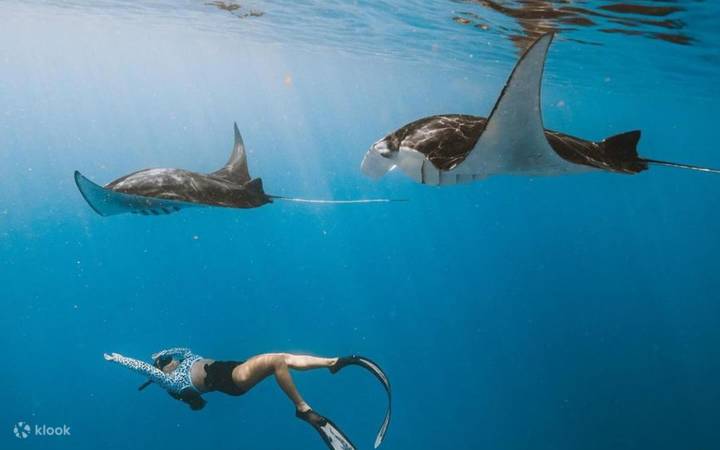 SnorkelingManta Point Snorkeling and West Nusa Penida TourSee it on Klook (opens in a new tab)
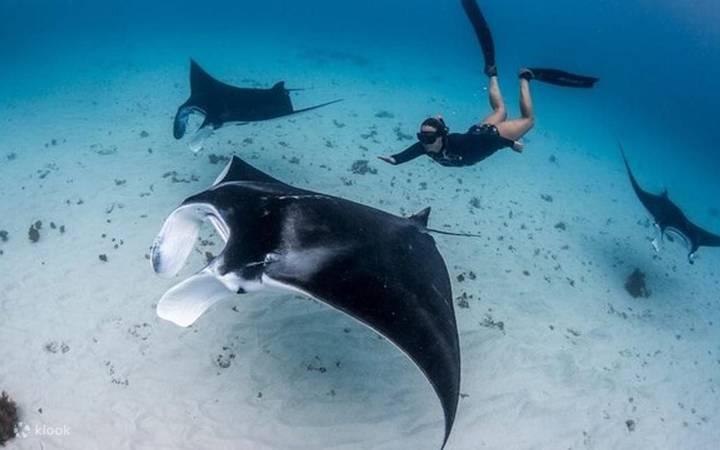 SnorkelingManta Point Snorkeling & Land Coast East Tour Nusa PenidaSee it on Klook (opens in a new tab)
Affiliate links: we may earn a commission if you book, at no extra cost to you. Affiliate disclosure
Know Before You Go
Manta Point and Manta Bay tips that save time and trouble.
- 01Tell your guide about any heart, breathing or other medical condition before you get in, and ask for a buoyancy vest if you are not a strong swimmer.
- 02Ask whether the trip goes to Manta Point, Manta Bay or both, and whether the IDR 100,000 marine fee and gear are included.
- 03Stay at least 3 m from the rays and let them come to you. Touching or chasing a manta is illegal in Indonesia and harms the animal.
- 04Never stand on coral or kick up sand at a cleaning station. The mantas return to stations that stay undisturbed.
- 05Wear a rash guard or a thin wetsuit. Water can turn cold below a thermocline, and long sessions chill you quickly.
- 06Take seasickness tablets an hour before departure if you need them. The crossing to Manta Point can be rough even on a calm day.
- 07Use a mask that fits. Bring your own if you have one, or test the seal of a rented one before you jump in.
- 08Carry a dry bag, water and sun protection. There is no shade at the sites, and boats load from the beach.
- 09Check that your travel insurance covers snorkeling and diving. Serious cases go by boat to Bali, because island clinics have limited services.
FAQ
Manta Point and Manta Bay questions, answered.
Is snorkeling with mantas in Nusa Penida worth it?
Yes, for confident swimmers. Few places let you float over reef mantas several meters across on a half-day trip, and Nusa Penida has them all year. It is less worth it if you get seasick, panic in deep water or have only one rushed day from Bali, when the boat ride and land tour leave little time in the water.
Are manta rays guaranteed at Manta Point?
No. They are wild animals, but the odds are high. One local dive operator estimates sightings on about 95% of trips to Manta Point and about 60% at Manta Bay. Researchers recorded cleaning and feeding in every year from 2012 to 2023. Swell sometimes stops boats from reaching Manta Point, which is the more common reason for a miss.
What is the difference between Manta Point and Manta Bay?
Manta Bay, off the west coast near Crystal Bay, is a feeding ground with smaller, younger rays, many boats and a shorter ride. Manta Point, below the south-coast cliffs, is a cleaning station where larger adults circle coral heads at about 10 m. It is farther out, more exposed to swell, and offers better odds. The two are about 10 km apart.
How much does a manta snorkeling trip cost?
Shared trips from Nusa Penida cost about IDR 150,000–350,000 per person for Manta Bay and around IDR 450,000 for Manta Point, and private boats cost more (checked Nov 2026). Foreign snorkelers and divers also pay a marine fee of IDR 100,000, often included. Add the island fee of IDR 25,000 per adult and Bali’s IDR 150,000 tourist levy.
Is it safe to snorkel at Manta Point?
It is open sea, so it is safe only for people fit to swim in swell. Snorkelers died on trips here in August 2022 and February 2026, and a diver collapsed and died after a dive in August 2024. Go with a guide, wear a buoyancy vest if unsure, mention any medical condition and stay close to the boat.
Do you need to be a strong swimmer to see the mantas?
You need to be comfortable in deep water with waves, because you will not touch the bottom. Strong swimmers have the easiest time, but weaker swimmers can manage with fins and a buoyancy vest, staying beside the guide. Children from about four join some trips. If you have never snorkeled, practice at Crystal Bay first.
Can beginners dive at Manta Point?
Yes, at the cleaning station, which sits at about 10 m and suits newly certified Open Water divers with a guide. Some dive centers take Discover Scuba divers there too. The wall below, down to about 40 m, is for advanced divers. Expect surge and occasional cold water, and refresh your skills first if you have not dived for years.
When is the best time to see manta rays in Nusa Penida?
Any month, in the morning. Mantas feed and visit the cleaning stations all year, and courtship peaks in May. April to October has calmer seas and clearer water. November to March brings more swell, so trips to Manta Point are canceled more often. Start early, before the midday crowd of boats.
Can you touch manta rays in Nusa Penida?
No. Manta rays have been fully protected in Indonesia since January 2014, and both sites are inside the Nusa Penida marine protected area. Touch strips the mucus layer that protects their skin. Follow the Manta Trust’s code: stay at least 3 m away, do not chase, and let the ray decide how close it comes.
Can you see the mantas on a day trip from Bali?
Yes. Day tours from Sanur and cruises from Benoa Harbour include a Manta Bay snorkel, often with a land tour of the west coast. It makes for a long day of boats and driving. For Manta Point and a calmer morning, stay a night in Toyapakeh or on Nusa Lembongan and take the first boat.
Nearby
Where to go after Manta Point and Manta Bay.
Places close by that fit into the same trip, with realistic travel times.
Short boat ride from Manta Bay; 15–25 min by road from Toyapakeh
Crystal Bay
The island’s easiest beach snorkeling, a temple islet and the starting point for many manta boats.
Visitor guideAbout 21 km, 45–60 min by road from Toyapakeh
Peguyangan Waterfall
A blue stairway down the Batukandik cliffs above Manta Point, with a spring and temple at the bottom.
Visitor guide40–60 min by road from Toyapakeh
Broken Beach and Angel’s Billabong
A sea arch and cliff pool above the coast near Manta Bay, where mantas can sometimes be seen from the rim.
Visitor guide40–50 min by road from Toyapakeh
Kelingking Beach
The T-Rex headland you pass by boat on the way to Manta Point, seen properly from the cliff top.
Visitor guideA few minutes by boat from Crystal Bay
Gamat Bay
A reef cove north of Crystal Bay that many manta trips add as a second snorkel stop.
More in Nusa Penida
Plan the rest of your time in Nusa Penida.
Area guide
Nusa Penida travel guide
Read the guide
Viewpoint
Kelingking Beach
Visitor guide
Nature
Broken Beach and Angel’s Billabong
Visitor guide
Beach
Diamond Beach
Visitor guide
Beach
Crystal Bay
Visitor guide
Temple
Goa Giri Putri Cave Temple
Visitor guide
Beach
Atuh Beach
Visitor guide
Nature
Peguyangan Waterfall
Visitor guide
Read Next
More Manta Point and Manta Bay guides.
Guide
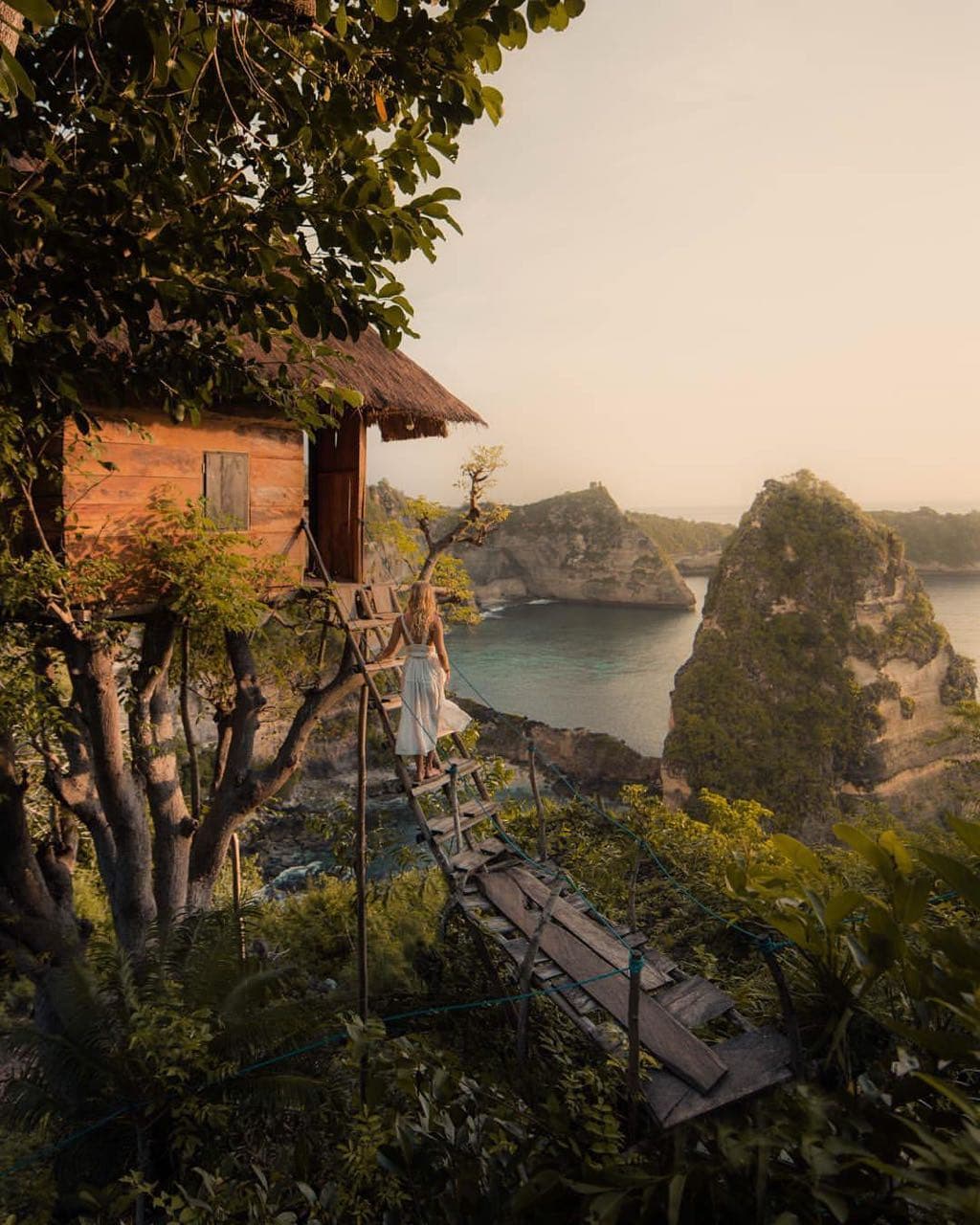
Top Places to Visit in Nusa Penida

Guide
27 Unique Things to Do in Bali (2026): The Best Bali Experiences
Guide
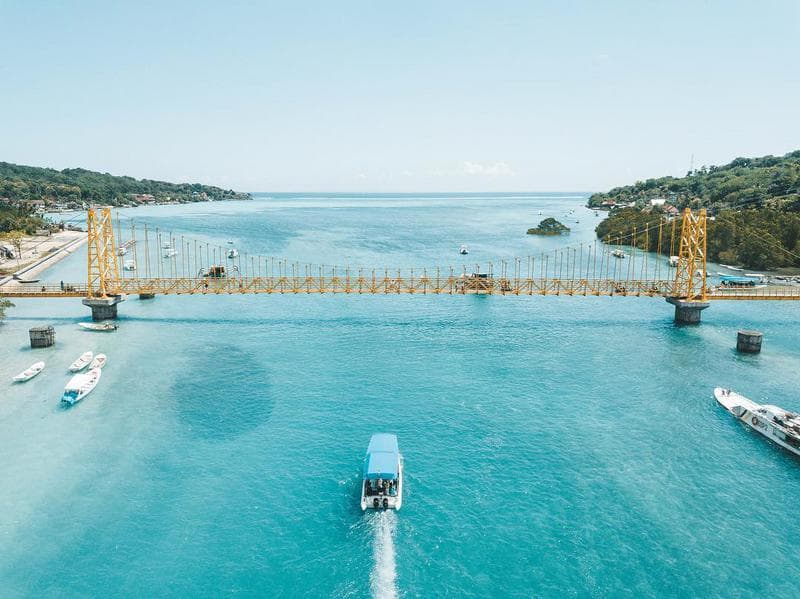
A Complete Guide to Nusa Lembongan Island

Guide
Where to Stay in Nusa Penida (2026): 20 Best Hotels, Villas and Glamping
Guide
13 Best Day Trips from Seminyak (2026): Ubud, Nusa Penida & Uluwatu
How we researched this
Sources and fact checks.
Prices, opening hours, show times and travel times in this Manta Point and Manta Bay guide were checked against official sites, government tourism pages and recent reporting on 11 November 2026. Where sources disagreed, we give the official figure and say so. Rankings are our editorial judgment, set out in our editorial policy.
We re-check the guide at least every three months and whenever we hear about a change. Spotted something out of date? Tell us.
Show all 22 sources ↓Hide sources ↑
- peraturan.bpk.go.id/Download/152471/Kepmen%20KKP%20Nomor%204%20Tahu…
- peraturan.bpk.go.id/Download/152490/Kepmen%20KKP%20Nomor%2024%20Tah…
- sharkrayareas.org/portfolio-item/nusa-penida-isra
- detik.com/bali/berita/d-6802377/kepala-desa-menyoal-retri…
- news.mongabay.com/2014/02/indonesia-pledges-to-protect-manta-rays
- mongabay.co.id/2020/06/02/kawasan-konservasi-perairan-nusa-pen…
- thebalisun.com/tourist-safety-under-scrutiny-as-snorkelling-tr…
- detik.com/bali/berita/d-6238760/wna-korea-selatan-hilang-…
- kaltim.antaranews.com/berita/165705/tim-sar-evakuasi-jenazah-wna-asal…
- thenightly.com.au/world/asia-pacific/australian-woman-64-dies-on-…
- nusapenida.org/bali-nusa-penida-diving-guide/manta-ray-nusa-pe…
- nusapenida.org/manta-point-nusa-penida
- research.mantatrust.org/murray-et-al-2019
- aquaventure-maldives.com/images/download/MT_TourismCoC_10StepGuide_Engli…
- mybalitrips.com/en/snorkling-nusapenida
- jonnymelon.com/manta-point-nusa-penida
- bali-travel-life.com/snorkeling-manta-ray-in-nusa-lembongan
- bali-home-immo.com/blog/bali-tourism/best-snorkeling-in-nusa-penid…
- nominatim.openstreetmap.org/ui/search.html
- router.project-osrm.org
- thebaliguideline.com/blog/top-7-nusapenida
- thebaliguideline.com/blog/must-things-to-do-in-bali