
Amed · Adventure
USAT Liberty Wreck, Tulamben: A Diving and Snorkeling Guide
A 1918 cargo ship lying on a black sand slope, a short swim off a beach of stones.
By The Bali Guideline Editorial TeamUpdated 9 November 2026
Overview
USAT Liberty Wreck, Tulamben, before you go.
The USAT Liberty is a US Army cargo ship torpedoed in 1942 that now lies about 25 to 40 m off the stony beach at Tulamben, on Bali’s northeast coast, 20 to 30 minutes from Amed. Its shallowest parts sit 3 to 5 m down and the deepest near 30 m, with no boat and almost no current. It suits divers of every level and confident snorkelers.
Despite the name, this was never one of the mass-produced Liberty ships of World War II. The ship was launched at Kearny, New Jersey, on 19 June 1918, served the US Navy briefly as an animal transport, then spent two decades as a merchant ship before the Army took it over in November 1940 and it became USAT Liberty, a US Army Transport. Before dawn on 11 January 1942, carrying rubber and railway parts, it was torpedoed by the Japanese submarine I-66 (renumbered I-166 that May) about 10 nautical miles southwest of the Lombok Strait. Two destroyers, USS Paul Jones and the Dutch Van Ghent, took it in tow for Singaraja on the north coast, but it was flooding too fast, so it was run aground at Tulamben, where the cargo and fittings could be saved.
The ship stayed on the beach for 21 years. In 1963 Mount Agung, whose summit is about 12 km from the shore, erupted, and the tremors slid the hull off the stones and down the slope where it lies today: about 125 m long, on its side, parallel to the beach, with the deck facing the open sea. Even the village name comes from the volcano. Bali’s tourism office traces Tulamben to batulambih, “many stones,” after the boulders left by Agung’s eruptions.
Eight decades of coral, sponges and sea fans have grown over the broken hull, and hundreds of fish species live on and around it: jacks schooling off the stern, bumphead parrotfish at first light, batfish under the spars and garden eels on the sand. Divers walk in from the beach, fin out for a few minutes and descend. Snorkelers float over the shallowest section. Village women carry the tanks from the cars to the water, often two at a time, as they have since the early 1980s.
There are catches. The entry is over smooth volcanic boulders with surf breaking on them, so getting in and out is the hardest part of the visit. The hull is fragile: a week of big swells in July 2015 broke off sections and buried others under rock and sand, and local guides have warned that nobody can predict how long it will hold together. It is also busy. About 100 divers a day used the site a decade ago, and the village head said visits rose by about half from July 2025, to 200 to 250 people a day. Come at dawn, or sleep in Tulamben, and you share the wreck with a fraction of them.
- Opening hours
- Open shore, daily; porters work about 7 AM–5 PM (checked Nov 2026)
- Ticket
- No entrance ticket; pay for parking and porters (checked Nov 2026)
- Time needed
- About 1 hour to snorkel; half a day for two dives
- Best time
- At dawn, before day trips arrive; April–July and October–November
- Dress code
- Swimwear, reef shoes for the stones, a 3 mm wetsuit for divers
- Location
- Tulamben, Kubu; about 15 km (20–30 min) northwest of Amed
Today at USAT Liberty Wreck, Tulamben
- Sunrise
- Sunset
- Daylight
- 12 hr 28 min
Checking the weather in Amed…
Times for this spot, in Bali time (WITA).
Tulamben, Kubu, Karangasem Regency, Bali 80853, Indonesia
Open in Google MapsWhat to See
What to see at USAT Liberty Wreck, Tulamben.
- 01
The shallow section for snorkelers
The highest part of the wreck lies about 3 to 5 m below the surface, depending on the tide, so on a clear day you can float over the hull, the coral growing on it and the fish schooling above. Deeper parts show only as a dark shape on bright mornings. Swim out from the main entry with a buddy, keep to the shallow side and do not stand on the wreck; the coral on it is alive.
- 02
The hull and holds for divers
Most of the wreck lies between about 5 and 30 m, and a typical dive runs along its length on the outside, from the shallow end down toward the deeper section and back. The structure has broken into open sections, so there are many places to look in with the surface always close. Going inside the hull is for divers with wreck training only. Most guides plan 60 minutes or more.
- 03
Bumphead parrotfish at first light
Groups of bumphead parrotfish, the largest parrotfish on the reef, often gather around the wreck around sunrise, then move off once the light is up. That is the main reason divers who stay in Tulamben book a 6 AM dive. Sunrise here is between about 5:45 AM in November and 6:35 AM in July.
- 04
Night dives on the wreck
Because the wreck is a short swim from shore, it is one of Bali’s easiest night dives. After dark, parrotfish sleep in the hull, shrimp and crabs come out on the coral, and flashlight fish and lionfish are common. Most dive shops in Tulamben and Amed offer night dives. If you have never dived at night, this is a good place for your first, with a guide who knows the wreck.
- 05
The porters of Tulamben
Tulamben’s tank porters are mostly women from the village who carry a full 15 kg tank on the head and another on the shoulder over the stones. They began working in the early 1980s, formed a group around 1983 and now share their earnings through a cooperative of 29 members, with a share set aside for the village. In 2021 and 2022 they were paid IDR 10,000 a tank.
- 06
The Coral Garden and the Drop Off
Two more shore dives sit along the same bay. The Coral Garden, from about 4 to 25 m, has coral heads and shallows good enough for snorkelers, and many divers use it as a second dive. The Drop Off, at the eastern end of the beach, is a wall that starts a few meters down and falls to around 60 m, with sea fans and larger fish passing in the blue.
- 07
Mount Agung behind the beach
Turn around from the water and Mount Agung, at 3,031 m Bali’s highest volcano, rises straight behind the village. Its summit is about 12 km away, and the boulders under your feet came down its slopes. It is clearest early in the morning; by late morning it is often in cloud, one more reason to start at dawn.
Seasons
Best time to visit USAT Liberty Wreck, Tulamben.
Go early. The sea is usually at its calmest in the morning, and the site is quiet until day-trip groups from south Bali arrive from mid-morning. Divers staying in Tulamben or Amed can be in the water at first light, around 6 AM, which is also the best time for bumphead parrotfish. Late afternoon, after the groups leave, is the second quiet window.
Diving runs all year. Visibility is usually best from about April to July and in October and November, typically 10 to 30 m and occasionally more. From December to March, rain washes runoff into the bay; the head of Tulamben’s dive guide association calls rain and the murky water it brings the main obstacle. Strong swells can also hit the coast in the dry season, as they did for a week in July 2015.
July to September is the busiest stretch, with numbers dipping in October and November and rising again over Christmas and New Year, according to the village head. Nyepi, the Day of Silence, closes Bali for 24 hours on 8 March 2027: no driving, no diving and no beach.
Coming between November and March? Read our Bali rainy season guide →
Getting There
How to get to USAT Liberty Wreck, Tulamben.
| From | Time | How |
|---|---|---|
| Amed (Jemeluk) | 20–30 min | About 15 km by car or scooter, west to Culik and then north on the coast road. Dive shops in Amed include pickup in their Tulamben trips. |
| Bali airport (DPS) | 2.5–3 hrs | About 104 km by car via the east-coast road, Candidasa, Amlapura and Culik; longer in afternoon traffic. If you land late, sleep near the airport or in Sanur and go in the morning. |
| Ubud | 2–2.5 hrs | About 84 km by car. Perama’s shared shuttle runs Ubud to Padang Bai, Candidasa, Amed and Tulamben (checked Oct 2026). |
| Sanur | 2–2.5 hrs | About 89 km on the coast bypass. Day-trip dive and snorkel tours from the south usually pick up around 6 AM to 7 AM. |
| Seminyak or Canggu | 3–3.5 hrs | About 98 km by car; leave before 6 AM to clear south Bali’s traffic, or you will arrive with the midday groups. |
| Candidasa | 45–60 min | About 39 km by car via Amlapura and Culik, a practical base for an early start. |
| Lovina | 2–2.5 hrs | About 73 km by car east along the north coast via Singaraja and Kubu. |
Getting around USAT Liberty Wreck, Tulamben
Tulamben is a thin strip of resorts, dive shops and warungs along the coast road, with lanes running down to the beach. Each entry point has parking behind it and may charge a small fee, so carry cash, and ask your dive shop where to park for the wreck. Grab and Gojek do not operate in this part of Karangasem, so come with a driver or a rented scooter, or arrange a ride back before you leave Amed.
From the parking area it is a short walk over large, rounded stones to the water. Porters wait at the main entries, carry the tanks down and back and are paid per tank, often through your dive shop. Pay them directly in cash if they are not included. Wear reef shoes on the stones: they are slippery when wet and hot by midday.
Snorkelers on their own can walk in at the Liberty entry with their own mask and fins. Divers should go with a licensed guide; the shops in the village and in Amed walk you in, set up the gear on the beach and handle the porters.
Tickets & Tours
USAT Liberty Wreck, Tulamben tours on Klook.
You can visit on your own with the details above. If you would rather have the driver, guide or entry sorted, these Klook tours include USAT Liberty Wreck, Tulamben. Prices, pick-up areas and what is included vary, so check the listing before you book.
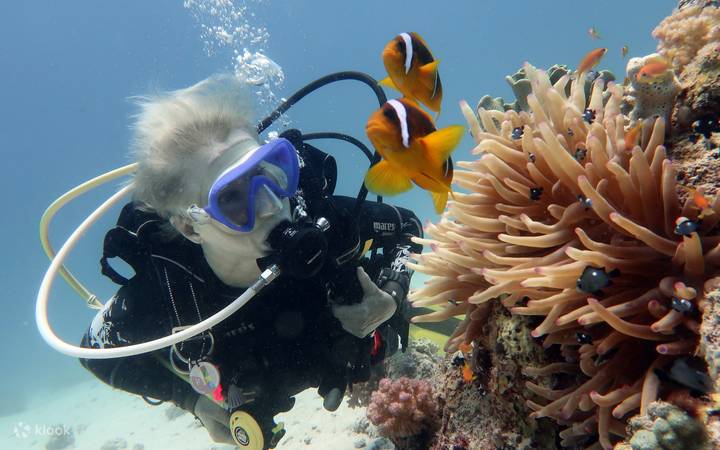 Scuba divingUSS Liberty Shipwreck Scuba Dive at TulambenSee it on Klook (opens in a new tab)
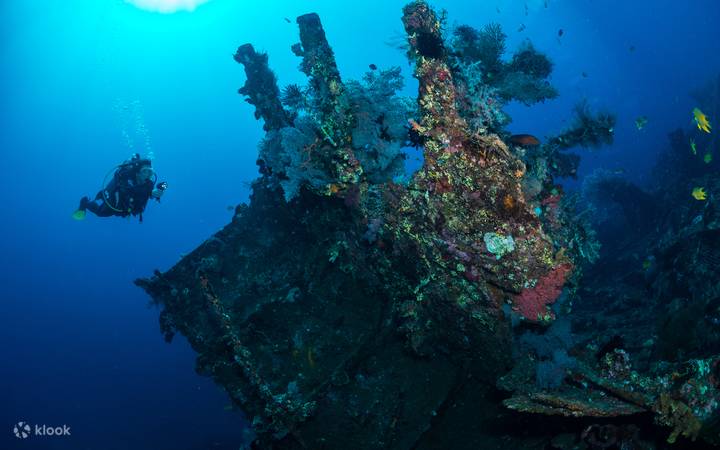 Scuba divingTulamben Wreck Diving Day Trip by Bali Hai CruiseSee it on Klook (opens in a new tab)
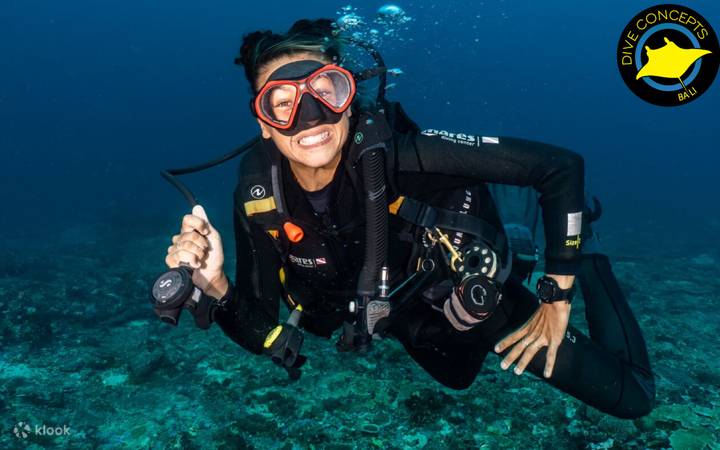 Scuba divingScuba Diving Day Trip, 3 Dives in TulambenSee it on Klook (opens in a new tab)
Affiliate links: we may earn a commission if you book, at no extra cost to you. Affiliate disclosure
Know Before You Go
USAT Liberty Wreck, Tulamben tips that save time and trouble.
- 01Wear reef shoes or dive boots for the entry; the stones are smooth, wobbly and slippery, and waves break on them.
- 02Put your fins on in the water once you can float, and time your exit between waves, holding on to your buddy if needed.
- 03Do not touch, kneel on or take anything from the wreck; the hull is fragile and the coral on it is alive.
- 04Carry cash for parking, porters and lunch. Many warungs in Tulamben take cash only.
- 05Only enter the hull if you have wreck training. Open sections give plenty to see from outside.
- 06First-timers on a try dive go no deeper than 12 m, which still covers the shallow half of the wreck.
- 07Ascend slowly and stay with your guide. In December 2025 an Australian diver died after panicking at about 15 m and surfacing fast.
- 08Leave at least 18 hours between your last dive and your flight home, as the Divers Alert Network advises after repeat dives.
- 09Skip the wreck the day after heavy rain if you can; runoff cuts visibility for a day or two.
FAQ
USAT Liberty Wreck, Tulamben questions, answered.
Is the USAT Liberty wreck worth it?
Yes, especially for divers. It is a real war wreck reachable from the beach, with no boat, little current and coral and fish over the whole hull, and new divers can see much of it within 12 to 18 m. It makes less sense as a rushed day trip from Seminyak or Canggu, with six hours in a car and a crowded midday swim.
Can you snorkel the USAT Liberty wreck?
Yes. The shallowest part of the wreck lies about 3 to 5 m down and about 25 to 40 m from the beach, so on a calm, clear morning snorkelers see the hull, the coral and the fish from the surface. You need to be a confident swimmer, because the entry is over stones with waves breaking on them. Bring fins and go with a buddy.
How deep is the Liberty wreck in Tulamben?
From about 3 to 5 m at its shallowest point to about 30 m at its deepest, depending on the tide and where you measure. Most of the hull lies between about 5 and 30 m on a sloping sand bottom, so one dive can cover most of it. Divers certified to 18 m see a lot; the deeper section needs advanced certification.
Do you need to be a certified diver to dive the Liberty?
No. Beginners can join a try dive with an instructor, which goes no deeper than 12 m under PADI rules and still reaches the shallow part of the wreck. Open Water divers can go to 18 m, and Advanced divers to 30 m, the bottom of the wreck. Entering the hull needs wreck training.
How did the USAT Liberty end up in Tulamben?
A Japanese submarine torpedoed it on 11 January 1942, about 10 nautical miles southwest of the Lombok Strait. Two destroyers towed it toward Singaraja, but it was flooding too fast, so it was beached at Tulamben to save the cargo. In 1963, tremors from Mount Agung’s eruption slid the hull off the beach into the sea.
Is the USAT Liberty a Liberty ship?
No. It is a common mix-up. The Liberty was built in 1918 at Kearny, New Jersey, as a cargo ship for the US Shipping Board, two decades before the standard Liberty ships of World War II. The US Army took it over in 1940, which is where the USAT, for US Army Transport, comes from.
How much does it cost to visit the Liberty wreck?
There is no entrance ticket to the beach or the wreck (checked Nov 2026). You pay for parking, porters and gear. Porters were paid IDR 10,000 a tank in 2021 and 2022; ask your dive center for the current rate. Two-dive day trips with transfers from south Bali cost about IDR 2 to 2.5 million per person (checked Nov 2026), and trips from Amed cost less.
What is the best time to dive Tulamben?
Early morning, from first light around 6 AM, before the day-trip groups arrive from mid-morning. The water is calmer and you may see bumphead parrotfish. April to July and October to November usually bring the best visibility; rain from December to March can cloud the water. Diving continues all year.
Can you visit the Liberty wreck as a day trip from Ubud or Seminyak?
Yes, but it is a long day. From Ubud the drive is 2 to 2.5 hours each way, from Seminyak or Canggu 3 to 3.5 hours, and day-trip tours usually pick up around 6 AM to 7 AM. Staying a night in Tulamben or Amed lets you dive at dawn and makes the trip far more relaxed.
Is it safe to dive and snorkel at Tulamben?
Generally, yes: there is almost no current over the wreck and depths are moderate. The main risks are the entry, where waves break on slippery boulders, and diver error. An Australian diver died in December 2025 after panicking at about 15 m and surfacing fast. Dive with a licensed guide, stay within your training and stay out of the hull unless you have wreck training.
How far is Tulamben from Amed?
About 15 km, or 20 to 30 minutes by car or scooter, west to Culik and then north along the coast road. Most Amed dive shops include the Liberty in their programs and pick you up from your hotel. There is no Grab or Gojek here, so arrange transport the day before.
Nearby
Where to go after USAT Liberty Wreck, Tulamben.
Places close by that fit into the same trip, with realistic travel times.
Along the same bay, a few minutes away
Coral Garden and the Drop Off, Tulamben
Two more shore dives: shallow coral heads for snorkelers and a wall that falls to around 60 m.
20–30 min by car (15 km)
Jemeluk Bay, Amed
Snorkeling over coral and sunken statues a few strokes off the beach, with a viewpoint over the bay and Mount Agung.
35–45 min by car (21 km)
Tirta Gangga water palace
The last raja of Karangasem’s water garden, with koi ponds, stepping stones and rice terraces around it.
Visitor guide40–50 min by car (20 km)
Lempuyang Temple
The split gate framing Mount Agung; arrive at dawn, as the wait for the photo grows through the morning.
Visitor guide50–60 min by car (31 km)
Taman Ujung
A seaside water palace near Amlapura where Balinese gates stand beside European-style arches and large ponds.
Visitor guide
Read Next
More USAT Liberty Wreck, Tulamben guides.

How we researched this
Sources and fact checks.
Prices, opening hours, show times and travel times in this USAT Liberty Wreck, Tulamben guide were checked against official sites, government tourism pages and recent reporting on 9 November 2026. Where sources disagreed, we give the official figure and say so. Rankings are our editorial judgment, set out in our editorial policy.
We re-check the guide at least every three months and whenever we hear about a change. Spotted something out of date? Tell us.
Show all 25 sources ↓Hide sources ↑
- lovebali.baliprov.go.id/destination/detail/34/tulamben
- history.navy.mil/research/histories/ship-histories/danfs/l/liber…
- en.wikipedia.org/wiki/USAT_Liberty
- combinedfleet.com/I-166.htm
- en.wikipedia.org/wiki/Tulamben
- detik.com/bali/wisata/d-8075210/wisatawan-diving-dan-snor…
- detik.com/bali/berita/d-6110382/suka-duka-porter-di-panta…
- detik.com/bali/wisata/d-6110256/bangkai-kapal-liberty-man…
- mongabay.co.id/2021/11/23/mengenal-wisata-bawah-laut-tulamben-…
- mongabay.co.id/2015/07/26/bangkai-kapal-liberty-ikon-bawah-lau…
- mongabay.co.id/2016/02/14/dive-tag-suvenir-menyelam-untuk-mend…
- divemagazine.com/scuba-diving-news/tragedy-strikes-as-australian…
- diveplanit.com/dive-site/usat-liberty-wreck-tulamben-bay
- scubadiverlife.com/dive-site-usat-liberty-tulamben-bali
- dive-the-world.com/diving-sites-indonesia-bali-tulamben.php
- stingynomads.com/tulamben-diving-the-liberty-wreck
- baliocean.com/blog/snorkeling-tulamben-usat-liberty-shipwreck
- twofishdivers.com/diving/tulamben-bali
- padi.com/courses/discover-scuba-diving
- dan.org/health-medicine/health-resources/diseases-condi…
- nominatim.openstreetmap.org/ui/search.html
- router.project-osrm.org
- gml.noaa.gov/grad/solcalc
- thebaliguideline.com/blog/must-things-to-do-in-bali
- thebaliguideline.com/blog/7-most-fascinating-place-in-east-bali