The best way to eat in Bali is at a warung, a night market or a roadside cart. Most of the dishes below cost less than a coffee in Seminyak, and the places that make them best are often small family kitchens that sell out by early afternoon. This guide covers 12 Balinese and Indonesian street foods, what goes into each, the typical price, and where to try them.
A few tips
- Go early for lunch dishes: babi guling, nasi campur and sate lilit warungs cook in the morning and close when the food runs out.
- Go late for night food: nasi jinggo and terang bulan sellers, and the night markets in Gianyar, Denpasar and Sanur, open from mid-afternoon into the evening.
- Pork is common: babi guling, many satays and some lawar and bakso are pork; ask if you avoid it.
- Bring cash: small stalls and warungs often take cash only.
More places to eat cheaply: the best cheap eats in Bali by area, the best markets in Bali (including the night markets) and the local dishes to try.
In this guide13 sections
01Babi Guling (Spit-Roast Pork)

Babi guling is Bali's spit-roasted whole pig. A young pig is stuffed with boiled cassava leaves and base genep, a spice paste of turmeric, galangal, ginger, kencur, lemongrass, chili, garlic, shallot, coriander, pepper and salam leaves. It is then rubbed with turmeric and turned for hours over a wood or coconut-husk fire until the skin crackles. Once a ceremonial dish, it is now sold daily as a plate of rice with sliced pork, crackling, lawar, pork satay, blood sausage (urutan) and a bowl of pork soup. Warungs open in the morning and trade until the pig runs out.
Where to try it: Warung Babi Guling Pak Malen in Seminyak, Warung Babi Guling Pande Egi in Beng, Gianyar, and Babi Guling Gung Cung in central Ubud, which has rooftop seating and closes at 4:30 PM.
At a glance
Babi Guling (Spit-Roast Pork)
02Nasi Campur (Nasi Bali)

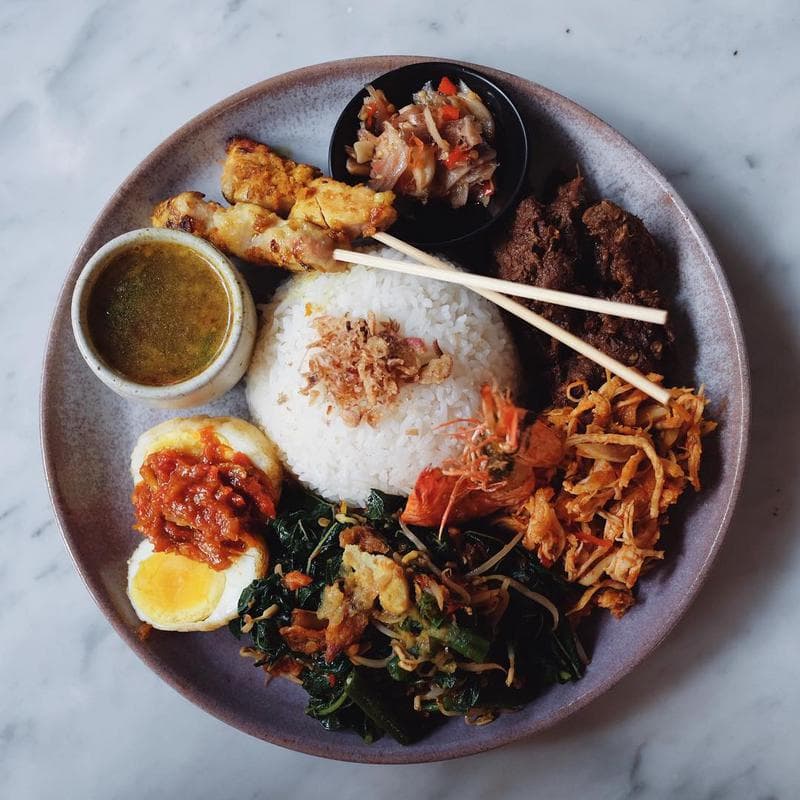
Nasi campur is a scoop of white rice with small portions of several dishes. The Balinese version, often called nasi campur Bali or nasi ayam Bali, usually comes with shredded chicken in betutu spices, sate lilit, urap (vegetables with spiced grated coconut), a spiced egg, crispy chicken skin, fried peanuts, kerupuk and sambal matah; pork versions add lawar and babi guling. It is a breakfast and lunch staple, best eaten early, before the trays run low.
Where to try it: Nasi Bali Men Weti in Sanur makes each plate to order and closes at 1 PM, so arrive early. Nasi Ayam Kedewatan Ibu Mangku, on the main road in Ubud, has served its spicy chicken rice with sate lilit since 1963 and also has branches in Renon, Seminyak and Jimbaran.
At a glance
Nasi Campur (Nasi Bali)
03Satay (Sate)

Satay is small pieces of seasoned meat threaded on bamboo skewers and grilled over charcoal. In Bali the everyday street versions are sate babi, pork satay often finished with a sweet-spicy glaze, and sate plecing, pork or chicken satay under a fiery chopped-chili and tomato sambal. Marinades lean on shallot, garlic, chili, palm sugar and sweet soy sauce. Javanese carts sell sate ayam with peanut sauce on most town streets in the evening. Satay is eaten with rice or with lontong or tipat, both compressed rice cakes.
Where to try it: Sate Babi Bawah Pohon in Legian for pork satay with rice, Sate Plecing Mak Lukluk in Renon, Denpasar, and Pasar Senggol Gianyar, a night market in Gianyar town that opens at 3 PM and is busiest after about 6 PM.
At a glance
Satay (Sate)
04Sate Lilit
Sate lilit is Bali's own satay. Minced fish (tuna, mackerel or marlin), pork or chicken is mixed with grated coconut, base genep spice paste, lime leaves and palm sugar, then pressed around a lemongrass stalk or flat bamboo stick and grilled; 'lilit' means 'to wrap'. Cooked for temple ceremonies and weddings, it is also sold every day as part of nasi campur or on a fish plate with rice, sambal matah and fish soup. Fish versions dominate on the coast.
Where to try it: Warung Ari Sate & Pepes Ikan Laut in Panjer, Denpasar, known for marlin sate lilit and pepes ikan, opens at 6:15 AM and often sells out before its 3 PM close. Sari Alit Fish Satay Stall in Kesiman, east Denpasar, serves sea-fish sate lilit with rice.
At a glance
Sate Lilit
05Lawar
Lawar is Bali's signature chopped mix of finely minced meat, usually pork but also chicken or duck, with vegetables such as long beans or young jackfruit, grated toasted coconut and base genep spices, finished with fried shallot, garlic and lime. Lawar merah (red) is mixed with fresh pig's blood; lawar putih (white) has none. It is made fresh for ceremonies and eaten the same day, usually as nasi lawar or on a babi guling plate, so most warungs sell it in the morning.
Where to try it: Warung Nasi Lawar Macho Rena in Kesiman Kertalangu, east Denpasar, serves red pork lawar from 11 AM to 7 PM and is closed on Sundays. Nasi Lawar Yan Negro in Pemecutan Kaja, north Denpasar, is the late-night option, open from 7 PM to midnight.
At a glance
Lawar
06Ayam Betutu (Slow-Cooked Spiced Chicken)

Ayam betutu is a whole chicken, or a duck for bebek betutu, rubbed and stuffed with base genep spice paste (shallot, garlic, chili, candlenut, turmeric, ginger, galangal, kencur, lemongrass, salam and lime leaves, shrimp paste), wrapped in banana leaf or areca-palm sheath and slow-cooked for hours. Traditionally it was buried in smoldering rice husks; most warungs now steam or braise it. It comes with rice, plecing kangkung (water spinach with chili-tomato sambal), fried peanuts and the spicy cooking juices. Gilimanuk in west Bali is famous for its fiery version.
Where to try it: Ayam Betutu Men Tempeh in Gilimanuk, and Ayam Betutu Khas Gilimanuk near the airport in Kuta, which also serves sate lilit and plecing kangkung. Both stay open until late evening.
At a glance
Ayam Betutu (Slow-Cooked Spiced Chicken)
07Bakso (Meatball Soup)
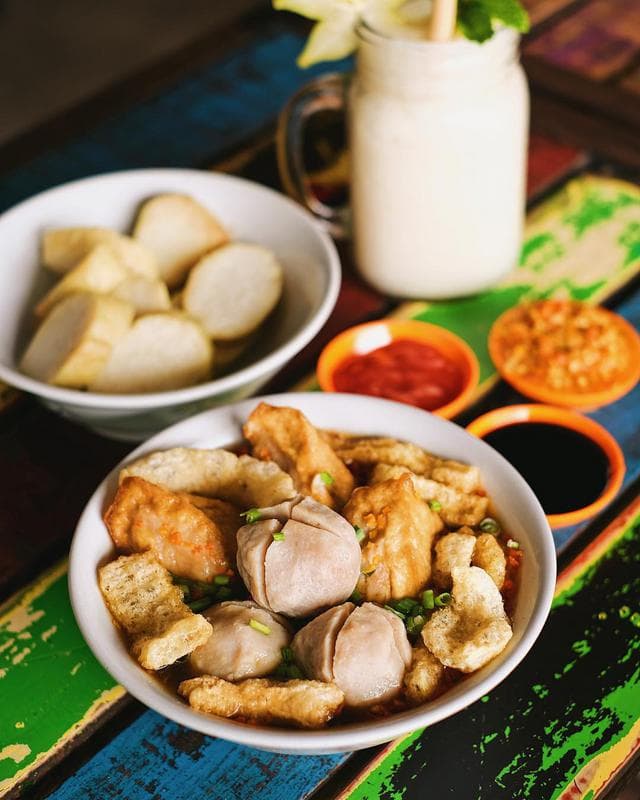
Bakso is a bowl of springy meatballs in a clear, savory broth with yellow noodles or rice vermicelli, tofu, fried wonton, celery and fried shallots. Each bowl is seasoned at the table with chili sauce, sweet soy and vinegar. Most bakso is beef, often with tendon (bakso urat), but Bali also has pork bakso. It is sold from push-carts, motorbike carts and small warungs from lunchtime until late evening; look for the 'bakso' sign and listen for the knock on a bowl.
Where to try it: Subur Meatballs in Panjer, Denpasar, for pork bakso with tendon and fried pork meatballs, and Sindhu Night Market in Sanur, a small evening market (5 PM to 10 PM) where bakso carts trade alongside martabak and goat satay.
At a glance
Bakso (Meatball Soup)
08Rujak (Spicy Fruit Salad)

Rujak is a spicy-sour fruit salad. The common Balinese street version mixes sliced young mango, papaya, yam bean (bengkoang), rose apple and cucumber with a thick sauce of palm sugar, tamarind, chili and shrimp paste. Bali has two specialties of its own. Rujak kuah pindang sets the fruit in a cold, spicy broth made from the water used to boil pindang, a salted fish. Rujak bulung is made with fresh bulung seaweed, served in the same pindang broth or with a grated-coconut and chili dressing.
Where to try it: Warung Rujak Glogor in Pemecutan, west Denpasar, for rujak kuah pindang, rujak bulung and tipat cantok, and Gula Bali The Joglo in Sumerta Kelod, east Denpasar, also known for jaja Bali. Both are daytime warungs that open at 10 AM and close by 6 PM.
At a glance
Rujak (Spicy Fruit Salad)
09Nasi Jinggo
Nasi jinggo is a fist-sized parcel of white rice wrapped in banana leaf with small amounts of shredded spiced chicken, sambal goreng tempeh, serundeng (spiced fried coconut) and a dab of sambal. Some sellers add fried noodles or a piece of egg, and pork versions come with babi guling. The name is commonly traced to the Hokkien 'ceng go' (1,500), its price in rupiah before the 1997–98 crisis. It began as evening fare near the 24-hour Kumbasari market in Denpasar and is still a late-night classic.
Where to try it: Evening stalls in Denpasar, and roadside stalls across Kuta. Sellers, whether on motorbikes, with baskets or at pop-up stalls, usually start around 5 PM and trade into the early hours.
At a glance
Nasi Jinggo
10Terang Bulan (Martabak Manis)

Terang bulan, also called martabak manis, is a thick, spongy pancake cooked in a heavy round pan, spread with butter or margarine and filled with chocolate sprinkles, crushed peanuts, cheese, condensed milk or sweet corn before it is folded in half and cut into squares. Newer carts add Toblerone, cream cheese, matcha or red velvet, and a thin, crisp version called tipker is also popular. The name means 'bright moon'; the snack began with the Hakka Chinese community of Bangka Island and spread across Indonesia as an evening cart food.
Where to try it: Indoroland Martabak Terang Bulan in Kuta, open from 4 PM to 11:30 PM and cash only, and the Martabak Sabar Menanti cart in Denpasar, which is takeout only.
At a glance
Terang Bulan (Martabak Manis)
11Jaja Bali (Balinese Sweets)

Jaja Bali are Balinese market sweets made mostly from rice or glutinous-rice flour, coconut and palm sugar. Favorites include laklak, small rice-flour pancakes cooked in clay molds; klepon, pandan rice balls filled with liquid palm sugar and rolled in coconut; pisang rai, banana in rice-flour batter; cerorot, steamed in a cone of young coconut leaf; and bubur injin, a black rice porridge with coconut milk. They are bought by the piece or as a mixed plate topped with grated coconut and juruh, a palm-sugar syrup.
Where to try it: Morning markets and jaja stalls, the evening food stalls at Pasar Badung in Denpasar (from about 3:30 PM), Pasar Senggol Gianyar night market in Gianyar town, and Pasar Rakyat Kreneng night market in Denpasar, open 6 PM to 10 PM.
At a glance
Jaja Bali (Balinese Sweets)
12Jagung Bakar (Grilled Sweet Corn)
Jagung bakar is sweet corn on the cob grilled over charcoal on the beach or at the roadside. As it cooks, the vendor brushes it with margarine or butter, then finishes it with a choice of seasoning: chili sauce, sweet soy or plain salt. It is a simple snack rather than a meal, and the grills appear along popular beaches in the late afternoon, timed for the crowds who come down to watch the sunset.
Where to try it: Sunset vendors on Kuta, Legian, Jimbaran and Sanur beaches. Roadside grills and night markets sell jagung bakar after dark, and beach prices sit at the top of the range.
At a glance
Jagung Bakar (Grilled Sweet Corn)
Bali street food: FAQ
What is the most famous food in Bali?
Babi guling, spit-roast pork stuffed with Balinese spice paste, is the island's best-known dish. Nasi campur, sate lilit and ayam betutu are close behind. For restaurants that cook Balinese food, see the best restaurants in Bali and Ubud restaurants.
How much does street food cost in Bali?
A nasi jinggo parcel costs about IDR 5,000–10,000, a plate of nasi campur or babi guling about IDR 20,000–60,000, and a whole terang bulan pancake about IDR 25,000–80,000.
Where are the best night markets for street food?
Pasar Senggol in Gianyar is one of the busiest. In Denpasar, try the evening food stalls at Pasar Badung and Kreneng, and in Sanur the smaller Sindhu Night Market. For dinner by the beach, see the best restaurants in Sanur.
Is Bali street food safe to eat?
Busy stalls with a quick turnover are the safest choice: the food is cooked fresh and does not sit for long. Drink bottled or filtered water and skip ice at very small stalls if you have a sensitive stomach.